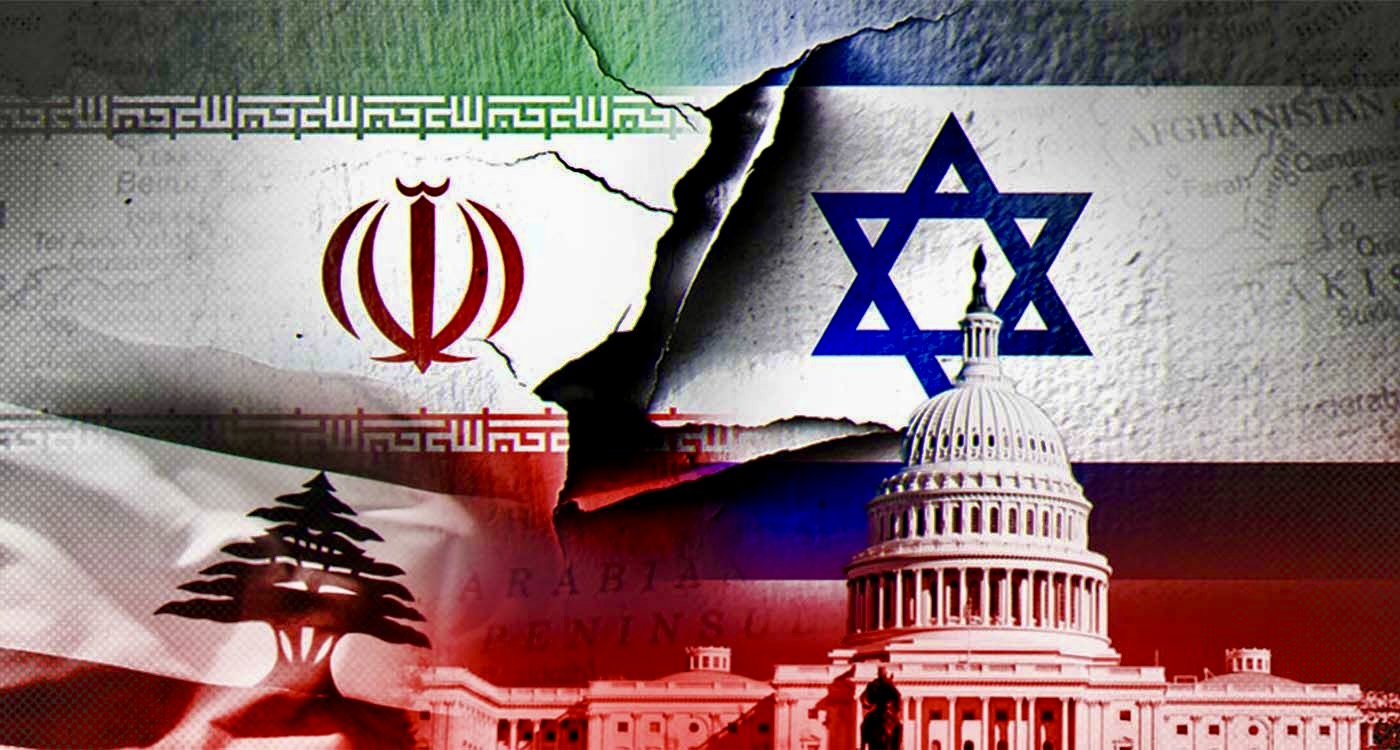
TEHRAN (Realist English). US diplomatic activity in April focused on two directions that differed markedly in character. On the Iranian issue, Washington opted for harsh pressure, rejecting Tehran’s peace initiatives and tightening its naval blockade.
On the Lebanese track, US diplomacy instead acted as an active mediator, trying to bring Israel and Lebanon closer together while simultaneously finding ways to curb Hezbollah.
Iranian track: a zero‑sum game
The negotiation process between Tehran and Washington, which was supposed to be the month’s main event, effectively reached an impasse. After several rounds of talks, including a 21‑hour marathon in Islamabad on 11‑12 April, the sides failed to narrow their positions, and an exchange of mutual accusations only intensified the confrontation.
Failed talks and muscle‑flexing
The failed round of talks in the Pakistani capital meant that the US and Iran could not reach any agreement on a long‑term settlement of the conflict because of a number of disagreements.
The situation worsened on 24 April, when the White House announced its intention to send senior representatives, including the president’s special envoy Steve Witkoff, to Islamabad for talks. However, those plans were thwarted.
In response to Tehran’s refusal to hold face‑to‑face contacts, President Donald Trump abruptly cancelled his delegation’s trip, saying: «I told my people a while ago, when they were about to leave: «No, you’re not going to fly 18 hours there. We hold all the cards. They can call us any time, but you’re not going to make any more 18‑hour flights to sit around talking about nothing”».
The blockade as the main trump card
Realising that the talks had reached a dead end, Washington opted to tighten economic pressure. On 29 April, Trump announced that he would continue the naval blockade of Iran until Tehran agreed to a nuclear deal with Washington.
In an interview with Axios, the US president called the blockade an effective means of pressure, stressing: «They (Iran) are suffocating like a fattened pig. And it’s only going to get worse for them». The US president also warned that Iran’s oil storage facilities and pipelines were «close to exploding» because of the inability to export oil.
Iran’s ‘peace plan’
The reliance on force did not come out of nowhere. Earlier, in mid‑April, Tehran had sent the US its own settlement proposal through Pakistani mediators. The Iranian plan, conveyed by Foreign Minister Abbas Araghchi, consisted of three stages:
- Stage one: The sides were to agree on a ceasefire, and the US was to give non‑aggression guarantees.
- Stage two: Washington was to open the Strait of Hormuz to Iranian ships.
- Stage three: Negotiations on the nuclear programme – which Tehran insisted should take place only after the first two points were fulfilled, effectively stripping the US of key leverage.
The White House rejected the plan. White House spokeswoman Olivia Wyles said the US would not «negotiate through the press» and that the president had made his «red lines» clear to Iran.
The Strait of Hormuz: bone of contention
The main cause of disagreement was control over the strategically vital Strait of Hormuz. Secretary of State Marco Rubio sharply criticised Iran’s actions in an interview with Fox News, saying its attempts to regulate ship traffic through the strait were «unacceptable».
He stressed that «coordinating with Iran» and paying it for passage was not opening the strait but a claim to illegitimate control over an international waterway. He warned that such a practice could not be normalised and that the US would not tolerate such a system.
Counting the costs and expert opinions
Iran’s Foreign Ministry condemned the tanker seizures, calling them a «direct legitimisation of piracy». According to Reuters, at the end of April at least six tankers carrying Iranian oil were forced to return to Iran because of the US blockade.
The scale of the pressure was also confirmed by shipping data: as of 25 April, daily traffic through the strait had fallen to seven vessels, compared with 140 before the war, and six Iranian tankers had been forced back to their ports.
Former US Secretary of State Antony Blinken warned in his analysis that military rhetoric could turn into a long‑term strategic failure for the US. He noted that Iran had retained key advantages: it still had enriched uranium, «centrifuges, missiles and control of the Strait of Hormuz».
According to Blinken, Washington faced a difficult choice: either escalation or a compromise that would require recognising Iran’s right to enrich uranium at a «very low level» as a face‑saving compromise.
Lebanon track: a fragile ceasefire and the role of mediator
Unlike the Iranian track, on Lebanon the US acted as an initiator and guarantor of the negotiation process, seeking to prevent a full‑scale war.
Historic talks and positions of the parties
On 15 April, with the State Department’s mediation, the first high‑level direct talks between Israel and Lebanon in 34 years took place in Washington. The meeting, attended by the ambassadors of the two countries, Secretary of State Marco Rubio and other senior officials, was supposed to set the framework for further dialogue.
However, the two sides initially had very different goals:
- Israel, led by Prime Minister Benjamin Netanyahu, insisted on the complete disarmament of Hezbollah as the main condition for «a real peace agreement that will last for generations».
- Lebanon, whose delegation acted with the approval of President Joseph Aoun, called for an immediate ceasefire as a first step and the adoption of measures to alleviate the acute humanitarian crisis.
‘Heavenly Shield’: a truce aimed at disarmament
April also saw diplomatic activity to establish a ceasefire. On 16 April, Trump announced a 10‑day ceasefire between Israel and Hezbollah. Subsequently, on 23 April, the US president announced a three‑week extension of the truce after «very good» talks.
According to The New Arab, the truce amounted to a harsh ultimatum for Lebanon. According to diplomatic sources, Washington had given Beirut three weeks (until 17 May) to present a «clear and achievable» plan to disarm Hezbollah. If that did not happen, the US would no longer restrain Israel, allowing it to expand its military operations, and Saudi Arabia would refuse to invest in the reconstruction of southern Lebanon.
Trump versus Netanyahu: differences in approach
Even on the conduct of hostilities, disagreements between the allies emerged. In an Axios interview, Trump urged Israeli Prime Minister to carry out only «pinpoint» strikes on Lebanon, not to destroy buildings.
«He can’t do that. It’s too awful and makes Israel look bad», the US president said. At the same time, he expressed confidence that after Iran was weakened, Hezbollah would be «automatically defeated».
The ‘Rubio option’: a new old strategy
At the same time, on 28 April, Secretary of State unveiled plans for military support to Lebanon. He said Washington was preparing a framework to train and equip «proven» units of the Lebanese Armed Forces to counter Hezbollah. Rubio stressed that Israel would not «have to do it» if the Lebanese army could eliminate the group on its own.
The plan, reminiscent of failed initiatives from the 1980s, raised serious questions inside Lebanon. Lebanese military sources stressed that the training would be useless without a clear political order to use force, which risked civil war.