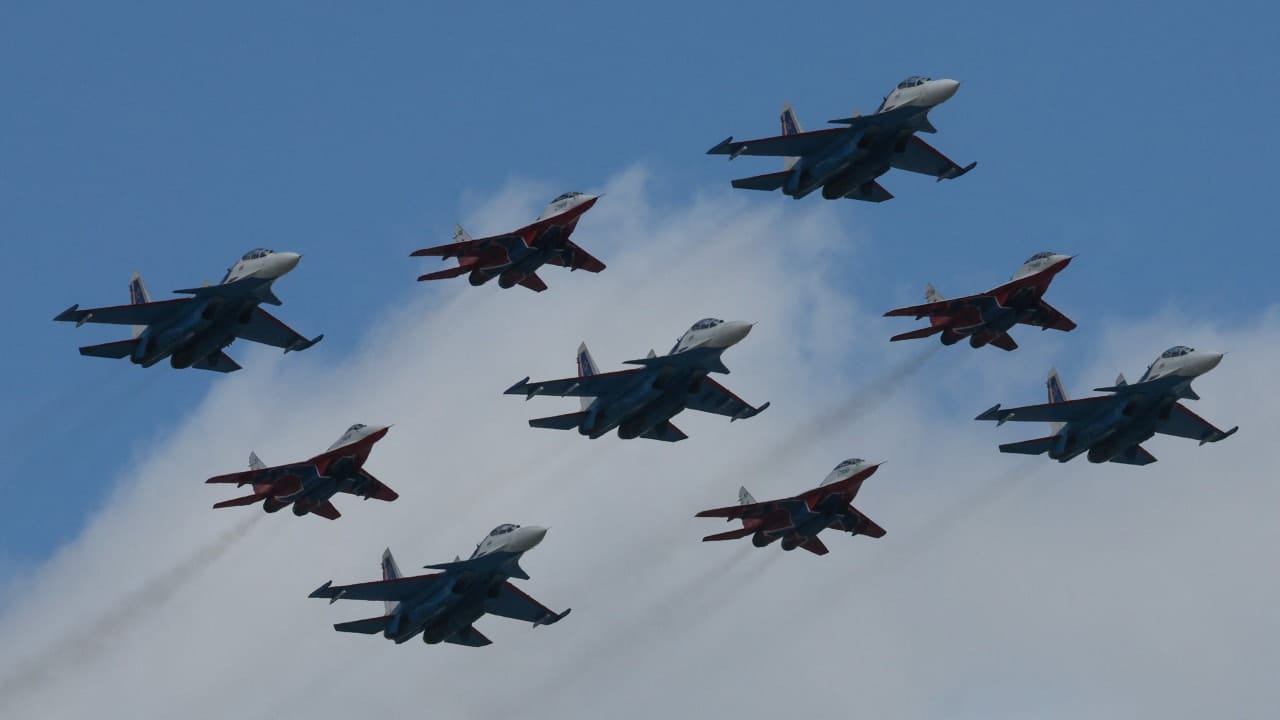
TEHRAN (Realist English). Iran has taken delivery of Russian MiG-29 fighter jets in what officials describe as the first step of a comprehensive effort to modernize the country’s air force. The aircraft, now stationed at Shiraz air base, were confirmed by Abolfazl Zohrevand, a member of the parliament’s national security committee, who called them a “short-term solution” while Iran awaits the arrival of more advanced Sukhoi Su-35 jets.
The announcement, carried by Iran’s Dideban news portal, highlighted a broader military buildup supported by Moscow and Beijing. Zohrevand said Tehran will also receive Russia’s S-400 air defense systems and China’s HQ-9 batteries “in significant numbers.”
“Once these systems are fully in place, our enemies will understand the language of power,” he stated.
The deliveries come after Israeli strikes during Operation Rising Lion destroyed several of Iran’s S-300 batteries along with F-14, F-5 and AH-1 aircraft, underscoring gaps in Tehran’s air defense network. Iran currently relies on a mix of Russian-made S-300 PMU2 systems, indigenous Bavar-373 long-range missiles, and other domestically produced platforms.
While the MiG-29 is not Russia’s most advanced aircraft, it represents a major upgrade for Iran’s fleet, which is still dominated by pre-1979 U.S.-made jets and aging Russian models. Military analysts say the pending delivery of Su-35s could significantly alter the strategic balance with Israel, whose F-35I Adir jets currently ensure air superiority.
Iran has already received Russian Mi-28 attack helicopters and Yak-130 trainer jets, and officials have hinted at future transfers of long-range surveillance radars and electronic warfare systems from China.
For Moscow, the arms deals provide both financial lifelines and geopolitical leverage as Russia faces Western sanctions over Ukraine. For Tehran, they deliver not only hardware but also political backing and potential access to Russian military training and doctrine.
The growing alignment among Russia, Iran, China, and North Korea has been described by Western analysts as an “Axis of Upheaval,” reflecting efforts to challenge U.S. and Western dominance in global security.