TEHRAN (Realist English). Iranian security and judicial authorities say they have dismantled several armed terror cells and arrested dozens of suspects linked to foreign intelligence services, as days of unrest escalated into deadly violence that has killed multiple law enforcement officers.
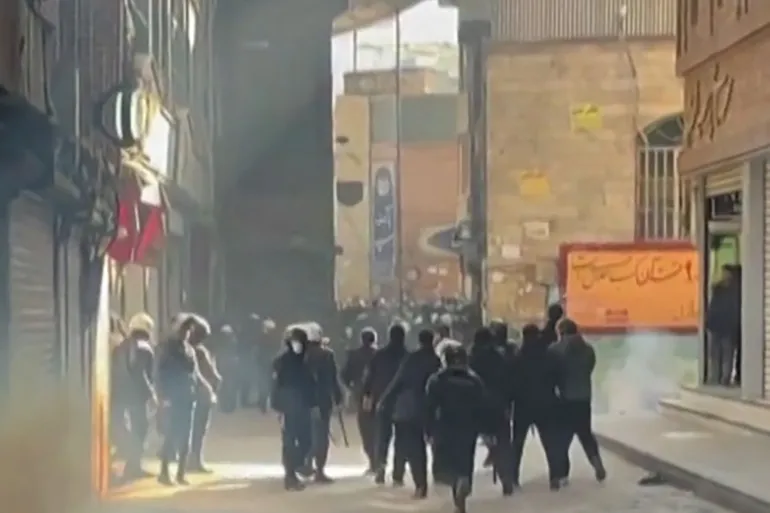
Officials say the protests, initially driven by public anger over rising living costs and currency depreciation, were exploited by organized groups to carry out coordinated attacks on security forces, religious sites and public infrastructure. The judiciary and police now describe the situation not as spontaneous protest, but as a deliberate destabilization campaign involving armed operatives, sabotage and information warfare.
In the western city of Borujerd, public prosecutor Goodarz Amraei said several alleged ringleaders were arrested for orchestrating riots and attacking religious centers and state property. Judicial officials said the suspects were non-residents with prior criminal records who entered the city with the explicit aim of provoking violence. Police later announced the neutralization of a four-member armed cell in the same city, seizing firearms, ammunition and equipment used to manufacture improvised explosive devices. Authorities said the group was preparing a false-flag killing operation intended to blame the state for civilian deaths.
In a separate case, four people were arrested in Qazvin on suspicion of planning attacks on military and government facilities. In Tehran, security officials said they detained an alleged Mossad operative who, according to investigators, coordinated with handlers based in Germany via Instagram and Telegram. Authorities claim the suspect recruited young people for street violence and collected footage of unrest for use by foreign media and propaganda outlets.
Iranian officials also reported arrests linked to what they described as a coordinated digital warfare campaign. In Tehran alone, 40 individuals were detained for using artificial intelligence tools to generate and circulate fabricated images and videos of unrest. Authorities said recycled footage from previous years and AI-generated content was used to create the impression of nationwide chaos. The material was removed following technical investigations and court orders.
At least four police officers were killed in separate incidents on Wednesday and Thursday, according to official statements. In Malard, west of Tehran, officer Shahin Dehghan was fatally stabbed while attempting to restore order during a riot. In the southeastern province of Sistan and Baluchestan, Mahmoud Haghighat was killed when gunmen identified as members of the Jaish al-Adl group opened fire on his vehicle. In the southwestern city of Lordegan, clashes intensified after rioters armed with hunting rifles shot at police, killing two officers and wounding around 30 others. Funeral processions were held on Thursday for Staff Sergeant Hadi Azaraz and Staff Sergeant Moslem Mahdavi-Nasab.
Separately, five people were killed overnight after an attack on a police station in Chenaran, in Khorasan Razavi province. Deputy governor for security Amirollah Shamaghdari said attackers scaled the station’s walls during the assault. He added that in recent days, 23 police officers and one protester were injured across the province, with Mashhad described as the most volatile city. Authorities reported arson attacks on public transport, road blockades and the temporary removal of Iran’s national flag in one public square, which was later raised again with local residents present.
State-linked media have also reported that separatist Kurdish factions based in northern Iraq have shifted from logistical support to direct operations inside Iran, particularly in the western provinces of Ilam and Kermanshah. Iranian officials say investigations are ongoing.
Tehran has accused foreign powers of openly encouraging unrest. Donald Trump has repeatedly voiced support for protesters, warning that Washington could respond militarily if demonstrators are harmed. Former U.S. Secretary of State Mike Pompeo has also issued statements interpreted by Iranian officials as endorsing unrest and separatist activity.
The latest tensions follow earlier U.S.-Israeli military actions against Iran this year, which Iranian authorities describe as acts of state terrorism that caused widespread civilian casualties and targeted military and nuclear infrastructure. Iranian officials argue that the economic hardships fueling public anger are the direct result of long-standing U.S. sanctions, particularly those imposed in 2011–2012 on Iran’s central bank and oil exports.
While acknowledging the legitimacy of peaceful economic grievances, Iranian authorities insist they will draw a firm line between lawful protest and what they call foreign-instigated violence. On Thursday, the Tehran prosecutor warned businesses and individuals against supporting calls for riots, announcing that legal cases had been opened against several brands, shops and social media figures accused of indirectly encouraging disorder.