
Realist: news and analytics

Русский / English / العربية

  • News
  • Russia
  • Caucasus
  • Opinion
  • Interviews
  • Experts
No Result
View All Result
Realist: news and analytics
  • News
  • Russia
  • Caucasus
  • Opinion
  • Interviews
  • Experts
No Result
View All Result
Realist: news and analytics

Japan eyes global defense market as it shifts from pacifism to industrial power

With arms exports still modest, Tokyo moves to expand capacity, deepen alliances, and revive its defense industry.

   
June 17, 2025, 06:03
Security & Defense
Arab and Muslim nations condemn Israeli strikes on Iran, call for de-escalation and nuclear disarmament

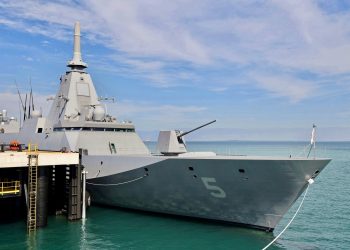
TOKYO (Realist English). In a significant departure from its postwar pacifist stance, Japan is positioning itself as a rising player in the global arms trade, seeking to bolster both national security and industrial competitiveness.

Defense Minister Gen Nakatani confirmed in a recent interview with Nikkei that Tokyo aims to ramp up defense exports — marking a major shift in Japan’s arms policy, which has traditionally focused on supplying the Japan Self-Defense Forces (JSDF).

Prime Minister Shigeru Ishiba has reinforced this pivot by becoming the first sitting premier to attend DSEI Japan, the country’s largest defense industry exhibition, underscoring the government’s growing focus on defense production and exports.

While global arms spending is surging, analysts say Japan’s motivations are rooted more in strategic imperatives than profit. “The primary objective is to deepen interoperability and defense cooperation with allied nations,” said Rintaro Inoue, research associate at Tokyo’s Institute of Geoeconomics (IOG).

Defense exports allow for standardization of military hardware and joint training programs, helping align Japan more closely with partners like the United States and Europe. This rationale was embedded in the 2013 doctrine of “Proactive Contribution to Peace”, introduced by late Prime Minister Shinzo Abe, who also reinterpreted Japan’s constitution to expand the JSDF’s international role.

Rebuilding an atrophied industrial base

According to Inoue, Japan’s domestic defense industry had long been in decline, with over 100 companies exiting the sector in the last two decades. The heavy reliance on U.S. systems — such as F-35 fighter jets and SPY-7 radar — left Japanese suppliers sidelined and unable to scale. Exports, experts say, offer the economies of scale necessary to revive domestic manufacturing.

“Without a reliable, sustained demand base, even essential munitions aren’t profitable to produce,” said Naoko Aoki, political scientist at the RAND Corporation. “Exports allow these firms to justify new investments, expand production capacity, and reduce unit costs.”

Still, Japan remains a marginal player in global arms markets. In 2024, the country’s exports totaled just $21 million in TIV (trend-indicator value) — accounting for only 0.1% of global arms exports, according to the Stockholm International Peace Research Institute (SIPRI). By contrast, South Korea exported $936 million (3.3%), and China $1.13 billion (3.9%).

Investor David Roche, of Quantum Strategy, believes demand will exceed supply globally for the next decade, making defense a critical growth sector. “If Japan continues to rely on the U.S. for its defense, especially under a transactional Trump administration, it will be forced to pay more — or build its own capacity.”

U.S. Defense Secretary Pete Hegseth emphasized this point at the 2025 Shangri-La Dialogue, urging allies to increase defense spending. “If NATO countries are pledging 5% of GDP, key Asian allies must not lag — especially with the threat from North Korea,” he said.

Legal reforms enable exports

Japan’s strict arms export laws — grounded in the 1967 “Three Principles” — were gradually loosened under Abe and further eased by former Prime Minister Fumio Kishida in 2023. The latest rules permit licensed manufacturing and re-export of defense equipment, such as Japan’s Patriot missiles sent to the U.S. to replenish its depleted stockpiles.

Experts say these steps are necessary but not sufficient for Japan to compete with regional players like South Korea. Inoue warns that Japan faces long-term demographic challenges, including an aging workforce and shrinking population, which may hinder industrial revival. “It’s going to be hard to bring back large-scale manufacturing,” he noted.

Aoki agrees, pointing out that while Japan has the technical expertise, export regulations remain restrictive. “In the near term, Japan will likely use defense exports more to support its industrial base and deepen ties with trusted partners than to compete aggressively on the open market,” she said.

As global demand for arms grows and security alliances evolve, Japan’s strategy marks a careful recalibration — balancing domestic revitalization, geopolitical alignment, and the country’s enduring aversion to militarism.


Arms TradeAsiaJapanMost Popular
Previous Post

Trump leaves G7 summit early as Israel–Iran conflict escalates

Next Post

Gold outshines traditional safe havens amid global instability and fiscal uncertainty

Related Posts

Greek National Guard vs Turkish contingent in Cyprus — a comparative analysis
Security & Defense

Greek National Guard vs Turkish contingent in Cyprus — a comparative analysis

1 May, 2026
Greece bolsters defence amid Turkish threats: F-35, Belharra frigates and ‘Achilles’ Shield’ for €25 billion
Security & Defense

Greece bolsters defence amid Turkish threats: F-35, Belharra frigates and ‘Achilles’ Shield’ for €25 billion

30 April, 2026
From the Aegean to Idlib: Turkey prepares for war on multiple fronts
Security & Defense

From the Aegean to Idlib: Turkey prepares for war on multiple fronts

29 April, 2026
NATO selects Swedish-Canadian AWACS aircraft instead of US Boeing
Security & Defense

NATO selects Swedish-Canadian AWACS aircraft instead of US Boeing

28 April, 2026
IDF Chief of Staff criticizes soldiers for looting, desecration of Jesus statue and breach of regulations
Security & Defense

IDF Chief of Staff criticizes soldiers for looting, desecration of Jesus statue and breach of regulations

28 April, 2026
Australia and Japan sign contract for 11 Mogami-class frigates to save the Royal Navy
Security & Defense

Australia and Japan sign contract for 11 Mogami-class frigates to save the Royal Navy

27 April, 2026
Most Popular
Most Popular
Azerbaijan provided its territory for strikes on Iran: source

Azerbaijan provided its territory for strikes on Iran: source

26 April, 2026

MOSCOW (Realist English). Iranian sources claim that Azerbaijan has provided its territory for strikes against the Islamic Republic, and this information...

155 billionaires vs. 150 million people: Zyuganov on the social catastrophe in Russia

155 billionaires vs. 150 million people: Zyuganov on the social catastrophe in Russia

25 April, 2026

MOSCOW (Realist English). Chairman of the Central Committee of the Communist Party of the Russian Federation Gennady Zyuganov presented the pre-election program "Victory...

‘Behind dry laws are living people and destinies’: Lawyer Narek Petrosyan on replacing justice with convenience

‘Behind dry laws are living people and destinies’: Lawyer Narek Petrosyan on replacing justice with convenience

25 April, 2026

MOSCOW (Realist English). Narek Petrosyan is a criminal defense lawyer who made himself. He overcame many obstacles on his path to the...

«The Kurdish card is a weapon of major powers»: Yaşar Yakış on why Turkey missed its chance to solve the Kurdish issue

«The Kurdish card is a weapon of major powers»: Yaşar Yakış on why Turkey missed its chance to solve the Kurdish issue

18 April, 2026

ANKARA (Realist English). Yaşar Yakış — a Turkish diplomat and statesman who served as Turkey's Minister of Foreign Affairs, ambassador to Saudi...

Opinion

War in Iran crushes luxury market: LVMH and Kering lose €100 billion

War in Iran crushes luxury market: LVMH and Kering lose €100 billion

1 May, 2026

DUBAI (Realist English). The 70-day war of the United States and Israel against Iran (since 28 February) has delivered a devastating...

Merz vs Macron: how German military spending is splitting the EU

Merz vs Macron: how German military spending is splitting the EU

30 April, 2026

BERLIN (Realist English). Less than a month after historian Liana Fix published an essay on the "perils of German power", she received an...

The Great Divide: Capitalism and Socialism in the Battle for Humanity’s Future

The Great Divide: Capitalism and Socialism in the Battle for Humanity’s Future

29 April, 2026

MOSCOW (Realist English). The world economic system has reached a point of no return. The conflict between the classic market model...

A century of violence from the Jeddah massacre to the killings in Kobani: how Turkey exterminated Arabs

A century of violence from the Jeddah massacre to the killings in Kobani: how Turkey exterminated Arabs

27 April, 2026

ISTANBUL (Realist English). The long and bloody history of the Turkish state's relations with the Arab population — both Muslim and...

All rights reserved.

© 2017-2026

  • About Us
  • Mission and Values
  • Contact Us
  • Privacy Policy

Follow Realist English

No Result
View All Result
  • News
  • Russia
  • Caucasus
  • Opinion
  • Interviews
  • Experts

Русский / English / العربية