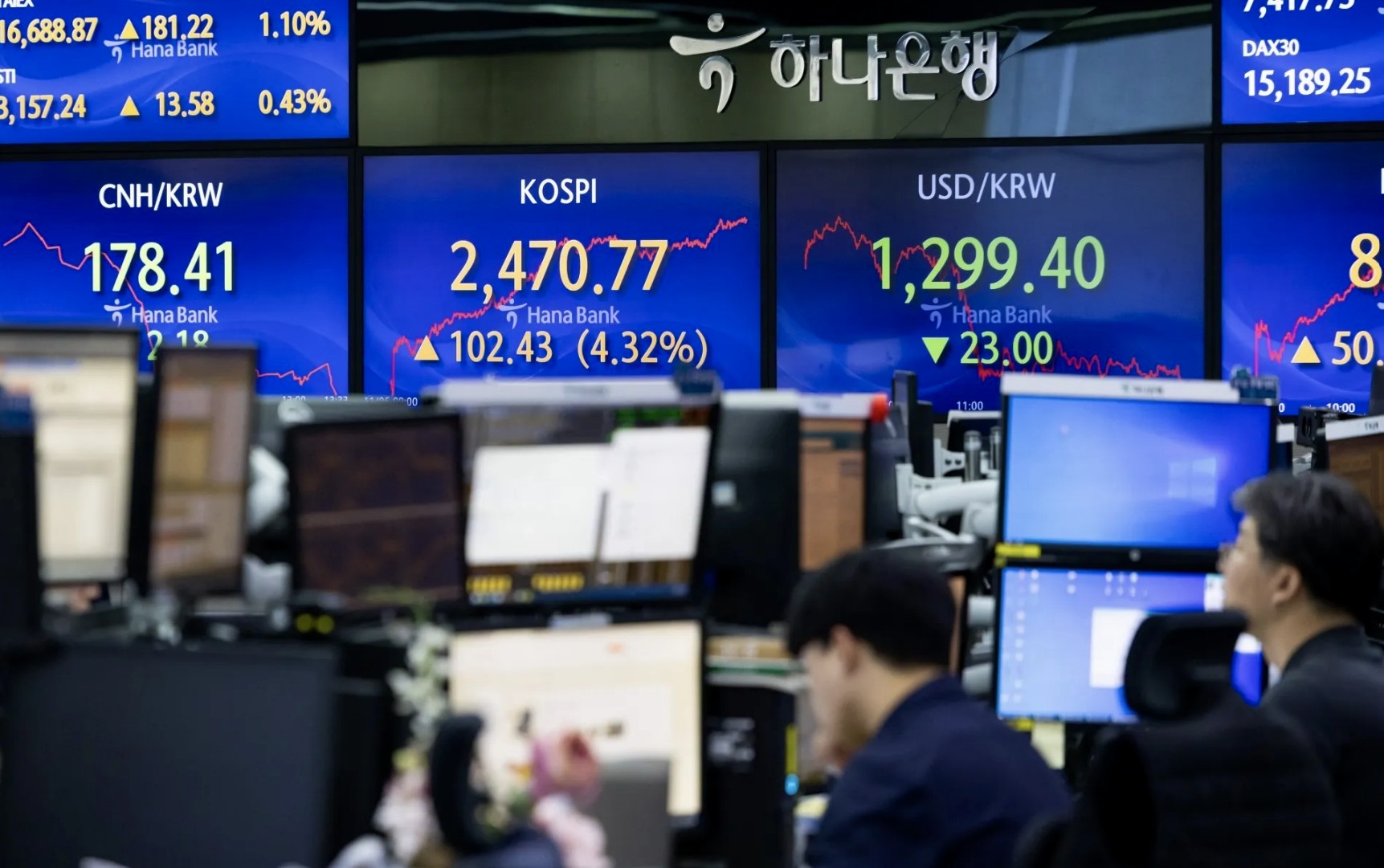
FRANKFURT (Realist English). The world’s leading central banks are widely expected to refrain from raising interest rates this week, as US President Donald Trump’s posts on Truth Social cause convulsions in energy markets, making inflation forecasting increasingly difficult.
The Federal Reserve, European Central Bank, Bank of England, Bank of Canada and Bank of Japan are setting rates against the backdrop of the second major energy shock in five years.
‘The right approach is to wait and see’
According to Tomasz Wieladek, chief European macro strategist at T Rowe Price, “the right approach for these central banks is to wait and see right now, given the uncertainties surrounding the situation in the Gulf, as well as the lack of clarity on how the energy shock will transmit into growth and inflation.” The war in the region is forcing policymakers to assess geopolitical risks and the unpredictable dynamics of commodity markets.
Sebastian Barrack, head of commodities at hedge fund Citadel, told an FT conference that Trump’s social media posts during the Iran war have completely transformed oil market behaviour. Traders are struggling to adjust to the volatility sparked by the president’s frequent messages and responses from the Iranian regime. Instead of focusing on a single central forecast, rate-setters are putting greater emphasis on scenarios that take into account a range of possible outcomes in the Middle East conflict.
Most experts (Rabobank, Commerzbank) forecast two rate cuts (25 basis points each) in the second half of 2026 – in September and December. However, they warn that due to the war, these forecasts may be revised towards even longer maintenance of high rates or even further hikes. Commerzbank experts also anticipate a gradual weakening of the dollar due to expected excessive policy easing in the US.
Trauma of 2021–2022 weighs on decisions
The memory of the inflationary surge of 2021–2022, when central banks were accused of reacting too slowly, hangs over this week’s meetings. Jens Larsen, a former BoE official now at Eurasia Group, noted: “It is challenging for a central banker who is accustomed to thinking about marginal pricing and the evolution of the labour market.”
Financial markets are pricing in two rate increases by the ECB this year from the current level of 2%, but ECB chief economist Philip Lane made it clear that the institution is wary of rushing to judgment. “Until we know more about how long this war is going to last, it’s really hard to know whether this is going to prove to be a temporary phase or a much bigger shock to the European economy,” he said in Frankfurt.
Morgan Stanley economist Jens Eisenschmidt argues that the moment when the ECB can “first properly assess whether it needs to act will come no earlier than June, possibly even later.” Katharine Neiss, chief European economist for PGIM Fixed Income, noted that compared with the Fed and the BoE, the ECB is in “a better position — it’s actually the only central bank that got inflation back down to two per cent.”
Fed freezes rate cut prospects
US rate-setters will vote on Wednesday 29 April, with a hold within the 3.5–3.75% benchmark range seen as a near certainty. The Fed has parked any prospect of interest rate cuts until officials have a clearer sense of whether the Iran war will impede their ability to hit their two per cent inflation goal, or damage a US jobs market that was already weakening. Annual US personal consumption expenditure (PCE) inflation stood at 2.8% in February.
However, some leading officials are sounding the alarm. Fed governor Chris Waller warned that a series of price shocks — not only from the war, but from Trump’s trade policies — threatens to erode the American public’s trust in the Fed to control US price pressures. The longer energy prices remain high, the greater the chances of higher inflation becoming “embedded” across the US economy — and that households and businesses would begin to price in permanently stronger price pressures.
Joe Lavorgna, chief economist for the Americas at Sumitomo Mitsui Banking Corporation and former economic counsellor to the US Treasury secretary, said: “We’re entering another supply shock of indeterminate length, and inflation in the US is still well above target.” The Fed is under significant political pressure but shows determination to keep inflation expectations under control, refusing immediate rate cuts.
Bank of Japan not expected to hike
Until recently, investors expected the Bank of Japan to raise its key rate from 0.75% this week, but the market now attaches a very low probability to that. Uncertainties created by the conflict in Iran are compounded by Japan’s vulnerability as a heavy importer of energy and raw materials.
Recent speeches by BoJ Governor Kazuo Ueda contained no hints of an April rate increase, and officials have let it be known that the central bank is no longer in the business of trying to catch the market off guard. UBS economist Go Kurihara expects the BoJ’s decision on Tuesday 28 April to be accompanied by a sharp increase in inflation forecasts and a downward revision in the economic outlook.
ECB holds rates steady
At its meeting on Thursday 23 April, the ECB, fully in line with market expectations, kept all three key rates unchanged for the fourth consecutive time. The deposit rate remained at 2% (main refinancing rate at 2.15%, marginal lending rate at 2.4%).
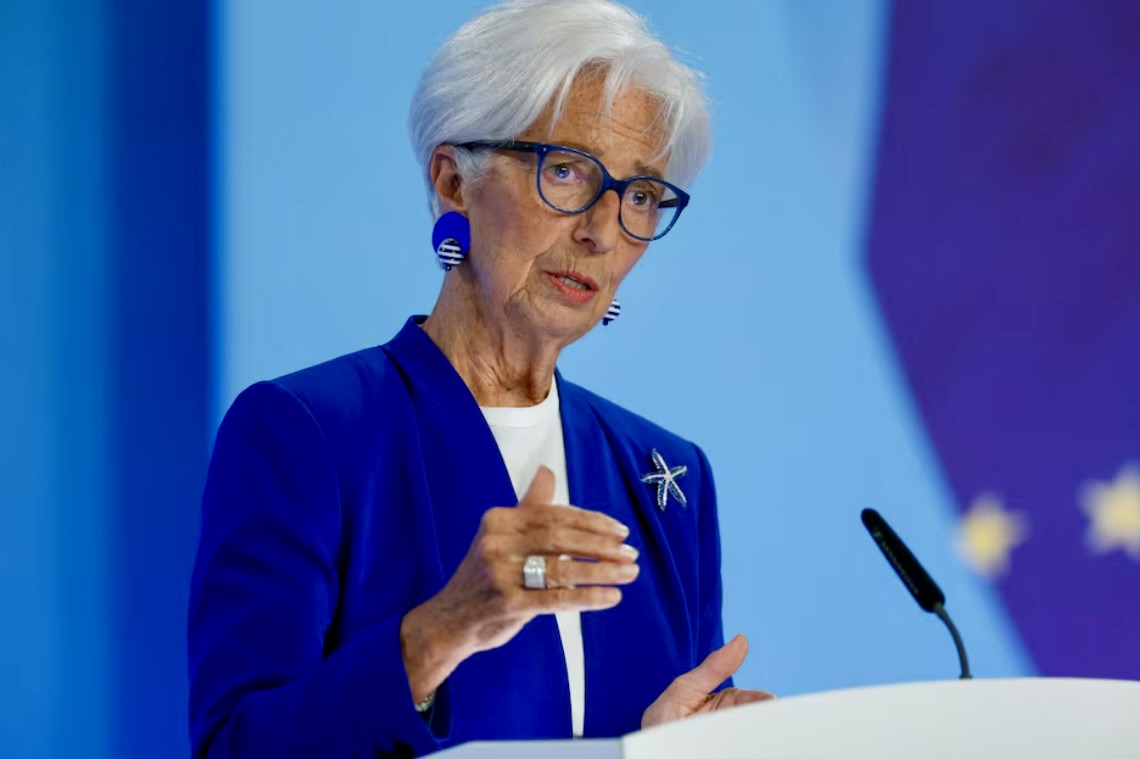
Economic context (stagflation): The ECB faces a severe dilemma. On the one hand, the eurozone economy is slowing, with Germany and Italy revising growth forecasts downward. On the other hand, the war in Iran and rising energy prices are driving inflation. ECB President Christine Lagarde described the situation as extremely difficult to assess due to the “fragmented nature of the conflict” (truces, talks, their breakdown, blockade).
Forecasts and risks: Most economists (80%) believe rates will stay at current levels at least until mid‑2026, and 75% until the end of the year. ECB Governing Council member Martins Kazaks said there is no urgent need to raise the rate above 2%. Unlike the Fed, markets are pricing in two ECB rate hikes this year, which experts attribute to the ECB’s “more proactive approach” to inflation.
Inflation and GDP forecasts: According to the ECB’s June forecast, inflation in 2025 was expected at 2%, and in 2026 at 1.5%. Subsequent updates raised the 2026 forecast to 1.9%. Growth for 2026 was upgraded to 1.2% (from 1%).
Bank of England: rates on hold
In March, the Bank of England appeared to raise the prospect of a near‑term rate increase from 3.75%, but following signals from Governor Andrew Bailey that investors were getting ahead of themselves, traders now put extremely low odds on such a move. Tomasz Wieladek sums up: “They [rate‑setters] want to know if we are heading into a situation like 2022, when inflation rose a lot more than expected, and they simply can’t assess this on the basis of a single month’s data.”
The BoE faces a similar situation to other central banks. On one hand, UBS economists note that rising energy prices could add about 1.2 percentage points to this year’s inflation forecast, raising it to 3.6%. On the other hand, Governor Andrew Bailey has cautioned against markets “getting ahead of themselves.”
The central bank will likely shift to scenario analysis, as the ECB has, adjusting its forecasts upward for inflation and downward for GDP growth.
Expert opinions diverge. UBS expects the rate to remain at 3.75% in the coming months, followed by two cuts — in November 2026 and February 2027. Meanwhile, Rabobank economists still pencil in one additional rate hike (to 4.0%) in their baseline scenario.