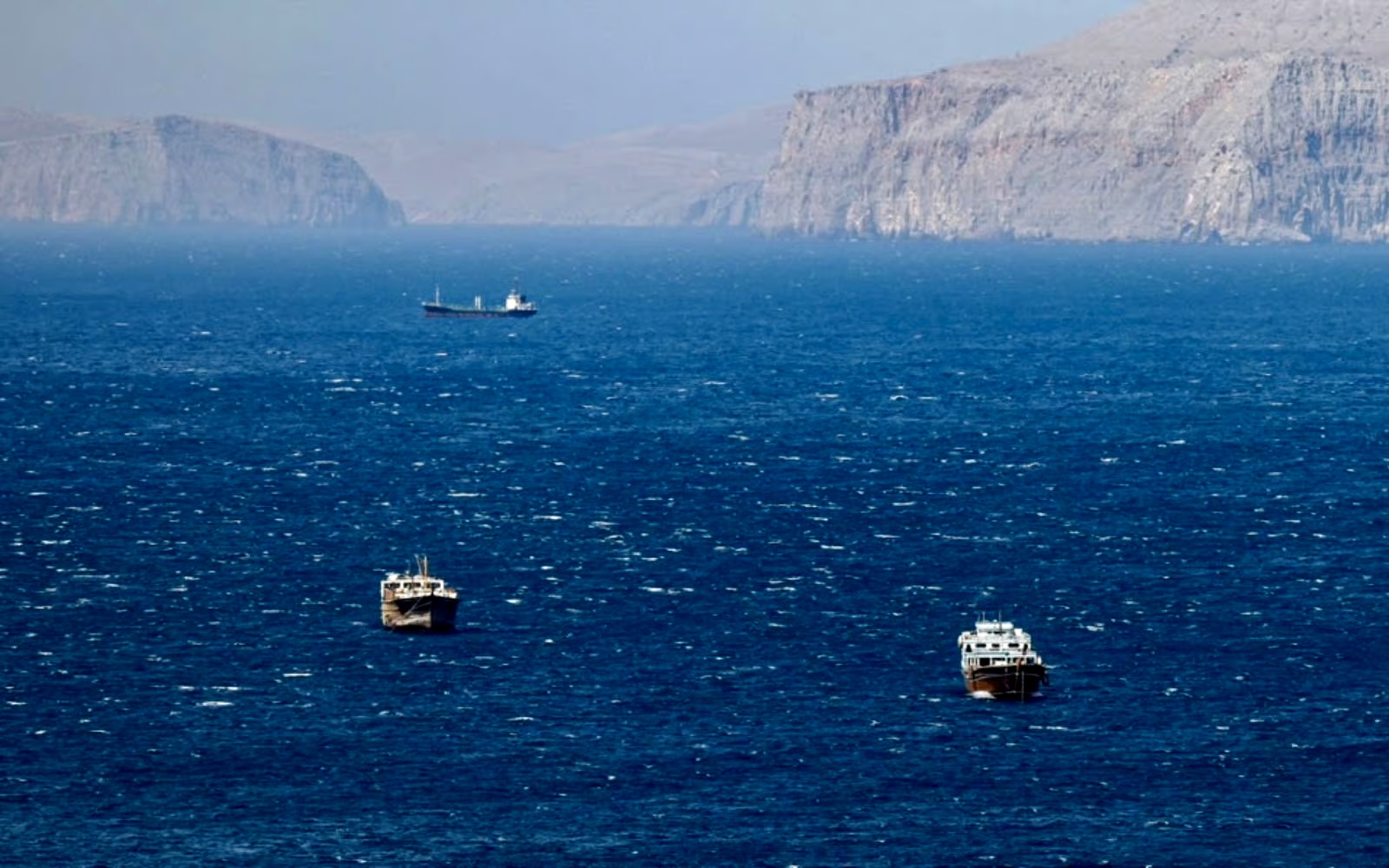
LONDON (Realist English). The small tanker Akti A, carrying 300,000 barrels of diesel fuel, made a risky transit through the Strait of Hormuz in the early hours of April 18 – immediately after Iran briefly declared the waterway “completely open.” The vessel, operated by Danish shipping line Maersk but chartered by commodity trader Vitol, had been sitting fully loaded off the coast of Bahrain for weeks, while Iranian drones and missiles struck other ships around it.
Luck was with the Akti A. Shortly after the tanker passed through the strait’s bottleneck, Islamic Revolutionary Guard Corps (IRGC) gunboats re‑entered the waters. The vessel is now heading around the Cape of Good Hope. But not everyone has been so fortunate.
The cost of evacuation: millions and human lives
For the world’s largest energy traders, evacuating their tankers stuck in the Persian Gulf since the war began on February 28 has become one of the most difficult tasks. It costs millions of dollars in insurance, maintenance and additional port charges. For some, the price has been even higher: on March 12, an Iranian attack on two naphtha‑carrying vessels transporting cargo for Vitol killed one crew member, and the tankers themselves were engulfed in flames.
Over the eight weeks of conflict, certain escape routes have opened and quickly closed again. Transiting the strait can take up to eight hours, meaning diplomatic conditions can change before vessels complete their exit.
On April 22, the IRGC attacked three container ships, later claiming that two of them had been seized and towed into Iranian territorial waters. If confirmed, this would be Iran’s first seizure of ships since the start of the war.
A window of opportunity that slammed shut
The clearest chance for ships to get out came on April 17, when Iran declared the strait “completely open” in response to the announcement of a ceasefire between Israel and Lebanon. Shipowners rapidly began moving their vessels toward the strait, hoping for a quick exit despite the risk of mines.
But the fragile opportunity did not last long. By the morning of April 18, Iran’s military said the strait would remain under its control, and safe passage would only be guaranteed for vessels approved by the IRGC.
Peter Weernink, CEO of Swiss Marine, a shipping company, said he instructed one of his ships to transit on April 17. But by the time the Chinese owner of the vessel had checked with the Chinese government, it was the morning of April 18 – and everything had changed. The ship did not make the transit.
“They will only go through when there’s no risk,” Weernink explained at the FT Commodities Summit on April 22. “You really need clarity that there won’t be attacks, and it needs to be confirmed by both sides that the ship will go through.”
The Omani channel and Trafigura’s success
Some strategies have relied on partnerships with countries that have close ties to Iran. Iran has shown a more lenient attitude toward vessels flying the flags of Pakistan and China, and has suggested that passage could be paid for in cryptocurrency. Oman, which has good relations with Tehran, has moved its own ships close to its coastline.
When the war broke out, trading house Trafigura, which controls a global fleet of more than 375 tankers, had 10 vessels stuck inside the Persian Gulf. Trafigura CEO Richard Holtum said that even today nine vessels remain trapped – these are chartered vessels that have been sub‑chartered to other companies and are not carrying Trafigura cargoes.
The only tanker that Trafigura managed to get out was the Omani‑owned vessel Dhalkut. It exited on April 2 as part of a three‑ship convoy, all linked to Oman, hugging the Omani coast.
Trading house Mercuria had three ships in the Gulf when the war began – and all of them have now exited, according to sources close to the company. However, Mercuria CEO Marco Dunand refused to disclose how it was done, citing the sensitivity of the information. “There are various ways to do it,” he said at the FT conference on April 21. “But I’m not going to tell you.” He added that “more ships are going through Hormuz than people think.”
Cruise ships and MSC: risks without GPS
Tankers are not the only vessels making the transit. On April 18, a small flotilla of cruise ships – one from MSC Cruises and two from Tui – also passed through the strait. Tui said that “no funds were paid to Iran for safe passage” and that the transit, which went via the Omani coast, “took place based on the relevant co‑ordination and approvals from the authorities.”
Those vessels that are more likely to be targeted – for example, MSC Group, which has business partnerships with Israel – have tried to slip through without their GPS transponders on. According to ship tracking data, six MSC ships left the strait over the weekend with their transponders off. However, the two vessels that the IRGC claimed to have seized on April 22 – the Francesca and Epaminondas – were either chartered or owned by MSC. MSC declined to comment on the transits or attacks.
To pay or not to pay?
All three major traders – Trafigura, Mercuria and Vitol – have stated that they did not pay for passage, which would risk breaching US sanctions on Iran. But Mercuria’s global head of freight, Larry Johnson, expressed frustration at governments’ inaction, saying politicians were “burying their heads in the sand.”
“There’s no concerted effort to formalise a way to put a ship through Hormuz,” Johnson said. “The ships that we have seen transit through Hormuz tend to be government‑owned vessels that have access, perhaps, to naval or military forces, or at least government‑to‑government channels of communication, perhaps with the Iranian regime. Pure merchant traders have no real mechanism to navigate that.”
Blockade and ship movements
The blockade announced by Washington on April 13 was initially limited to Iranian ports, formally not closing transit through the strait to non‑Iranian ports. However, after a short and chaotic window of “opening” on April 20, movement has effectively ceased again. As of the morning of April 23, only one or two vessels were passing through the strait, and another vessel (the MSC Francesca) was again detained by Iranian forces at the entrance to the corridor.
The vast majority of tankers and container ships that attempt to pass are turning back, waiting in the Persian Gulf, or risking the long route around Africa via the Cape of Good Hope, which adds 10–15 days to the journey and sharply increases costs.
After the US blockade was imposed, the IRGC sharply increased its military presence. Satellite images show swarms of more than 30 Iranian gunboats off the coast of the strait, posing an unprecedented threat to any commercial vessel. Clashes occur almost daily:
- April 17–18 (first wave of attacks): The IRGC shelled several vessels, including an Indian‑flagged tanker carrying crude oil.
- April 22 (peak escalation): Iranian forces seized two container ships – the MSC Francesca and MSC Epaminondas. The vessels were towed into Iranian territorial waters on the pretext of “rule violations” and the illegal disabling of GPS navigation.
This has forced most major trading houses to hastily evacuate their assets.
The insurance premium for a ship to transit the strait has jumped 12‑fold – from 0.25% to 3% of the vessel’s value. The beneficiaries of the crisis have been traders who made money on the difference between spot oil prices and on the shortage of tonnage by declaring force majeure on previously concluded contracts.
The blockade has triggered a global logistics collapse. Due to the need to go around Africa, the idling of commercial vessels in the conflict zone, and massive delays, freight rates have risen, automatically increasing the cost of imported goods worldwide. Turkey has urgently developed five alternative routes (including land corridors through Iraq and Syria, and combinations of sea‑to‑land reloading), but they cannot yet compensate for the closure of the water artery.