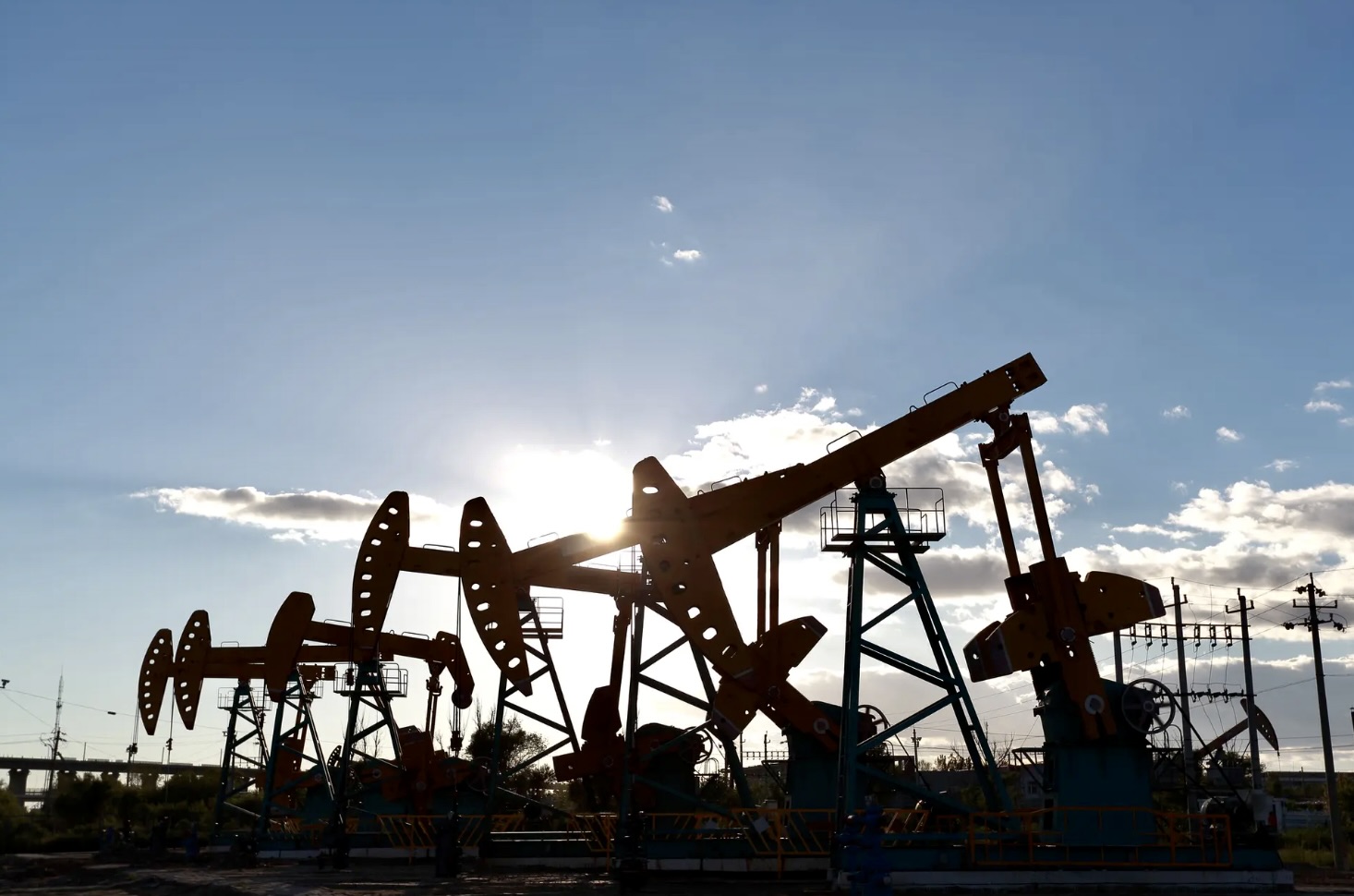
LONDON (Realist English). Global energy prices continue to decline amid the implementation of the peace agreement between the United States and Iran. Oil futures are heading for their third consecutive weekly loss, while European gas is rapidly shedding the geopolitical premium priced in during the conflict.
However, analysts warn that the restoration of supplies through the Strait of Hormuz will take months, not days, and the fragility of the agreement itself leaves the market in a state of uncertainty.
Oil continues to decline
On June 19, oil futures continued their fall amid the resumption of tanker traffic through the Strait of Hormuz.
By 03:28 GMT, Brent futures for August delivery were down 43 cents, or 0.54%, at $79.42 a barrel. US WTI for July delivery fell 17 cents, or 0.22%, to $76.43 a barrel. The more actively traded August WTI contract dropped 30 cents to $75.55 a barrel.
The day before, on June 18, both benchmark grades hit their lowest levels since early March after several tankers, including three Saudi-flagged vessels carrying 6 million barrels of oil, passed through the strait just hours after the signing of the interim agreement between the US and Iranian presidents.
Analysts expect the deal to release more than 85 million barrels of oil stuck in Gulf states onto world markets. The lifting of sanctions on Iranian oil, also provided for in the agreement, could further increase supply.
European gas plunges more than 18%
The European gas market reacted even more sharply to the geopolitical breakthrough than oil. A massive sell‑off of the geopolitical premium began on the Dutch TTF virtual hub.
Over several trading sessions, the front‑month futures crashed by more than 18% — from a peak of €51 to €38.74 per MWh. By the close of trading on June 18, TTF had stabilised just above €40 per MWh. On Friday morning, prices corrected to €41.75 per MWh (+3%).
The reason for the sharp drop was the framework agreement between the US and Iran, which includes the lifting of the naval blockade and the reopening of the Strait of Hormuz — for at least 60 days. About 20% of global LNG trade passed through the strait.
Additional pressure on prices came from QatarEnergy’s statement that it intends to quickly ramp up production at the Ras Laffan complex: a 50% recovery of export capacity is expected within a month and about 80% within two months.
Traders await proof
Despite positive signals, market participants remain cautious. “Traders are still waiting for real evidence that tanker traffic through the Strait of Hormuz is actually normalising before pricing in further price declines,” said Tim Waterer, chief market analyst at KCM.
Vandana Hari, founder of Vanda Insights, warned: “This is not the geopolitical environment that would give the market confidence in the resumption of transit through Hormuz.”
In her view, Israeli strikes on Hezbollah in Lebanon and the cancellation of US Vice President JD Vance’s visit to Switzerland for talks with Iranian negotiators undermine confidence in the durability of the agreement.
Dennis Kissler, head of energy trading at BOK Financial Securities, noted that the market may have “overestimated the scale of the sell‑off” and that futures are in oversold territory. “While the strait may start to open, global stocks remain tight,” he added.
Banks cut forecasts
Major investment banks have already revised their forecasts downward. Goldman Sachs cut its Brent forecast for the fourth quarter of 2026 to $80 a barrel from $90, and its average forecast for 2027 to $75 from $80.
Morgan Stanley now expects Brent at $90 a barrel in the third quarter (down from $100) and $80 in the fourth quarter. The bank’s analysts noted that “much still needs to be agreed, and key risks remain, but this is now an important step towards de‑escalation of the conflict and increased oil exports through the Strait of Hormuz.”
Citi is the most bearish, cutting its third‑quarter forecast to $75 a barrel and its fourth‑quarter forecast to $70. For 2027, Citi expects Brent to average $65 a barrel.
Goldman Sachs forecasts that flows through the Strait of Hormuz will recover to only 70% of pre‑war levels, as producers will seek alternative routes.
Stocks at critical minimum
Despite falling prices, the physical market remains tight. Inventories at the largest US storage hub in Cushing, Oklahoma, have fallen to 20 million barrels — a level traders consider operational minimum. According to the American Petroleum Institute (API), US crude inventories for the week ending June 12 fell by 8.3 million barrels, significantly exceeding forecasts of 4.6 million.
Experts on long‑term risks for Europe
International Energy Agency (IEA) head Fatih Birol warned that the world energy map will be redrawn in the coming years regardless of the outcome of the current agreement. “Partnerships will be redefined, new partnerships will be created,” he said.
Analysts at Chatham House note that even if a solid agreement is reached, it will take months to fully restore shipping.
Moreover, the war has reconfigured the global LNG market to Europe’s disadvantage: Iranian missile strikes knocked out about one‑sixth of Qatar’s export capacity, and recovery could take several years.
Europe’s dependence on US LNG continues to grow: in the first quarter of 2026, 63% of European LNG imports came from the United States.