WASHINGTON (Realist English). Nearly four months of war, tens of billions of dollars in military spending, and more than a thousand US troops involved in the conflict with Iran — all of this has led to a memorandum of understanding that critics have already called a “diplomatic catastrophe” and a “huge foreign policy miscalculation.” Nevertheless, President Donald Trump insists he got exactly what he wanted.
Republican revolt: ‘dud’ instead of victory
For the first time in a long while, an open rebellion has erupted within the Republican Party against Trump’s foreign policy course. Senator Bill Cassidy (Louisiana) said the deal would make Ronald Reagan “turn over in his grave.” “This will be recorded in history as a huge foreign policy miscalculation,” he warned.
The main grievances of the “hawks”:
Iran gets too much: The deal provides for the lifting of sanctions, access to oil markets, and the creation of an Iranian reconstruction fund of no less than $300 billion. Trump insists the US will not put a cent into this fund, but critics say the wording of the agreement “leaves the door open” for future payments. Senator Ted Cruz warned: “I don’t want theocratic Islamists who want to kill us to become stronger.” Former US Ambassador to the UN Nikki Haley said that “Iran is winning” under this arrangement, and that lifting sanctions is a “huge mistake.”
Nuclear programme not stopped: By starting the war, Trump promised to achieve Iran’s “complete capitulation” and the dismantlement of its nuclear programme. However, the memorandum merely extends the ceasefire for 60 days, during which the sides are to hold negotiations on the nuclear programme. Iran has only committed to “downblending” its stockpiles of highly enriched uranium under IAEA supervision, not to ending enrichment. Senator Lindsey Graham warned that the deal could prove “nothing more than an intermission,” allowing Iran to rebuild its arsenal.
Missile programme and proxy forces ignored: The agreement text makes virtually no mention of Iran’s ballistic missiles or its support for proxy groups such as Hezbollah. Republicans believe these concessions were key objectives of the war.
Status quo worse than before the war: Senator Cassidy pointed out that before the war, the Strait of Hormuz was open, Iran was “crushed by sanctions,” and US troops were not dying. Now, 13 US service members have died, sanctions will be lifted, and Iran gains powerful leverage.
Trump: ‘If I don’t like it, we’ll go back to bombing’
Amid the barrage of criticism, Trump took an unprecedented step for a US leader — he publicly admitted that the war had become too costly.
“I didn’t want to see an economic catastrophe. If we had continued this, it could have happened,” Trump said. He confessed that he had been closely watching the stock market’s reaction: shares “went up like a rocket” on news of peace and fell on reports of continued fighting.
“The only president I didn’t want to be was the late great Herbert Hoover,” he said, hinting at the president under whom the Great Depression began.
At the same time, Trump left himself room to manoeuvre, calling the agreement a “memorandum of understanding”: “If I don’t like it, we’ll go back to bombing.”
Israel: ‘will not allow Iran to get nuclear weapons with or without an agreement’
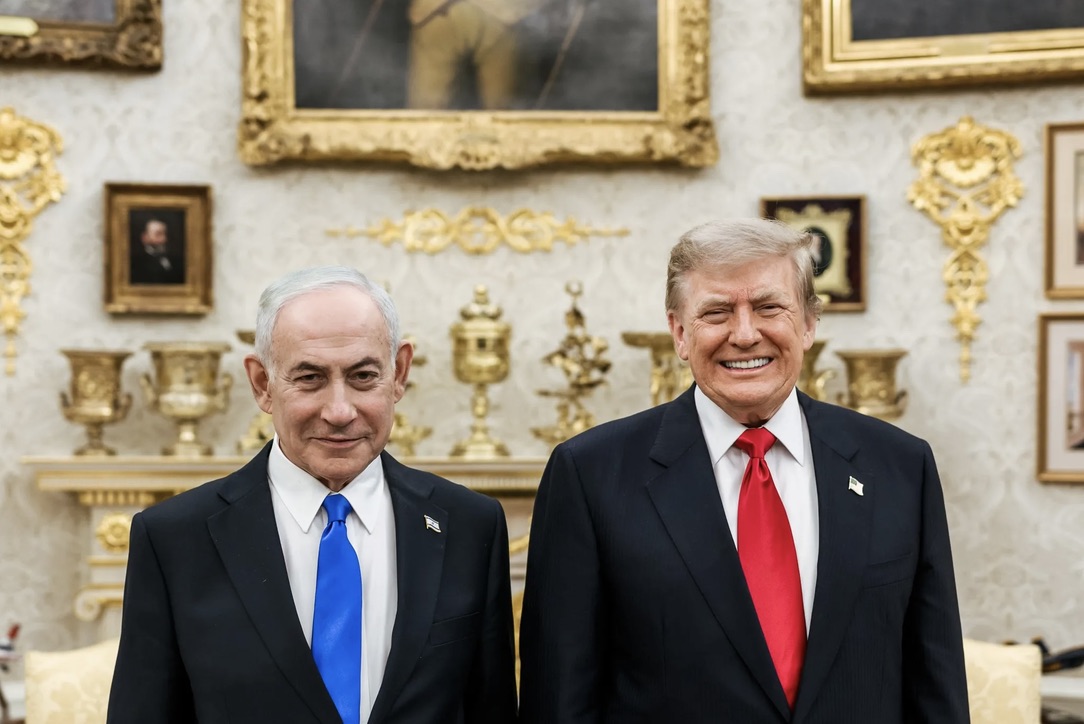
Israeli Prime Minister Benjamin Netanyahu said Israel would not allow Iran to obtain nuclear weapons “with or without an agreement.” The Israeli side, which fought shoulder‑to‑shoulder with the US and waged a separate conflict with Hezbollah in Lebanon, had difficulty gaining access to the text of the agreement.
Trump, for his part, publicly criticised Israel over its campaign in Lebanon and made statements that, according to observers, mark a break with decades of US policy.
Political circus instead of strategic success
The Iran deal is less a diplomatic breakthrough than a political compromise dictated by domestic economic and electoral considerations. Trump, realising that the war was threatening his approval ratings (which had fallen to the 30‑percent range) and his election prospects, decided to exit the conflict at any cost.
However, he paid for this with a split in his own party and the surrender of key strategic positions, leaving the resolution of the main issues to a 60‑day period during which — as was already the case with the 2015 nuclear deal — it may be too late to regain lost leverage.