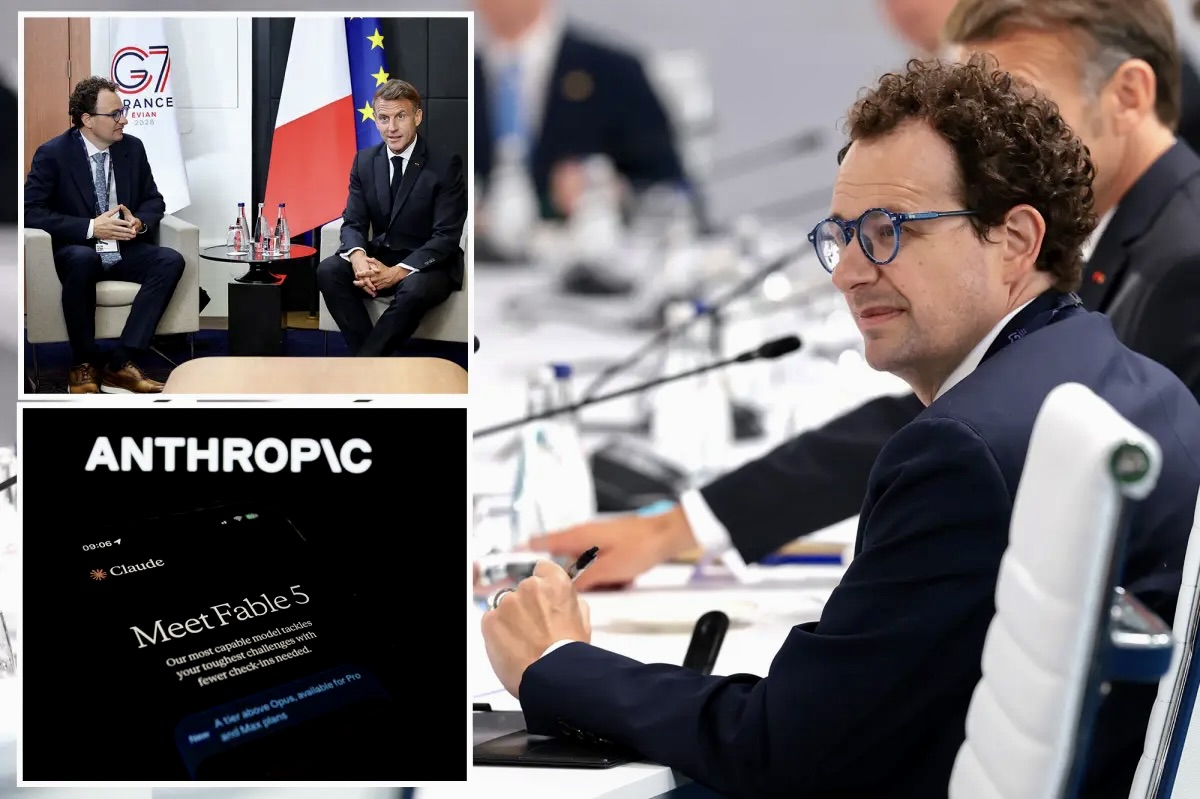
PARIS (Realist English). The G7 summit in the French resort town of Evian-les-Bains became a platform for heated debate over artificial intelligence regulation.
Anthropic CEO Dario Amodei called on leaders to “resist the temptation to splinter” over access to advanced AI models. At the same time, JPMorgan Chase restricted access for its Hong Kong staff to the same technologies, effectively treating them as a risky tool outside the United States.
Amodei’s address to G7: unity against fragmentation
Speaking before US President Donald Trump and other G7 leaders, Anthropic CEO Dario Amodei urged allied countries to “resist the temptation to splinter” in their approaches to AI regulation. He stressed the need to “establish more consistent cooperation mechanisms” while preventing advanced models from falling into the hands of malicious actors.
According to the Financial Times, Amodei and Google DeepMind head Demis Hassabis also proposed creating a US-led coalition to develop common AI rules and standards. In particular, they suggested coordinating chip exports to China and establishing a shared access control system for the most powerful frontier models.
Amodei stressed that AI-based cybersecurity tools should be available to all G7 countries.
OpenAI CEO Sam Altman supported this position, saying that countries of the “free world” should set the rules themselves, rather than delegating that responsibility to AI labs.
US export restrictions and the ‘trusted partners’ plan
Behind the scenes at the summit, the key topic was US policy, which last week imposed export restrictions on Anthropic’s Fable 5 and Mythos 5 models over concerns that they could be used by adversaries for cyberattacks. The decision alarmed European allies, who fear that the US could at any moment “turn off the tap” on access to critical technologies.
French President Emmanuel Macron called Washington’s actions “extremely nationalistic,” but expressed hope that a compromise would be reached in the coming weeks to expand access to advanced US AI models.
In response, G7 leaders are discussing the creation of a “trusted partners” mechanism — selected countries and companies that would gain access to cutting-edge US AI models to strengthen cyber defence.
JPMorgan restricts staff access in Hong Kong
While politicians argued over future regulation, the largest US bank, JPMorgan Chase, took a practical step: it blocked access for its Hong Kong staff to Anthropic’s models, including the Claude AI assistant.
According to the Financial Times, the bank removed Claude from its internal list of approved large language models for Hong Kong employees due to wording in Anthropic’s licensing agreement. The decision followed a similar move by Goldman Sachs, which restricted access to Claude for its Hong Kong bankers in April.
The Next Web notes that JPMorgan’s decision was made “quietly, but with loud consequences.” It signals Wall Street’s growing caution about using AI in sensitive markets, especially amid rising US-China tensions over technology, data security, and access to advanced computing tools.
Fragmentation of the global AI market
These two events — the call for unity at the G7 and JPMorgan’s decision — reflect a growing divide. On one hand, AI industry leaders and governments are trying to develop common rules.
On the other, businesses and regulators are already operating in a fragmented environment, restricting access to technologies along geographic lines.
As an Atlantic Council analyst noted, the US has now “shown a willingness to cut even G7 allies off from certain AI capabilities.” While politicians negotiate “trusted partners,” banks are already cutting off access for their Hong Kong staff.