ISLAMABAD (Realist English). Regional powers have launched a coordinated diplomatic effort to push the United States and Iran toward direct negotiations, even as fighting continues in the fourth week of the conflict.
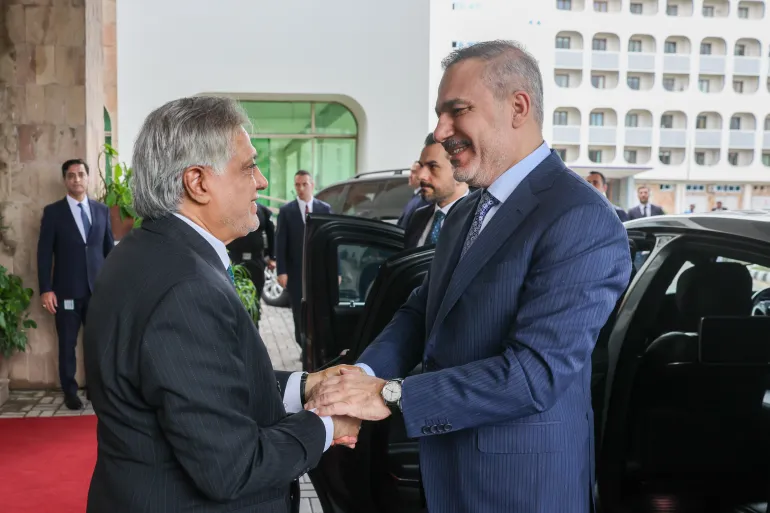
Foreign ministers from Turkey, Saudi Arabia, Egypt and Pakistan began two days of consultations in Islamabad on Sunday, marking what officials describe as the most structured regional initiative so far aimed at de-escalation.
Ahead of the meeting, Pakistani Prime Minister Shehbaz Sharif held a 90-minute call with Iranian President Masoud Pezeshkian, focusing on reducing tensions and addressing what Tehran views as a key obstacle to negotiations — trust. Iranian officials have repeatedly pointed to previous instances where talks coincided with military action, deepening skepticism toward U.S. intentions.
The Islamabad format builds on earlier discussions among Arab and Muslim states in Riyadh, evolving into a four-country mechanism with Pakistan acting as a central intermediary between Washington and Tehran. China has signaled support for the initiative, encouraging Iran to engage with the diplomatic process.
Diplomats say the talks are not designed to produce an immediate ceasefire but to align regional positions and prepare the groundwork for potential direct engagement. Officials indicate that a meeting between U.S. Secretary of State Marco Rubio and Iranian Foreign Minister Abbas Araghchi could take place within days if conditions allow.
However, such a meeting would likely require confidence-building steps, including a temporary pause in U.S. strikes — a key demand from Tehran. Iranian conditions for negotiations reportedly include an end to hostilities, guarantees against future attacks, reparations, and recognition of its strategic position in the Strait of Hormuz.
Pakistan’s role has focused on relaying proposals between the two sides rather than mediating terms directly. “We can take the horse to the water; whether the horse drinks or not is entirely up to them,” a senior Pakistani official said, describing the limits of the initiative.
The effort reflects growing concern among regional actors about the risk of wider escalation. Iranian officials have warned that Israel is seeking to expand the conflict geographically, while Pakistan and other participants have emphasized the need for dialogue under conditions of mutual respect.
At the same time, divisions remain. Several regional countries have criticized aspects of the U.S.-Israeli military approach, even as they seek to prevent further escalation and maintain stability.
Analytically, the emergence of a coordinated regional diplomatic track suggests a shift in mediation dynamics, with middle powers attempting to shape outcomes in the absence of direct U.S.-Iran engagement.
The key question is whether this initiative can overcome deep mistrust between Washington and Tehran, or whether continued military operations will undermine the conditions necessary for meaningful negotiations.