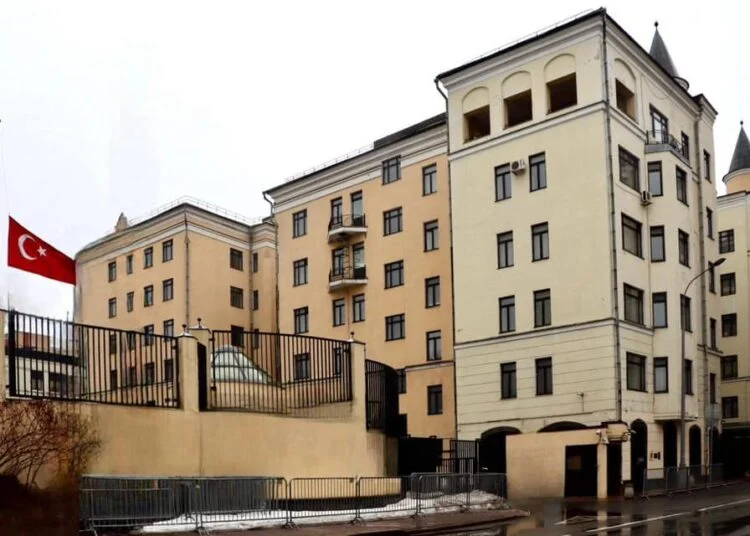
MOSCOW (Realist English). A covert intelligence unit operated on a permanent basis inside the Turkish Embassy in Moscow, collecting sensitive information on Russian territory under diplomatic cover, according to an investigation published by the Stockholm-based watchdog Nordic Monitor.
The report is based on confidential internal documents from Turkish state institutions, which Nordic Monitor says show that embassy staff formally listed as “advisers” were in fact engaged in intelligence collection and the transfer of information to Ankara. Unlike traditional overseas intelligence operations run by Turkey’s National Intelligence Organisation, the unit was reportedly subordinated to the Interior Ministry via the General Directorate of Security.
According to the documents, dated December 29, 2025, intelligence activity was coordinated through internal correspondence between Turkey’s General Directorate of Security and personnel at the Moscow embassy. One document states that on February 27, 2025, operatives transmitted a substantial package of intelligence materials gathered directly inside Russia to Ankara.
The collected information reportedly included analyses of court documents and focused on individuals whom the Turkish authorities associate with the movement of Fethullah Gulen, which Ankara designates as a terrorist organisation. After review by the Interior Ministry’s foreign relations department, the materials were circulated to provincial police departments across Turkey for what was described as “operational action”.
One of the published records — an internal memorandum issued by Ankara police on January 27, 2026 — explicitly states that personnel attached to the Turkish Embassy in Moscow carried out overseas intelligence collection while holding diplomatic status.
Nordic Monitor said the documents point to a systematic practice of using diplomatic missions for external intelligence activities, a model it argues goes beyond isolated incidents. The findings raise questions about compliance with the Vienna Convention on Diplomatic Relations, which sets strict limits on the conduct of diplomatic staff in host countries.
The publication could have serious implications for relations between Russia and Turkey, particularly if the allegations prompt official scrutiny. Neither the Turkish authorities nor the Turkish Embassy in Moscow have publicly commented on the claims at the time of publication.