NAIROBI (Realist English). The war between Sudan’s military and the Rapid Support Forces (RSF) has triggered the growth of a vast transnational market for weapons and mercenaries stretching across North and Central Africa, according to a report released Tuesday by the Global Initiative Against Transnational Organised Crime.
The study shows how long-standing smuggling corridors were revived and expanded after fighting erupted in April 2023 between the Sudanese Armed Forces (SAF) and the RSF. It identifies Chad and Libya as the main channels for alleged UAE-backed support to the RSF, with the conflict’s effects spilling into Niger, Mali, and parts of the Horn of Africa. Abu Dhabi denies supporting the RSF, despite what researchers describe as mounting evidence.
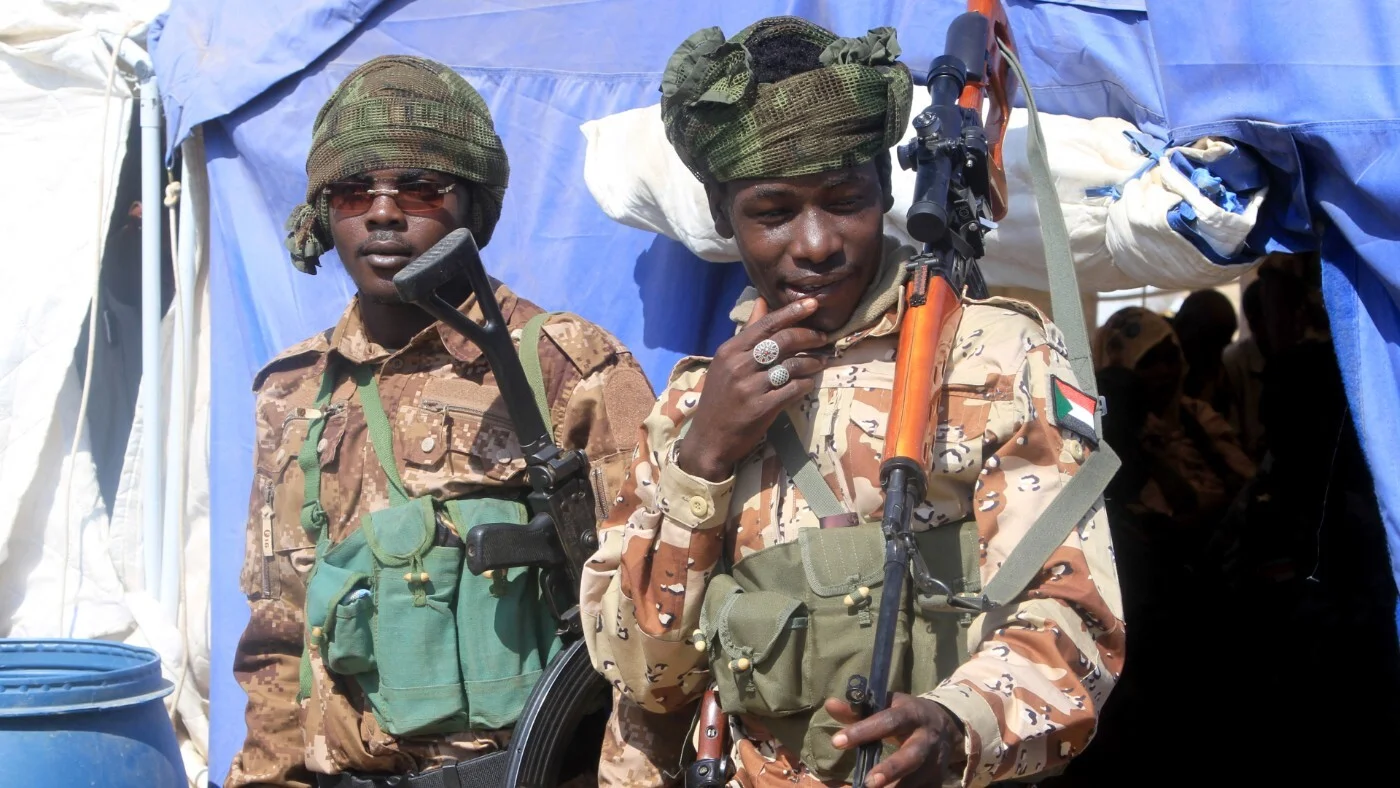
Sudanese officials opposed to the RSF say the paramilitary group has deployed fighters and technicians from 17 countries. Report author Dr. Kholood Khair Badi argues that Sudan’s war has “not only reshaped its own frontlines but transformed the wider security economies of its neighbours.” The proliferation of weapons and reliance on mercenaries, she writes, is restructuring the security architecture of the Sahel and Sahara.
The report documents substantial outflows of arms from Sudan, including heavy machine guns and small arms now surfacing in markets in Chad and on Facebook. Badi says the collapse of command structures inside both SAF and RSF enabled rapid leakage from military stockpiles into regional black markets.
Supply networks have been decisive on the battlefield. RSF advances have often coincided with uninterrupted external supply lines, while setbacks — including the loss of Khartoum in spring 2025 — aligned with disruptions in northern Darfur. In June, with help from groups aligned to Libyan commander Khalifa Haftar, the RSF seized Sudan’s portion of the tri-border zone with Libya and Egypt, restoring a direct corridor via Maaten al-Sarra to support its assault on el-Fasher, which fell in October.
The report traces a shifting geography of UAE-linked logistics: eastern Libya’s Kufra was once the anchor of RSF resupply, but the hub later moved to Amdjarass in Chad, supported by Emirati infrastructure and tacit Chadian facilitation. Haftar-aligned forces, including Subul al-Salam and the LAAF’s 128th Brigade, moved matériel south to the Ain Kaziyet crossing for handover to RSF units.
Mercenaries, the report concludes, are central actors, not peripheral players. They escort convoys, manage border access and keep arms and equipment flowing — making them critical to the functioning of conflict economies across the region.
Badi warns that these entrenched networks mean the wider region cannot be analysed in isolation. “Arms circuits and mercenary flows have rewired the region,” she writes, and will continue to shape instability long after Sudan’s war ends.