
Realist: news and analytics

Русский / English / العربية

  • News
  • Russia
  • Caucasus
  • Opinion
  • Interviews
  • Experts
No Result
View All Result
Realist: news and analytics
  • News
  • Russia
  • Caucasus
  • Opinion
  • Interviews
  • Experts
No Result
View All Result
Realist: news and analytics

The 12-Day War ends — but tension simmers beneath fragile Israel-Iran ceasefire

Trump, Netanyahu and Tehran all claim victory as ceasefire holds; uncertainty clouds future of Iran’s nuclear program.

   
June 25, 2025, 05:51
World
Kuwait extends bidding deadline for major oil infrastructure tender in strategic southern fields

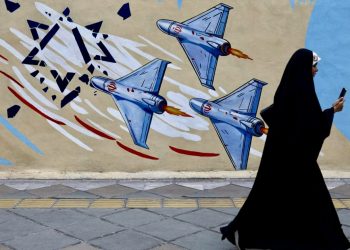
JERUSALEM/TEHRAN/WASHINGTON (Realist English). After nearly two weeks of escalating hostilities, what President Donald Trump called the “12-Day War” between Israel and Iran has entered a precarious ceasefire — one brokered in haste, maintained with difficulty, and claimed as a success by all sides.

Overnight, the region shifted from open warfare to fragile calm. But far from resolving the crisis, the ceasefire has deepened questions: Who truly gained the upper hand? Can this pause lead to diplomacy? And is the Middle East any closer to lasting stability?

A war by any other name

The conflict reached a tipping point Saturday night when U.S. forces, at Israel’s request, launched coordinated strikes on Iran’s nuclear sites at Fordow, Natanz, and Isfahan. Trump declared the facilities “completely obliterated.”

In response, Iran fired ballistic missiles at the U.S. Al Udeid airbase in Qatar — marking a rare direct attack on American forces in the Gulf. With both sides appearing ready for escalation, Trump unexpectedly declared on Truth Social that a “Complete and Total Ceasefire” had been agreed.

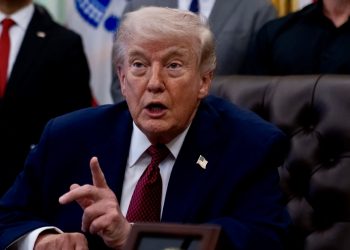
The truce faltered within hours. Israel launched a retaliatory strike on a radar site near Tehran, claiming Iran had fired two missiles into its airspace — both of which were intercepted. Tehran denied the launches. Trump, visibly frustrated, told reporters: “These two countries have fought for so long, they don’t know what the hell they’re doing.”

After a tense morning, Trump confirmed the ceasefire was back on. “ISRAEL is not going to attack Iran. All planes will turn around and head home… Nobody will be hurt,” he posted online.

What did Israel accomplish?

June 13 marked a turning point: for the first time, Israel directly targeted Iranian nuclear infrastructure, striking beyond Syria and Iraq — a bold move designed to demonstrate range and resolve.

Prime Minister Benjamin Netanyahu claimed the strikes had neutralized an “existential threat” and praised Israel’s ability to pull the United States into direct military action. He later thanked Trump for standing “shoulder to shoulder” with Israel.

Yet Israel faces legal and diplomatic headwinds. The strikes, described by Jerusalem as anticipatory self-defense, were met with international skepticism. No independent verification yet confirms that Iran was on the brink of a nuclear breakout.

Still, Israel’s message is clear: it can strike deep inside Iranian territory, and it can do so with U.S. support — if only under exceptional circumstances.

Did Iran defend its program?

Damage to Iran’s facilities is evident — satellite images show hits on surface structures — but underground damage remains unverified. The IAEA’s Rafael Grossi warned that given the sensitivity of centrifuges, significant internal destruction is likely.

At the same time, Iran appears to have anticipated the assault. Atomic Energy Organization head Mohammad Eslami insisted that recovery plans were already in place and that production would not be interrupted.

However, key questions linger: Where is Iran’s stockpile of enriched uranium? And who fired the missiles that disrupted the ceasefire?

Tehran has denied involvement, raising fears of uncontrolled escalation — or errors, like the 2021 downing of a Ukrainian passenger jet by Iranian forces.

Is this the end — or just a pause?

Despite the ceasefire, neither Israel nor Iran has shifted its long-term position.

Iran’s parliament is already considering legislation to suspend cooperation with the IAEA, while President Trump has reiterated that he will not allow Iran’s nuclear programme to resume.

International diplomacy has begun to stir. On June 20, Iranian Foreign Minister Abbas Araghchi met with officials from France, Germany, the UK, and the EU’s foreign policy chief in a failed attempt to prevent U.S. strikes. Still, Europe may be Iran’s last diplomatic lifeline.

“Iran will try to involve the Europeans diplomatically by proposing enhanced monitoring,” said Ioannis Kotoulas, a lecturer in geopolitics at the University of Athens. “The U.S. could accept a peaceful program. Europe is now Iran’s only way out.”

But with trust shattered, and calls for full uranium enrichment suspension emerging only from within Iran’s civil society — not its leadership — compromise remains elusive.

The 12-Day War may have ended with a handshake in silence, but the fundamentals remain unchanged: Israel still sees Iran as a looming nuclear threat, while Tehran views U.S. and Israeli actions as existential aggression. Both sides claim strategic victory, yet neither has secured long-term advantage. Without a credible diplomatic channel — and with mutual distrust deepened — this ceasefire is not peace, but a pause between storms.
IranIran WarIran–Israel ConflictIsraelMiddle EastUS Foreign Policy
Previous Post

The true cost of America’s wars: $8 trillion and 4.7 million lives

Next Post

Kuwait extends bidding deadline for major oil infrastructure tender in strategic southern fields

Related Posts

Trump claims Iran’s regime is fractured, but reality is more complicated — CNN
World

Trump claims Iran’s regime is fractured, but reality is more complicated — CNN

23 April, 2026
Trump extends Iran ceasefire without deadline
World

Trump extends Iran ceasefire without deadline

22 April, 2026
US-Iran talks in doubt: Tehran still undecided on going to Pakistan
World

US-Iran talks in doubt: Tehran still undecided on going to Pakistan

22 April, 2026
Trump: ‘Highly unlikely’ Iran ceasefire will be extended if no deal reached by April 22
World

Trump: ‘Highly unlikely’ Iran ceasefire will be extended if no deal reached by April 22

21 April, 2026
Former Bulgarian President Rumen Radev wins parliamentary election
World

Former Bulgarian President Rumen Radev wins parliamentary election

20 April, 2026
Iran vows retaliation over ship seizure as talks cast in doubt, Tehran denies meeting plans
World

Iran vows retaliation over ship seizure as talks cast in doubt, Tehran denies meeting plans

20 April, 2026
Most Popular
Most Popular
«The Kurdish card is a weapon of major powers»: Yaşar Yakış on why Turkey missed its chance to solve the Kurdish issue

«The Kurdish card is a weapon of major powers»: Yaşar Yakış on why Turkey missed its chance to solve the Kurdish issue

18 April, 2026

ANKARA (Realist English). Yaşar Yakış — a Turkish diplomat and statesman who served as Turkey's Minister of Foreign Affairs, ambassador to Saudi...

Dmitry Novikov on his path to politics, the intelligentsia, the left movement, and why US aggression against Iran is a threat to Russia

Dmitry Novikov on his path to politics, the intelligentsia, the left movement, and why US aggression against Iran is a threat to Russia

12 April, 2026

MOSCOW (Realist English). Dmitry Novikov, Deputy Chairman of the CPRF Central Committee and First Deputy Chairman of the State Duma...

“We Are Witnessing the Messianic Footsteps”: Avigdor Eskin on Israel’s War with Iran

“We Are Witnessing the Messianic Footsteps”: Avigdor Eskin on Israel’s War with Iran

11 April, 2026

JERUSALEM (Realist English). Israeli public figure and publicist Avigdor Eskin argues that we live in an era of “incredible acceleration,” when...

“Israel is not fighting the Iranian people, but the regime”: Alexander Tsinker on the goals of the operation against Iran

“Israel is not fighting the Iranian people, but the regime”: Alexander Tsinker on the goals of the operation against Iran

9 April, 2026

TEL AVIV (Realist English). The war in the Middle East, which began with US-Israeli strikes on Iran, has entered its fifth...

Opinion

Venezuela after Maduro: oil instead of democracy?

Venezuela after Maduro: oil instead of democracy?

22 April, 2026

CARACAS (Realist English). When U.S. forces swooped into Caracas in January 2026 and seized President Nicolás Maduro, many Venezuelans inside and outside...

The deal was close, but Trump blew it up with social media posts

The deal was close, but Trump blew it up with social media posts

21 April, 2026

WASHINGTON (Realist English). Toward the end of last week, the US and Iran appeared to be closing in on a deal...

The story of Russian girl Kristina Romanova: a Mexican thriller with a terrible ending

The story of Russian girl Kristina Romanova: a Mexican thriller with a terrible ending

20 April, 2026

MEXICO CITY (Realist English). Tatyana Poloskova, Doctor of Political Science, First Class State Advisor of the Russian Federation, based on her...

From Ayatollahs to Generals: Has Iran Shifted Under the Rule of Security Forces?

From Ayatollahs to Generals: Has Iran Shifted Under the Rule of Security Forces?

19 April, 2026

TEHRAN (Realist English). The Islamic Republic of Iran was built to be governed by clerics. It is now widely acknowledged as...

All rights reserved.

© 2017-2026

  • About Us
  • Mission and Values
  • Contact Us
  • Privacy Policy

Follow Realist English

No Result
View All Result
  • News
  • Russia
  • Caucasus
  • Opinion
  • Interviews
  • Experts

Русский / English / العربية