

MOSCOW (Realist English). The fourth week of the United States–Israeli military campaign against Iran has become a turning point for the entire Middle East. The war, which began with strikes on the Iranian leadership, has evolved into a blockade of the Strait of Hormuz, a new escalation of tensions in Lebanon, and the entry of Yemeni Houthi forces into the conflict. Experts are increasingly asking whether Tehran can retain power, whether Hezbollah will preserve its military potential, and who will ultimately act as a mediator in a potential settlement.
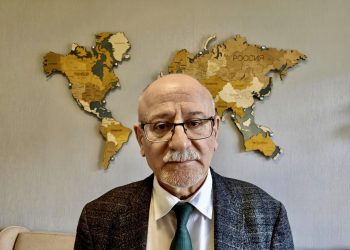
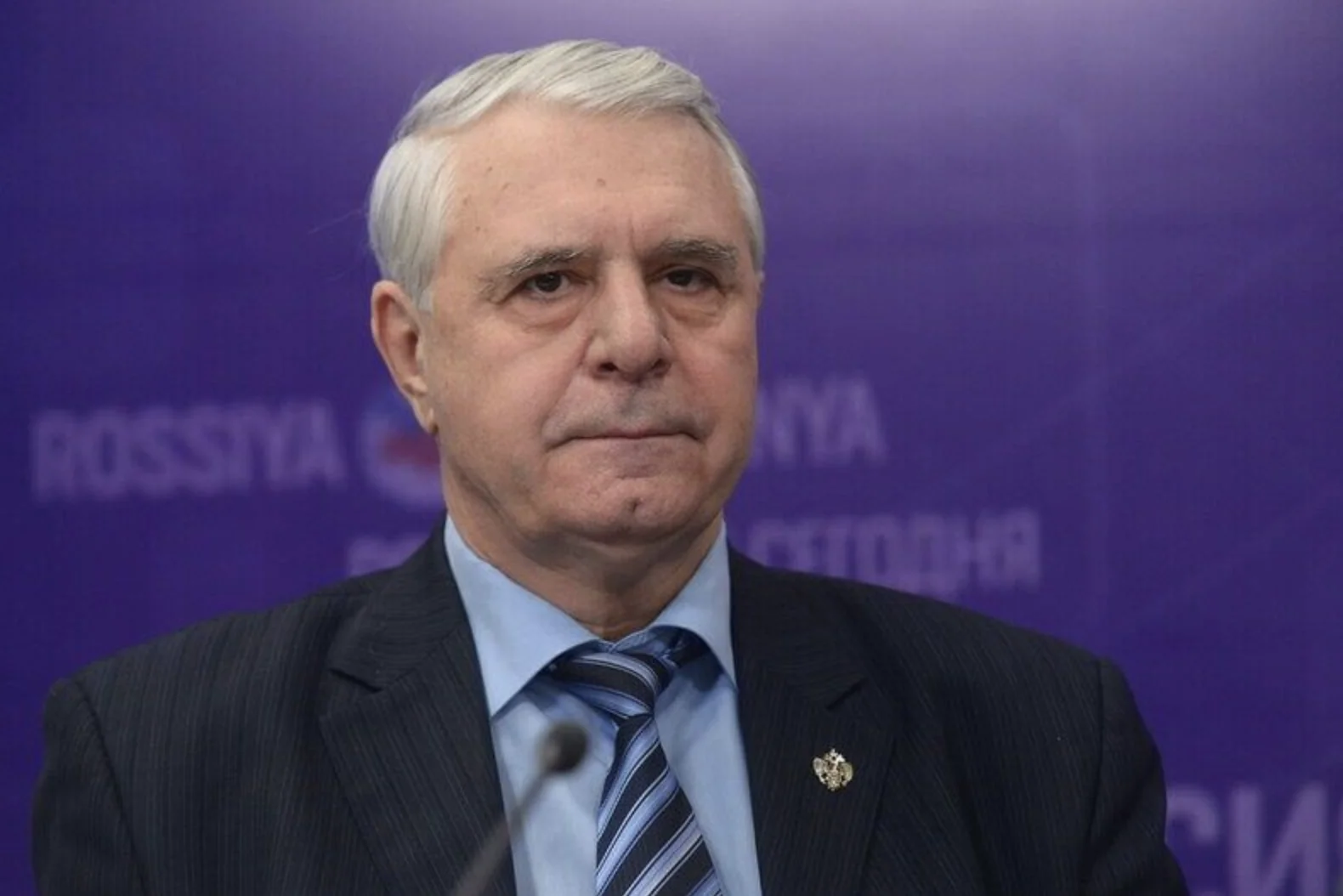
Stanislav Ivanov — retired colonel, State Councillor of the Russian Federation, Second Class, and leading research fellow at the Center for International Security of the Primakov National Research Institute of World Economy and International Relations of the Russian Academy of Sciences and the Institute of Oriental Studies of the Russian Academy of Sciences — answers these and other questions in an interview with Realist News Agency. A Candidate of Historical Sciences and author of more than 360 academic works, awarded the Order “For Military Merit,” Stanislav Mikhailovich has spent many years studying international security issues, including the Kurdish question, Iran, and counterterrorism.
In the interview, the practitioner-expert assesses the military outcomes of the campaign, the prospects for regime change in Iran, the future of Hezbollah, and the role of Kurdish forces in the region, and also reflects on whether negotiations could bring the war to an end.
— The fourth week of the United States–Israeli military campaign against Iran. How do you assess its military and political results at this stage? Have Washington and Tel Aviv achieved their objectives?
Stanislav Ivanov: It is evident that the primary objective of the United States and Israel was to weaken Iran militarily as much as possible and to create conditions for changing the theocratic regime.
— The killing of Supreme Leader Ali Khamenei and a significant part of Iran’s top military leadership — how has this affected decision-making structures in Tehran?
Stanislav Ivanov: The decision-making structure in Tehran has been preserved; there are still enough ayatollahs and military leaders.
— Iran has declared its “legitimate right” to control the Strait of Hormuz and is effectively blocking it. How long, in your view, can Tehran maintain this blockade? What are the limits of its capabilities?
Stanislav Ivanov: Only God knows how long Iran will be able to obstruct maritime navigation in the Strait of Hormuz. It has sufficient forces and resources for this operation.
— According to media reports, Israeli military officials doubt the possibility of overthrowing the regime in Iran in the near term. How do you assess the prospects for a change of power in Tehran? Is there a scenario in which the Islamic Revolutionary Guard Corps could attempt to establish direct military control over the country?
Stanislav Ivanov: The question of power in Iran is decided by the Iranian people, and it appears they are not yet ready to sweep away this regime, as they did the Shah’s regime in 1979. There is a certain level of disappointment and fatigue among Iranians with the rule of the ayatollahs, but the critical mass of public discontent has not yet been reached. As for the Islamic Revolutionary Guard Corps, it has long since established direct military control over the country, including its finances and economy.
— Since the outbreak of the war, Kurdish regions in Iraq, Syria, and Iran itself have found themselves in a complex situation. In your view, how has the situation changed for Iranian Kurds? Could a weakening of central authority in Tehran give them new momentum toward self-determination?
Stanislav Ivanov: Syrian, Iranian, and other Kurdish groups are maintaining neutrality and staying out of the conflict around Iran. Iranian Kurds, like Azerbaijanis and Baloch, are not rushing to confront the ruling regime. Attempts by the Central Intelligence Agency and Mossad to play the Kurdish card have not succeeded. What they need now is not self-determination, but equal rights and freedoms with Persians.
— Relations between Erbil and Baghdad remain tense. How does the war in Iran and the broader regional escalation affect the balance of power between the Iraqi federal government and the Kurdish autonomous region? Is there a risk that Kurdistan could be drawn into the conflict on one side?
Stanislav Ivanov: These claims are greatly exaggerated. Baghdad and Erbil cooperate effectively, and all disputed issues are resolved at the negotiating table. It should not be forgotten that the President of Iraq is a Kurd and that there is a substantial Kurdish faction in parliament. Kurds are, first and foremost, Iraqis and are building a new democratic Iraqi state together with Arabs. Iraqi Kurdistan will not allow itself to be drawn into any regional conflict.
— Israel has announced the creation of a “security zone” in southern Lebanon up to the Litani River. How do you assess this move?
Stanislav Ivanov: It is a correct step, and the Lebanese government does not object to it. The time has come to eliminate Iran’s proxy forces in the form of Hezbollah’s illegal armed formations, which not only threaten Israel’s security but also undermine Lebanese statehood.
— Hezbollah has suffered serious losses during the current campaign. To what extent, in your view, has its military potential been undermined? Is the group capable of continuing combat operations on the same scale?
Stanislav Ivanov: The change of regime in Syria and the war waged by the United States and Israel against Iran have significantly undermined Hezbollah’s financial, material, and military potential. The group is experiencing an agonizing decline on the eve of collapse.
— Israel is conducting military operations on multiple fronts simultaneously. How do you assess the strategy of the Israeli leadership? Is the current campaign part of a unified plan, or is it developing according to a scenario of uncontrolled escalation?
Stanislav Ivanov: Israel is forced to defend itself on all fronts and directions in order to ensure the state’s security in the foreseeable future. Netanyahu seeks to ensure that no one can “push Israel into the sea,” and that future generations of Israelis — Jews, Arabs, and Muslims — can live in peace.
— You have worked on the issue of Iraqi Kurdistan. In your view, how should Moscow build relations with Kurdish forces in Iraq and Syria today, given that Turkey is pursuing a hard line against Kurdish formations?
Stanislav Ivanov: It is time to stop orienting policy toward Erdogan in the Kurdish question. To begin with, there are no longer any Kurdish armed formations in Turkey; even the Kurdistan Workers’ Party has been dissolved. As for Syrian and Iraqi Kurds, they are citizens of foreign states in relation to Ankara and build their relations with central authorities independently, without external interference. It should also be remembered that Kurds are one of the indigenous peoples of the Russian Federation. They actively participated in the Russo-Turkish wars and the Second World War. There are Kurdish public organizations in Russia, and Zelimkhan Mutsoev represents them in the State Duma.
There are also representations of Syrian and Iraqi Kurds in Moscow, as well as Kurdish-language platforms such as Kurdistan.ru. Finally, the Kurdish people are among the most tolerant toward other nations. Kurdish militias played a decisive role in defeating the jihadists of the Islamic State group, which is banned in the Russian Federation, while authorities in Damascus and Baghdad hid in the basements of presidential palaces, and their armies fled the battlefield, abandoning equipment and heavy weapons. Erdogan and his circle turned Turkey into a transit corridor for jihadists from around the world, making it a rear base for terrorists and a trading partner for them.
— What are the real prospects for a diplomatic settlement? Is there a scenario in which the war ends not with a military victory by one side, but through negotiations? And who could act as a mediator?
Stanislav Ivanov: It is too early to speak about scenarios. One thing is clear: there will be no winners in this war. Sooner or later, the war will end, but not only its direct participants will suffer heavy losses — the entire international community will be affected. Oil and gas prices are already rising, and populations in many countries are tightening their belts. As for mediators, there is nothing to say yet.
None of the three sides to the conflict are currently seeking such assistance from foreign states. Moreover, the United States would prefer to expand its front against Iran by involving the monarchies of the Persian Gulf, Turkey, Azerbaijan, and Pakistan. Peacekeeping actors are not in demand in this conflict at this stage.