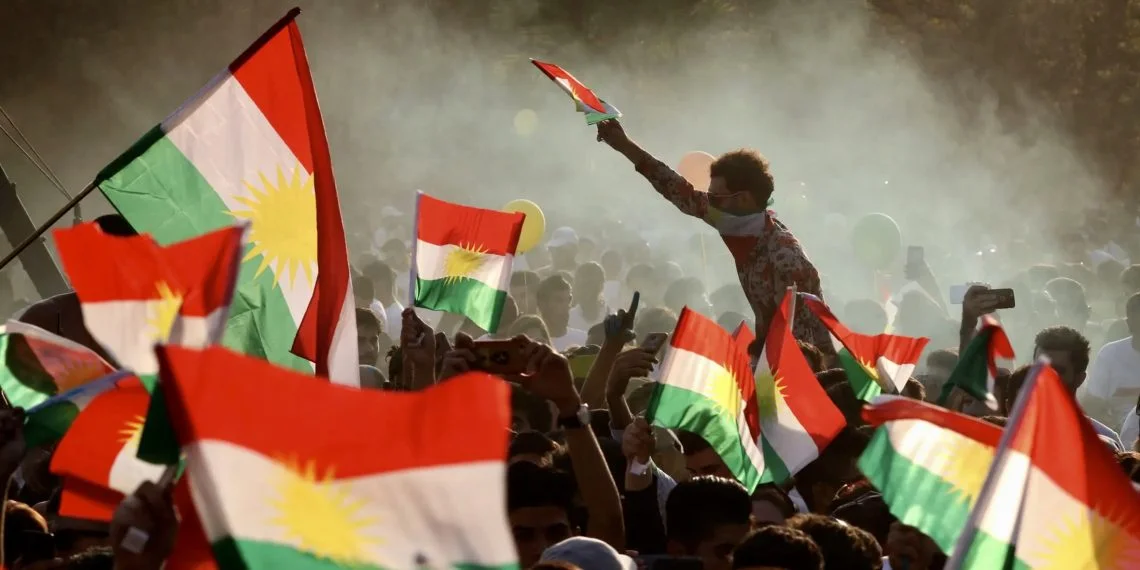
MOSCOW (Realist English). Kurdish forces across Iran, Iraq and Syria have largely refrained from entering the conflict involving Iran, despite reported efforts by the United States and Israel to mobilise them, according to Russian analyst Stanislav Ivanov.
Speaking to Realist News Agency, Ivanov — a senior researcher at the Institute of World Economy and International Relations — said Kurdish groups, along with other ethnic minorities in Iran such as Azerbaijanis and Baloch, have shown little willingness to challenge the Iranian government.
“They are not rushing into confrontation. For them, the priority is equal rights, not self-determination,” he said, adding that attempts to activate Kurdish forces as a new front in the conflict have so far failed.
His assessment comes amid heightened activity in Kurdish-populated regions, which some analysts describe as among the most volatile areas since the start of hostilities.
Reports suggest that Washington has engaged Kurdish political leaders in Iraq, including Masoud Barzani and Bafel Talabani, to discuss potential coordination. Some media outlets have also reported that Kurdish factions in western Iran have launched limited operations, though these claims remain contested.
Authorities in Iraq’s Kurdistan Region have strongly denied involvement. Government spokespersons said no fighters had crossed into Iran and stressed that Erbil remains committed to avoiding escalation. Iraqi officials also highlighted ongoing cooperation between Baghdad and Kurdish authorities, despite periodic tensions.
Iran, for its part, has carried out strikes on bases of Kurdish opposition groups located in northern Iraq, targeting areas in Erbil and Sulaymaniyah provinces. These actions reflect Tehran’s efforts to prevent the emergence of a new front along its western border.
Regional dynamics are further complicated by Turkey’s position. Ankara has expressed concern over the activities of Kurdish groups linked to the Kurdistan Workers’ Party (PKK), warning that separatist movements could destabilise the broader region.
Recent incidents underscore the fragility of the situation. Strikes have targeted Kurdish political and military sites in Iraq, while clashes involving pro-Iranian militias have added to tensions. Iraqi Prime Minister Mohammed Shia al-Sudani has called for investigations into attacks affecting Kurdish areas.
Analytically, the limited mobilisation of Kurdish forces highlights the constraints facing external actors seeking to expand the conflict geographically. Kurdish leadership appears cautious, influenced in part by previous experiences in Syria, where shifting alliances led to territorial losses.
The key question is whether sustained military pressure and diplomatic engagement could alter this stance, or whether Kurdish groups will continue to prioritise stability over involvement in a broader regional conflict.