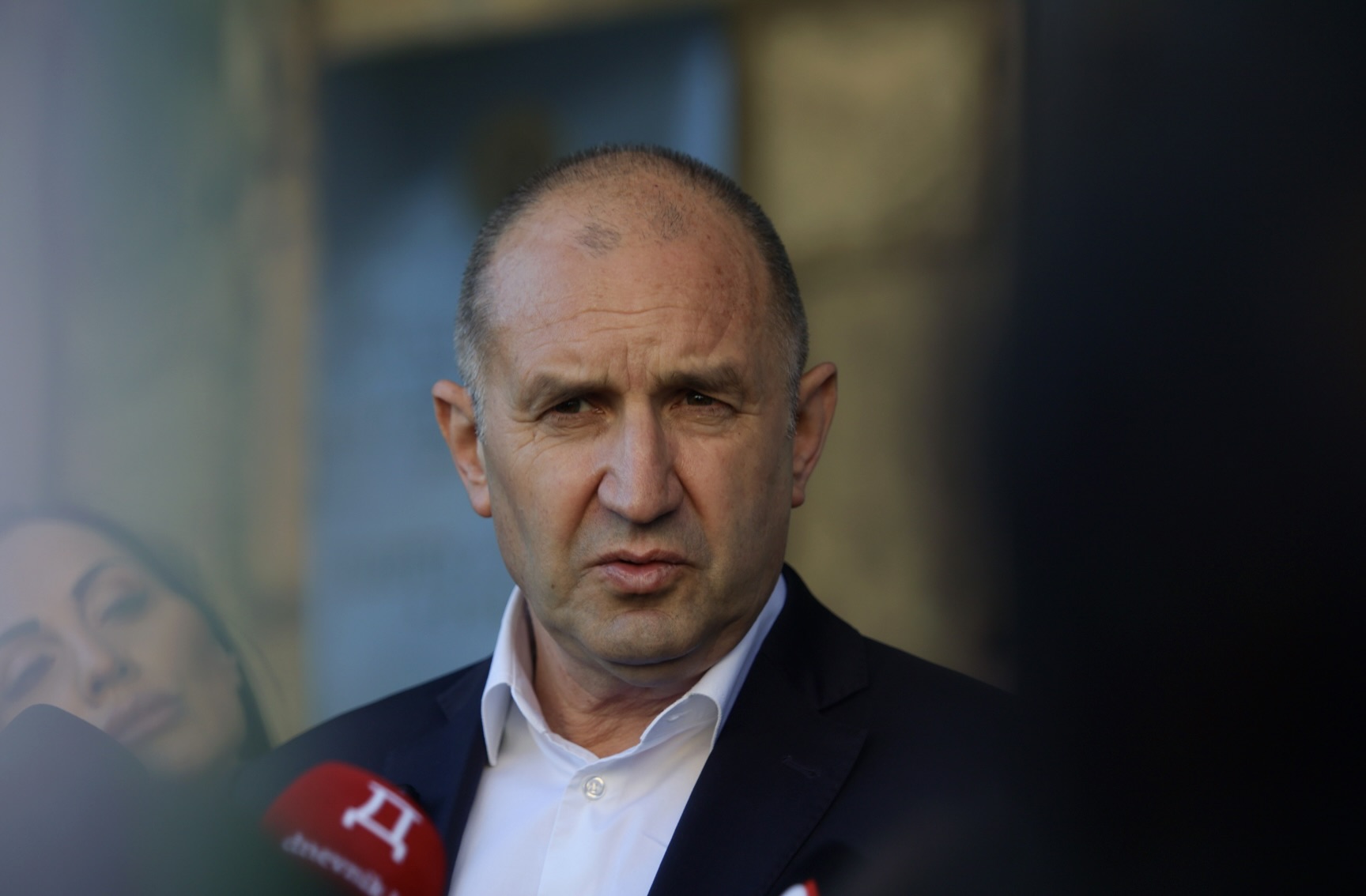
SOFIA (Realist English). Bulgaria’s new government, led by Prime Minister Rumen Radev, has decided to stop supplying weapons to Ukraine. Defense Minister Dimitar Stoyanov, commenting on the decision, stated that Kyiv currently needs “not more weapons, but more people” and called for a “fair peace that will be determined by the participation of both sides in the conflict.”
Change of Course
The decision of the new cabinet, formed after the April 2026 parliamentary elections, marks a radical reversal of Sofia’s foreign policy. It directly contradicts the European Union’s line, which over the past years has been aimed at providing military support to Kyiv.
Defense Minister Dimitar Stoyanov at a briefing on June 9 stated outright that Ukraine needs not new arms supplies but the mobilization of additional human resources to continue hostilities.
“Ukraine needs more people, not more weapons,” Stoyanov said.
He also stressed that it would be extremely difficult for the EU to act as a mediator in the negotiation process to resolve the conflict, given its one‑sided support for Kyiv throughout the entire period of hostilities.
The new course aligns with the position of Prime Minister Rumen Radev, a former Air Force commander who served as president until January 2026. Radev repeatedly opposed military support for Ukraine, calling it pointless, and urged the lifting of anti‑Russian sanctions, which he believes primarily harm the European economy.
From Covert Deliveries to Open Refusal
Bulgaria, being one of the EU’s largest producers of Soviet‑caliber ammunition, long held a dual position. Officially, Sofia refused to supply heavy weapons directly, but Bulgarian shells and ammunition reached the front through exports to other EU countries.
In 2023, the country for the first time officially approved the shipment of heavy equipment, and by early 2025 it had agreed with its allies on compensation of €500 million for the military aid provided. Since the start of full‑scale hostilities in 2022, Bulgaria has sent at least 13 packages of military aid to Ukraine, the details of which have remained classified.
Political Consequences
The new government’s decision has caused a stir in European capitals. The policy of the new Prime Minister Radev, who openly opposed military aid to Kyiv, could weaken the pan‑European front of support for Ukraine. There are concerns about the formation of a “weakening coalition” within the EU, which, besides Hungary, could include Bulgaria.
Interestingly, Radev himself, having taken the prime minister’s seat, promised to increase Bulgaria’s role in pan‑European decision‑making, which diverges from the position of the European Commission, which is seeking to tighten pressure on Russia.
Bulgaria’s Military Aid: Key Figures
- One‑third of all ammunition — in the first half of 2022, Bulgarian stocks covered about one‑third (33%) of the Ukrainian army’s total needs for artillery shells. According to the German newspaper Welt, these were not direct deliveries but re‑exports through intermediaries, although the fact is acknowledged by both Ukrainian and Bulgarian officials.
- 2 million shells — in 2025, the EU tasked Bulgaria with producing a significant part of the 2 million artillery shells promised to Kyiv. Funding is provided through European programs. Bulgarian factories were shifted to round‑the‑clock operation.
- Thermobaric munitions — in 2026, Ukraine received a batch of RTB‑7LDMA thermobaric rounds from Bulgaria for RPG‑7 hand grenade launchers. This weapon has increased power and is used to destroy enemy personnel in shelters and urban areas.
- 40% of fuel needs — from April to August 2022, Bulgaria secretly supplied diesel fuel for Ukrainian armored vehicles. The volume covered up to 40% of all the Ukrainian Armed Forces’ fuel needs in the early phase of the war.
Official Packages and Ratification
On December 5, 2022, the defense ministries of Bulgaria and Ukraine signed an intergovernmental agreement on the free transfer of weapons, equipment and ammunition. On December 16, 2022, the 48th National Assembly of Bulgaria ratified the document. A crucial detail: the deputies at the same time decided not to publish the list of transferred weapons — which is why details have remained classified.
From February 2022 to February 2026, Bulgaria approved 13 official military aid packages to Ukraine. The last (13th) package was approved by the government on February 12, 2026. Its specific contents have not been disclosed.
In 2025, Bulgaria concluded an agreement with its EU allies to receive compensation for the weapons transferred. The total compensation is estimated at about €500 million, allowing Sofia to purchase new Western weaponry, primarily for its own army.