
Realist: news and analytics

Русский / English / العربية

  • News
  • Russia
  • Caucasus
  • Opinion
  • Interviews
  • Experts
No Result
View All Result
Realist: news and analytics
  • News
  • Russia
  • Caucasus
  • Opinion
  • Interviews
  • Experts
No Result
View All Result
Realist: news and analytics

Traditional power transfer in Russia no longer viable, analyst says

Expert says focus has shifted from succession to systemic transformation, with governors and technocrats emerging as key actors.

   
March 28, 2026, 00:47
Russia
Traditional power transfer in Russia no longer viable, analyst says

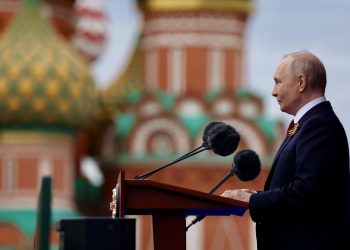
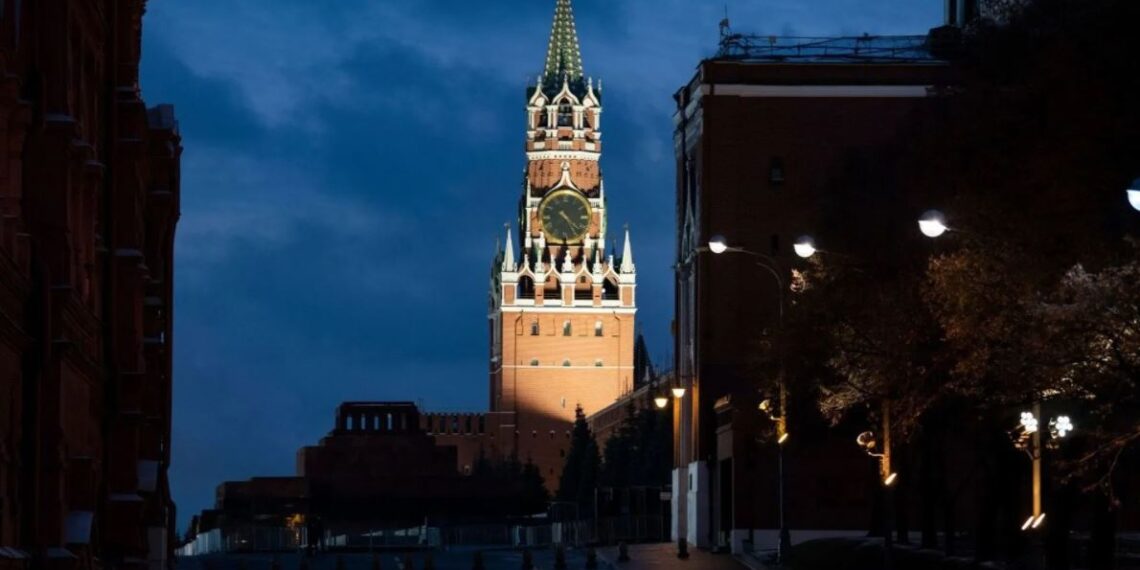
MOSCOW (Realist English). The traditional model of power transfer in Russia is no longer viable, and the country is instead approaching a broader systemic transformation, political analyst Ilya Grashchenkov said in an interview with Realist News Agency.

Grashchenkov, director of the Center for Regional Policy Development, argued that the key question is no longer who President Vladimir Putin might designate as a successor, but how the political system itself will evolve as it begins to lose its established structure.

“Practically speaking, a transfer of power in the previous sense is no longer possible,” he said, suggesting that Russia is entering a phase where either a new political model will emerge or the current system will be reshaped within constitutional frameworks.

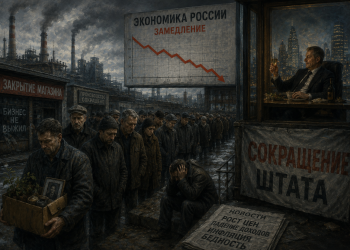
According to the analyst, earlier expectations of a controlled succession — preserving the existing system through a designated successor — have weakened significantly. He linked this shift to structural changes in the economy and elite balance following the war in Ukraine, which disrupted the previous model built around high oil revenues and integration with Western markets.

Grashchenkov said several elite groups have lost influence in recent years, including parts of the traditional oligarch class and networks associated with the late Yevgeny Prigozhin. He also pointed to challenges within the circle linked to former defense minister Sergei Shoigu, whose position has weakened following personnel changes and legal cases involving members of his former team.

Russia’s political landscape is now characterized by competition among ideological visions, the analyst said. Some factions advocate for more conservative or even imperial models of governance, while others favor normalization and a return to constitutional principles as the basis for a more institutionalized state.

Within this transition, influence is shifting toward actors who combine access to resources — including financial, media, and security capabilities — with the ability to articulate a vision for the future.

Grashchenkov described the emerging pool of potential post-Putin figures as a relatively broad but structurally similar group, including technocratic administrators, mid-level political figures, and representatives of regional and security elites. He suggested that regional governors could play a larger role at the federal level, even if not as direct successors.

Recent developments within Russia’s power structures provide context for these dynamics. Following Prigozhin’s death in 2023, networks linked to the Wagner Group have diminished in influence. Meanwhile, several former senior defense officials, including Ruslan Tsalikov, Dmitry Bulgakov, Pavel Popov, and Timur Ivanov, have faced legal action, with Ivanov sentenced to 13 years in prison on corruption charges.

Shoigu, who left the post of defense minister in 2024 to become secretary of the Security Council, has maintained a public role but seen parts of his former network reshaped.

Analytically, the shift described by Grashchenkov points to a transition from a personalized system of power toward a more fragmented and competitive elite structure, where succession may be replaced by institutional or hybrid models.

The key uncertainty is whether this transformation will lead to a more stable and institutionalized political system, or result in prolonged elite competition with unpredictable outcomes for governance and policy continuity.

Most PopularRussiaRussia’s Domestic Policy
Previous Post

“There will be no one left to befriend”: Dmitry Zhuravlev on the future of Russia–Europe relations

Next Post

U.S. seeks Iran talks as war timeline extends beyond plans

Related Posts

Iran war boosts Russia’s economy through energy windfall
Russia

Iran war boosts Russia’s economy through energy windfall

27 March, 2026
Russia rules out full VPN ban, plans targeted restrictions
Russia

Russia rules out full VPN ban, plans targeted restrictions

25 March, 2026
FSB reports prevention of alleged Ukraine-linked sabotage plot
Russia

FSB reports prevention of alleged Ukraine-linked sabotage plot

24 March, 2026
Moscow court orders detention of Znanie deputy head Serikov
Russia

Moscow court orders detention of Znanie deputy head Serikov

22 March, 2026
Putin calls Crimea reunification a historic choice
Russia

Putin calls Crimea reunification a historic choice

19 March, 2026
Russians withdraw record funds from banks amid shifting investment trends
Russia

Russians withdraw record funds from banks amid shifting investment trends

18 March, 2026
Most Popular
Most Popular
Traditional power transfer in Russia no longer viable, analyst says

U.S. seeks Iran talks as war timeline extends beyond plans

28 March, 2026

WASHINGTON (Realist English). The United States is seeking to hold talks with Iran as early as this or next week,...

Traditional power transfer in Russia no longer viable, analyst says

Traditional power transfer in Russia no longer viable, analyst says

28 March, 2026

MOSCOW (Realist English). The traditional model of power transfer in Russia is no longer viable, and the country is instead...

Europe loses LNG cargoes to Asia amid Middle East war

Iran rejects US ceasefire plan, outlines five conditions

26 March, 2026

TEHRAN (Realist English). Iran has rejected a U.S. proposal aimed at ending the ongoing conflict, insisting that any ceasefire will...

Iran war exposes global reliance on fragile energy routes

Iran war exposes global reliance on fragile energy routes

23 March, 2026

LONDON (Realist English). The war involving Iran has exposed the global economy’s dependence on vulnerable fossil fuel supply routes, intensifying...

Opinion

Star Wars without fiction: how space became the next battlefield

Star Wars without fiction: how space became the next battlefield

27 January, 2026

MOSCOW (Realist English). “Star Wars” stopped being science fiction long ago. Unfortunately, over ten thousand years of civilisation, humanity has...

Armenian monastery Dadivank

Dadivank: The Legacy of Christ’s Apostles in Artsakh

17 December, 2025

YEREVAN (Realist English). In Artsakh, before the ethnic cleansing and forced deportation – simply put, genocide – carried out by...

An unusual phenomenon at the Church of the Holy Savior in Shushi

An unusual phenomenon at the Church of the Holy Savior in Shushi

3 November, 2025

YEREVAN (Realist English). In the distant year 1979, as a third-year university student, I used to visit the Church of...

War with Iran seen as inevitable, Armenia warned of looming regional storm

War with Iran seen as inevitable, Armenia warned of looming regional storm

21 September, 2025

YEREVAN (Realist English). The war with Iran is drawing ever closer. And once again, this pulls Armenia into a zone...

All rights reserved.

© 2017-2026

  • About Us
  • Mission and Values
  • Contact Us
  • Privacy Policy

Follow Realist English

No Result
View All Result
  • News
  • Russia
  • Caucasus
  • Opinion
  • Interviews
  • Experts

Русский / English / العربية