WASHINGTON (Realist English). U.S. President Donald Trump confirmed on Wednesday that he had authorized the Central Intelligence Agency to conduct covert operations in Venezuela, marking a major escalation in Washington’s pressure campaign against President Nicolas Maduro’s government.
The revelation followed a report by The New York Times, which said the classified directive grants the CIA authority to carry out lethal operations inside Venezuela and extend activities across the Caribbean. Citing senior officials, the report said the move is part of the administration’s broader strategy to remove Maduro from power.
Speaking to reporters in the Oval Office, Trump said his decision was driven by migration concerns and drug trafficking.
“I authorized for two reasons really,” Trump said. “Number one, they have emptied their prisons into the United States of America… they came in through the border. They came in because we had an open border. And the other thing are drugs.”
Trump offered no evidence for his claim that Venezuela had sent former prisoners to the U.S. He added that while the U.S. had “the sea very well under control,” new operations were now focused on land routes.
The White House declined to elaborate on the scope of the CIA’s new powers, and Reuters was unable to confirm what specific actions had been authorized.
Venezuela accuses U.S. of violating international law
In Caracas, Venezuela’s Foreign Minister Yvan Gil condemned Trump’s remarks as a “flagrant violation of international law,” accusing Washington of attempting to legitimize a regime-change operation aimed at seizing the country’s oil wealth.
“Our Permanent Mission to the UN will raise this complaint with the Security Council and the Secretary-General tomorrow, demanding accountability from the United States government,” Gil said in a statement posted on Telegram.
Maduro’s government said the U.S. campaign constitutes an act of aggression and warned that any covert or military action would be met with “proportionate response.”
Military buildup and legal questions
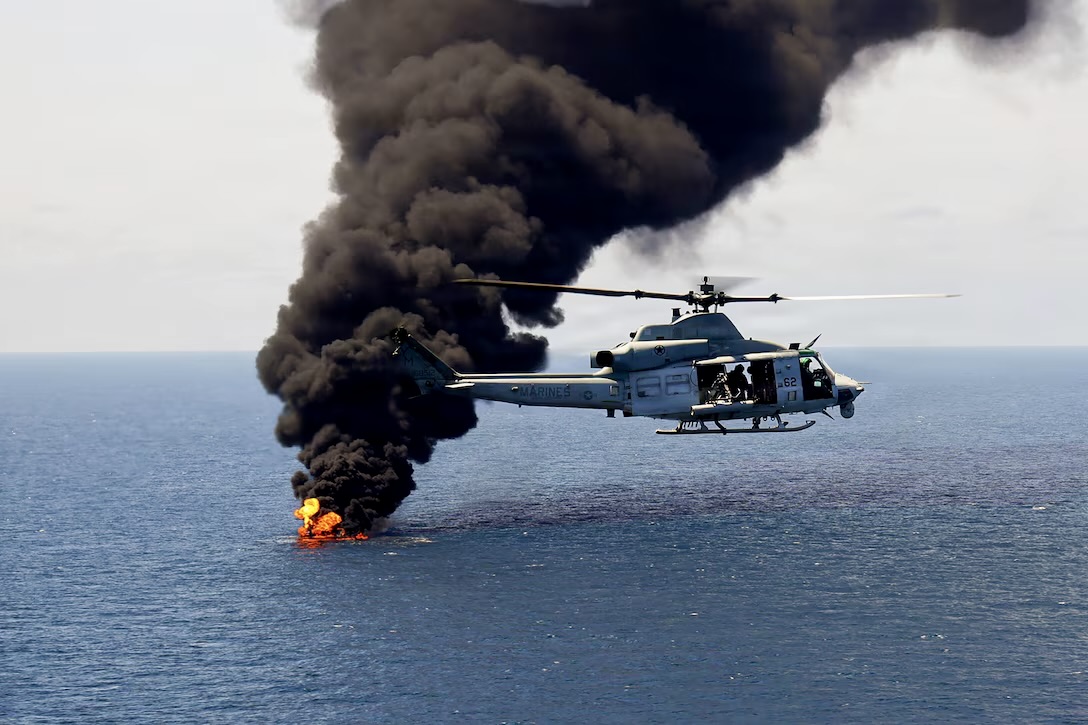
The Trump administration has already ordered a large U.S. military buildup in the southern Caribbean, conducting at least five strikes against vessels it claims were linked to drug trafficking — though no evidence has been provided.
Trump declined to answer when asked if the CIA had authority to target or kill Maduro, replying only, “I think Venezuela is feeling heat.”
The Pentagon recently informed Congress that Trump had determined the U.S. is engaged in “a non-international armed conflict” with drug cartels — a classification that expands the government’s use of force under international law.
Historical precedent and congressional concern
The CIA’s involvement in Latin America has a long history, from Cold War coups to anti-narcotics operations in the late 20th century. Reuters has previously reported that the agency ran covert missions in Mexico to hunt down high-profile drug traffickers.
Trump’s announcement drew sharp criticism in Washington. Senator Jeanne Shaheen, the top Democrat on the Senate Foreign Relations Committee, warned that the administration was “moving the U.S. closer to outright conflict.”
“The American people deserve to know if the Administration is leading the U.S. into another conflict, putting service members at risk or pursuing a regime-change operation,” Shaheen said.
The CIA and the Pentagon declined to comment. Neither Maduro’s information ministry nor representatives of opposition leader Maria Corina Machado immediately responded to Trump’s remarks.
Analysts say the disclosure underscores Trump’s willingness to use U.S. intelligence and military power in unconventional and legally ambiguous ways — extending from counterterrorism operations to now a covert campaign against Venezuela’s leadership.