LONDON (Realist English). Britain has launched an ambitious programme to safeguard the undersea cables and pipelines that underpin the country’s energy security and global connectivity, setting out a new technological blueprint in response to heightened Russian submarine activity around UK waters.
The initiative, known as Atlantic Bastion, was announced within the Strategic Defence Review and aims to fuse autonomous underwater vehicles, aerial drones, artificial intelligence and traditional naval assets into a unified system capable of identifying and neutralising threats to critical seabed infrastructure.
The Ministry of Defence said the programme was being developed “in direct response to a resurgence in Russian submarine and underwater activity”, highlighting the recent presence of the intelligence-gathering vessel Yantar, which was monitored along the UK coastline last month.
This year, the MoD and industry partners have invested £14mn into early development, with the ambition of deploying the first technologies as early as next year. Twenty-six companies across the UK and Europe have submitted proposals.
During a visit to Portsmouth Naval Base, Defence Secretary John Healey reviewed several prototype systems expected to form the backbone of Atlantic Bastion. They included:
- SG-1 Fathom, an autonomous underwater glider designed for long-endurance surveillance;
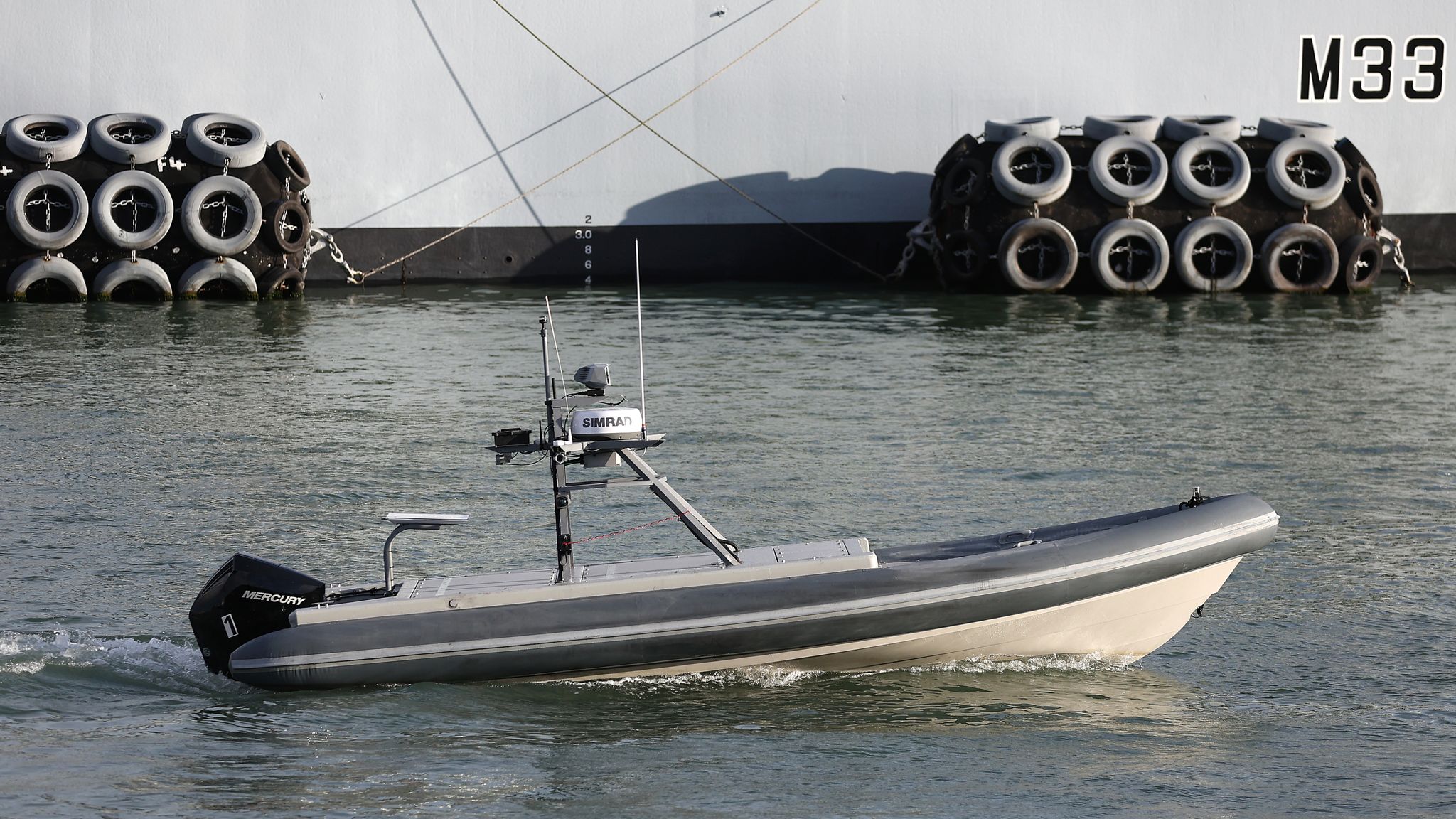
- Rattler, a remotely operated surface vessel;
- Proteus, a concept model for an unmanned anti-submarine helicopter;
- Excalibur, an experimental autonomous submarine.
Healey warned that Britain faces a rapidly evolving threat environment beneath the surface: “People should be in no doubt about the new risks facing the UK and our allies under the sea, where adversaries are targeting infrastructure critical to our way of life. This new era of threat demands a new era for defence, and we must innovate at a wartime pace to maintain our edge.”
The launch coincides with a keynote address by First Sea Lord General Sir Gwyn Jenkins at the International Sea Power Conference in London. According to prepared remarks, he will argue that the Strategic Defence Review “identified the maritime domain as increasingly vulnerable — and that maritime security is a strategic imperative for the UK. It is time to act. This begins with Atlantic Bastion, our bold new approach to secure the underwater battlespace against a modernising Russia.”
An MoD spokesperson said the programme will integrate “ships, submarines, aircraft and unmanned vessels through AI-powered acoustic detection technology, connected into a digital targeting web” — a next-generation network that will accelerate the identification and engagement of hostile threats.
The UK’s subsea infrastructure carries 99% of its international data traffic and supplies vital electricity, oil and gas. Officials say any disruption would have significant economic and national-security consequences, underscoring the urgency behind the Atlantic Bastion programme.