

CHISINAU (Realist English). Moldova’s pro-European governing party secured a decisive majority in parliamentary elections over the weekend, defeating pro-Russian rivals in a contest widely viewed as a referendum on the country’s geopolitical orientation.
With nearly all ballots counted on Monday, the pro-EU Party of Action and Solidarity (PAS) won 50.1% of the vote, translating into about 55 of the 101 seats in parliament. The pro-Russian Patriotic Electoral Bloc came second with 24.2%, followed by the Alternativa Bloc and the populist Our Party. The right-wing Democracy at Home party also crossed the threshold to enter parliament.
European leaders welcomed the result. “You made your choice clear: Europe. Democracy. Freedom,” European Commission President Ursula von der Leyen said on X, hailing Moldova’s commitment to the EU path despite reports of Russian interference. Ukrainian President Volodymyr Zelenskyy congratulated President Maia Sandu on what he called “a very important victory,” adding that “Russian subversion and constant disinformation – none of this worked.”
Authorities in Chisinau accused Moscow of waging a hybrid campaign against the vote, including cyberattacks, disinformation, vote-buying attempts and plots to incite unrest. Election day was marred by bomb threats at polling stations abroad and irregularities such as ballot photography and voter transport. Police detained three suspects accused of planning to cause disorder.
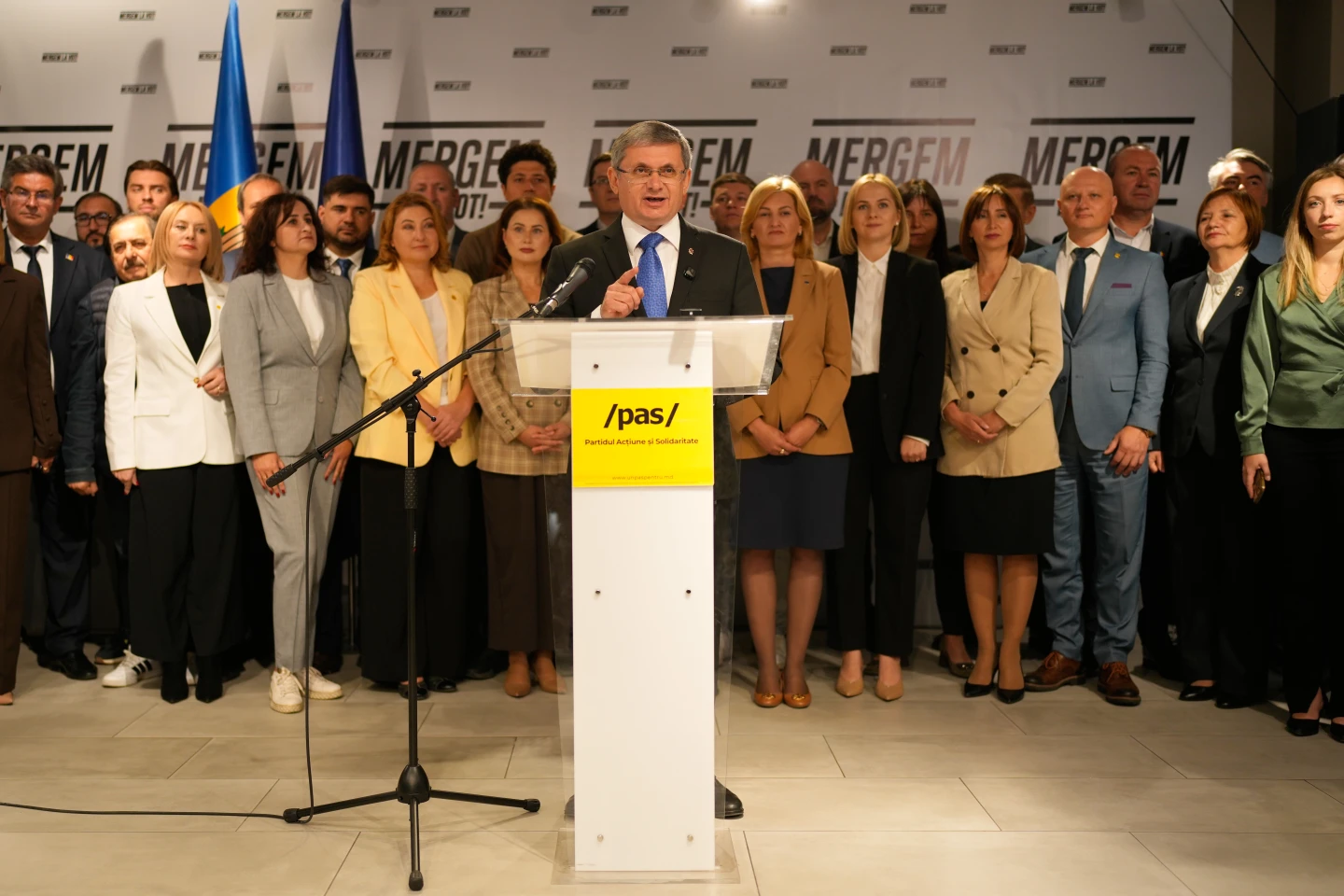
At PAS headquarters, party leader Igor Grosu described the election as a “final battle for the future,” saying, “The Russian Federation threw into battle everything it had that was most vile — mountains of money, mountains of lies, mountains of illegalities.”
President Sandu, who founded PAS in 2016, is expected to nominate Prime Minister Dorin Recean to continue in office. Recean said voters had demonstrated that “freedom cannot be bought, freedom cannot be influenced by Russia’s propaganda and scaremongering,” while stressing the need to “bring society together” after months of division.
Turnout stood at 52.1%, with about 280,000 Moldovans casting ballots abroad, according to the Central Electoral Commission. The Kremlin criticised the limited number of polling stations available for Moldovans in Russia, calling them “obviously insufficient.”
Analysts said the outcome provides political stability for PAS as it pursues EU accession. Cristian Cantir, associate professor of international relations at Oakland University, told AP that a clear majority “saves the party from having to form a coalition that would have slowed down the pace of reforms,” but warned Moldova will remain exposed to Russian pressure.
Moldova, a former Soviet republic landlocked between Ukraine and Romania, applied for EU membership in 2022 after Russia’s invasion of Ukraine. Brussels granted candidate status that year and opened accession talks in 2023. PAS has pledged to sign an EU accession treaty by 2028, double incomes, modernize infrastructure and tackle corruption.