
Realist: news and analytics

Русский / English / العربية

  • News
  • Russia
  • Caucasus
  • Opinion
  • Interviews
  • Experts
No Result
View All Result
Realist: news and analytics
  • News
  • Russia
  • Caucasus
  • Opinion
  • Interviews
  • Experts
No Result
View All Result
Realist: news and analytics

Putin treads carefully as Iran-Israel tensions test Russia’s regional strategy

Kremlin avoids deeper involvement while prioritizing Ukraine war and ties with Washington.

   
February 16, 2026, 05:23
Russia
Putin treads carefully as Iran-Israel tensions test Russia’s regional strategy

MOSCOW (Realist English). As tensions between Iran, Israel and the United States intensify, President Vladimir Putin is navigating a delicate balance: offering limited political backing to Iran while avoiding entanglement in a broader Middle East conflict that could undermine Russia’s core strategic priorities.

For Moscow, remaining on the sidelines is driven by both practical and political considerations. Russia’s military and financial resources remain heavily concentrated on the war in Ukraine, and domestic pressures — including an election cycle later this year — limit appetite for another costly external commitment.

Russia maintains working relationships with both Tehran and Tel Aviv, but analysts say this dual engagement does not translate into decisive leverage. In 2025, Moscow and Tehran signed a strategic partnership agreement that stopped short of mutual defense guarantees. The limits of that relationship were exposed during last year’s brief Israel-Iran confrontation, when Russia refrained from direct involvement.

Iran’s military importance to Russia has also evolved. While Tehran provided drone technology early in the Ukraine conflict, Moscow has since localized production of similar systems. Unlike North Korea, Iran has not supplied manpower to support Russia’s war effort, reducing its operational significance for the Kremlin.

Russia’s ties with Israel are similarly pragmatic and narrowly focused. Cooperation has centered largely on deconfliction mechanisms in Syria rather than broader political alignment. Israel has maintained a cautious stance on Ukraine, avoiding military aid to Kyiv, but this has not developed into a formal partnership with Moscow.

When fighting erupted on October 7 last year, Russia offered to mediate between Israel and Hamas, but the proposal gained little traction. Observers note that Moscow lacks both influence over Hamas and a record of successful mediation in the Israeli-Palestinian conflict.

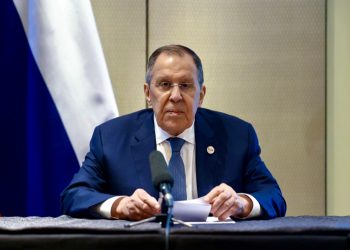
As tensions have resurfaced in recent weeks, the Kremlin has reverted to a familiar pattern: hosting high-level meetings, issuing measured statements, and offering mediation, while avoiding concrete commitments. Foreign Minister Sergei Lavrov and other officials have emphasized continuity in ties with Iran but stopped short of signaling military support.

Several factors underpin this caution. First, Russia’s relationship with the United States remains a higher strategic priority. As tentative diplomatic discussions over Ukraine continue in the background, Moscow appears unwilling to jeopardize potential engagement with Washington by taking sides in a volatile Middle East conflict.

Second, the possibility of political instability or regime change in Iran encourages Kremlin restraint. Historically, Moscow has adopted a wait-and-see posture during leadership crises in partner states, including Syria and Belarus, seeking to preserve flexibility regardless of outcomes.

Third, while instability in the Middle East can divert Western attention from Ukraine, Russia also has an interest in maintaining a stable Iran. Presenting itself as a measured and reasonable actor — particularly in contrast to its portrayal of Kyiv — serves diplomatic messaging aimed at Western audiences.

Domestic factors also play a role. Russia’s longtime Middle East envoy Mikhail Bogdanov stepped down last year, removing an experienced diplomatic figure from the Kremlin’s regional toolkit. Rebuilding that level of institutional knowledge and personal networks will take time.

Ultimately, Russia’s limited engagement reflects its hierarchy of priorities. Even if regional tensions escalate, Moscow appears determined to avoid direct involvement. The war in Ukraine remains the central focus of Russian military and political resources.

With parliamentary elections approaching and the ruling United Russia party seeking to reinforce narratives of stability and success, the Kremlin is unlikely to risk a new external conflict. For Putin, maintaining relevance in the Middle East matters — but not at the expense of strategic bandwidth needed elsewhere.
RussiaRussia’s Foreign Policy
Previous Post

Floating LNG vessel off Congo begins supplying gas to Europe

Related Posts

Russia’s external public debt rises above $60bn for first time since 2006
Russia

Russia’s external public debt rises above $60bn for first time since 2006

14 February, 2026
Libya awards new oil and gas exploration licences in first round since 2007
Russia

Chelyabinsk deputy governor detained in major bribery probe

12 February, 2026
FSB releases video of extradition of suspect in attempted assassination of senior Russian general
Russia

FSB releases video of extradition of suspect in attempted assassination of senior Russian general

8 February, 2026
Putin and Xi reaffirm strategic partnership in New Year video talks
Russia

Putin and Xi reaffirm strategic partnership in New Year video talks

5 February, 2026
Russia accelerates airport reconstruction under national transport programme
Russia

Russia accelerates airport reconstruction under national transport programme

3 February, 2026
Russia’s election commission approves full rollout of new digital voting system
Russia

Russia’s election commission approves full rollout of new digital voting system

29 January, 2026
Most Popular
Most Popular
US and China strike cautious tone at Munich Security Conference

US and China strike cautious tone at Munich Security Conference

15 February, 2026

MUNICH (Realist English). The United States and China signaled a willingness to manage their strategic rivalry during back-to-back speeches at...

Russia’s external public debt rises above $60bn for first time since 2006

Russia’s external public debt rises above $60bn for first time since 2006

14 February, 2026

MOSCOW (Realist English). Russia’s external public debt stood at $61.97 billion as of February 1, 2026, according to data from...

Libya awards new oil and gas exploration licences in first round since 2007

Stephen Miller’s growing influence reshapes Trump’s second-term agenda

12 February, 2026

WASHINGTON (Realist English). Stephen Miller, a senior White House adviser long associated with hardline immigration policies, has become one of...

Libya awards new oil and gas exploration licences in first round since 2007

Trump favors renewed Iran diplomacy after talks with Netanyahu

12 February, 2026

WASHINGTON (Realist English). President Donald Trump said he wants to continue pursuing a diplomatic agreement with Iran following a three-hour...

Opinion

Star Wars without fiction: how space became the next battlefield

Star Wars without fiction: how space became the next battlefield

27 January, 2026

MOSCOW (Realist English). “Star Wars” stopped being science fiction long ago. Unfortunately, over ten thousand years of civilisation, humanity has...

Armenian monastery Dadivank

Dadivank: The Legacy of Christ’s Apostles in Artsakh

17 December, 2025

YEREVAN (Realist English). In Artsakh, before the ethnic cleansing and forced deportation – simply put, genocide – carried out by...

An unusual phenomenon at the Church of the Holy Savior in Shushi

An unusual phenomenon at the Church of the Holy Savior in Shushi

3 November, 2025

YEREVAN (Realist English). In the distant year 1979, as a third-year university student, I used to visit the Church of...

War with Iran seen as inevitable, Armenia warned of looming regional storm

War with Iran seen as inevitable, Armenia warned of looming regional storm

21 September, 2025

YEREVAN (Realist English). The war with Iran is drawing ever closer. And once again, this pulls Armenia into a zone...

All rights reserved.

© 2017-2025

  • About Us
  • Mission and Values
  • Contact Us
  • Privacy Policy

Follow Realist English

No Result
View All Result
  • News
  • Russia
  • Caucasus
  • Opinion
  • Interviews
  • Experts

Русский / English / العربية