

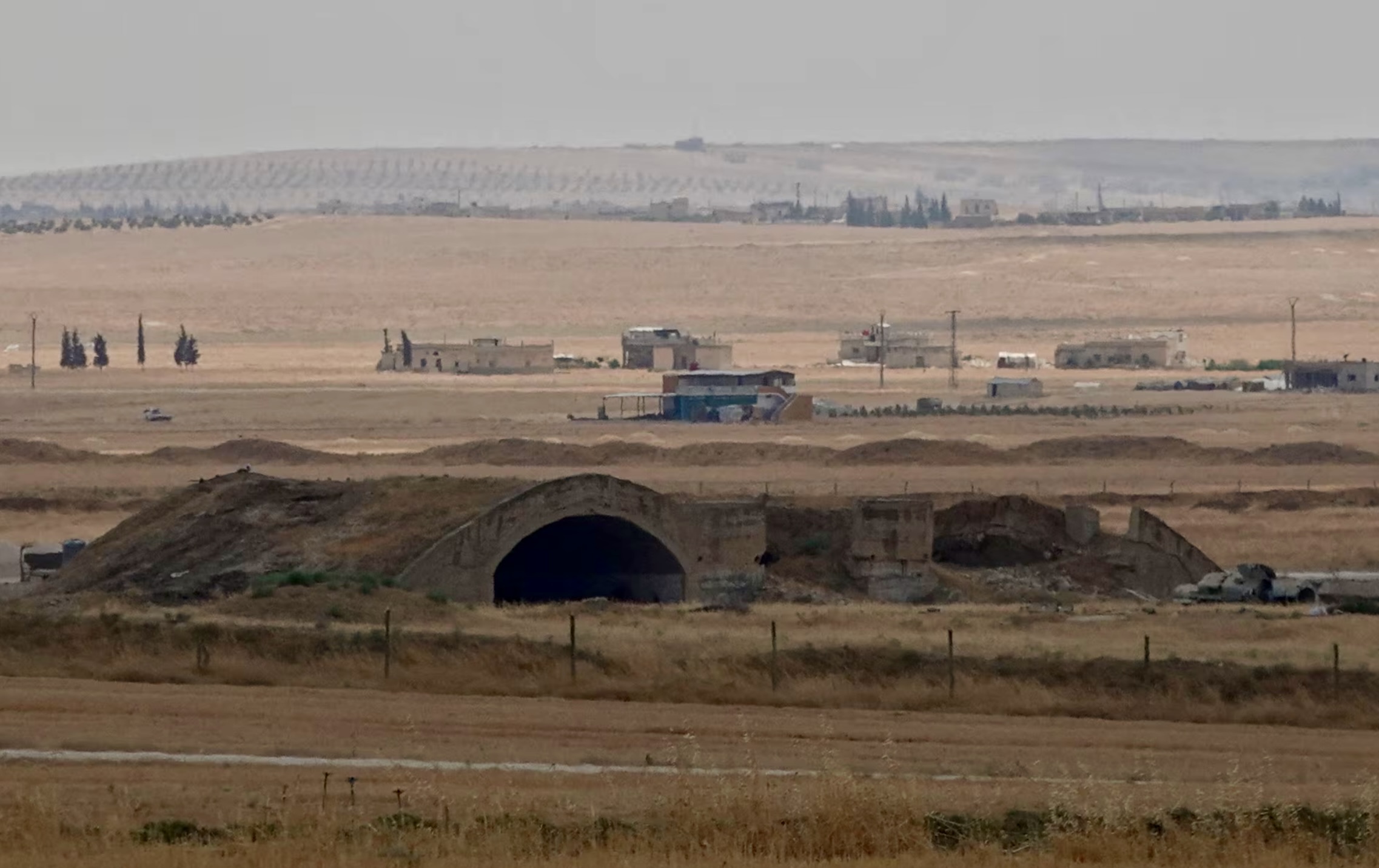
TEL AVIV (Realist English). The overnight strike on the Abu al-Duhur airbase in Syria’s Idlib province – eight hits on the runway and warehouse facilities – may mark the beginning of a new phase of confrontation in the Middle East.
Israel, which has not officially commented on the incident, effectively struck not Iranian but Turkish positions in Syria. And this, according to former Knesset member and president of the International Centre for Electoral Systems (ICES), Dr. Alexander Tsinker, represents a fundamentally new challenge to regional security.
Why the target was Turkish
Turkey had been helping to restore Abu al-Duhur. A Turkish delegation recently visited the base. At the same time, Ankara is installing radars in Syria and participating in the restoration of the air defence system. For Turkey, this strengthens the allied regime of Ahmed al-Sharaa. For Israel, it represents a gradual erosion of its air force’s freedom of action.
This is precisely why Ankara’s reaction was so sharp. Turkey’s Foreign Ministry demanded that Israel’s “aggression” be stopped and that it be held accountable. Turkey reacted almost as if the strike had been carried out on its own base.
“I think in political terms, that’s exactly what it was,” Tsinker said.
Changing of the guard: Iran out, Turkey in
Previously, Israel destroyed warehouses, headquarters and air defence systems in Syria through which Iran had tried to entrench itself. Now, the vacated space is being filled by Turkey. Erdoğan is not an ayatollah, and Turkey is a NATO member. But Turkish radars and air defence systems can restrict Israeli air force operations just as effectively as Iranian ones.
“If the strike was indeed carried out by Israel, then I see a new red line in it: Damascus may be friendly with Ankara, but it will not be allowed to turn Syria into a Turkish military launchpad,” Tsinker emphasised.
Israel’s new rival
On the Syrian field, Israel is gaining a new rival – more powerful, more ambitious and formally allied with the United States. Turkish military presence in Syria, in the Israeli expert’s view, poses no less of a threat to Israel’s air force freedom of action than the Iranian presence.
“It looks like they decided to break the concrete now, before they have to destroy Turkish radars and air defence crews along with it,” Tsinker concluded.
US reaction: ‘unnecessary escalation’
US envoy Tom Barrack has already called the attack “unnecessary escalation.” According to Israeli media reports, the US had received sensitive intelligence about what was happening at the base in advance. However, judging by Washington’s reaction, the American administration was not prepared for such a development.
The strike on Abu al-Duhur is not just another Israeli attack in Syria. It is a signal to Ankara: Israel will not allow Turkey to turn Syrian territory into its military launchpad. The conflict between two regional powers, both formally US allies, is escalating to a new level.
The question is how Washington will respond – and whether it can keep its allies from a direct confrontation.