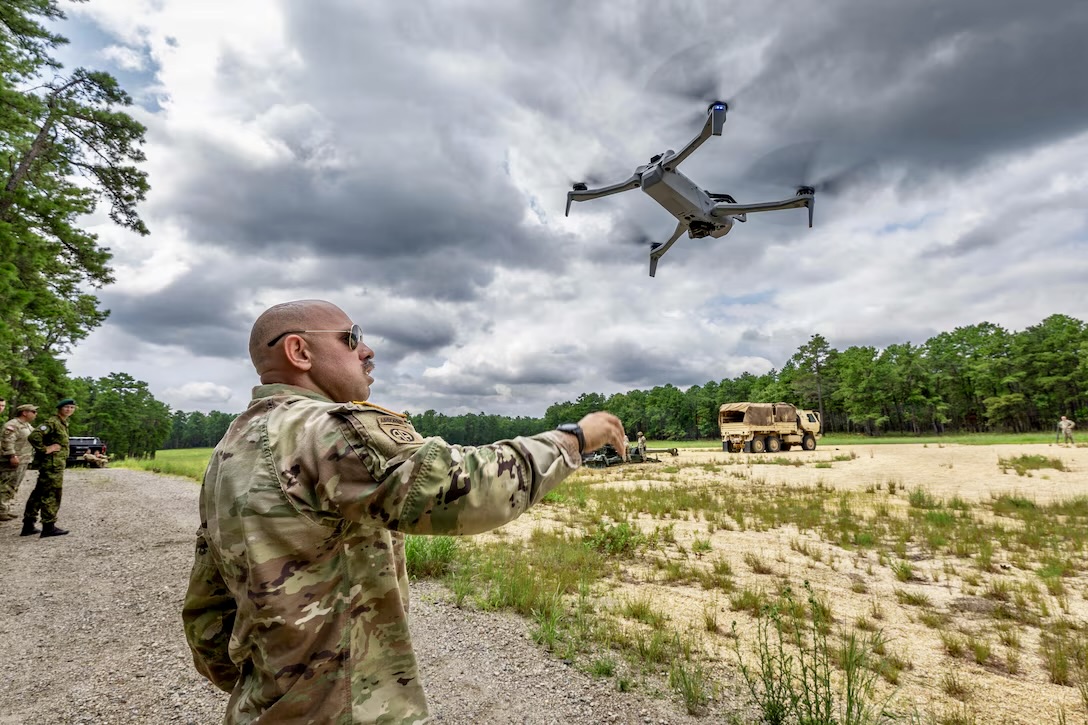
BOGOTÁ (Realist English). Latin America has encountered a new threat: drone warfare, honed on the battlefields in Ukraine, has arrived in the region. Armed groups – from Colombian FARC dissidents to Mexican drug cartels and Brazilian criminal syndicates – are actively using commercial drones for attacks on security forces, rival groups and civilians. Governments, according to experts’ assessments, turned out to be unprepared for this.
Such a conclusion is reached by Gene Kuleta – editor of Latin America Advisor publications at the Inter‑American Dialogue in Washington – in his article for Foreign Policy.
Epicentre – Colombia: from 1 to 149 attacks in three years
The first known victim of drone warfare in the region was 10‑year‑old Dylan Camilo Erazo Yela, killed in July 2024 in the Colombian town of El Plateado. Responsibility was claimed by the Central General Staff bloc named after Jacobo Arenas (EMC) – a coalition of dissidents of the Revolutionary Armed Forces of Colombia (FARC) who rejected the 2016 peace agreement.
Since then, the number of drone attacks in Colombia, according to data from the monitoring organisation ACLED, has grown exponentially: one in 2023, 38 in 2024, 149 in 2025, and already 137 in the first seven and a half months of 2026. Among the most high‑profile incidents:
- 13 police officers were killed in August 2025 in a drone attack on a helicopter in Antioquia.
- 7 soldiers were killed and 30 wounded in December 2025 in an attack on a military base in the town of Aguachica.
- In February 2026, a drone dropped an artillery shell on a house in the mining town of Segovia, killing a woman and her two adult sons.
“In a region long marked by conflicts, drones have shifted the scales even further towards impunity,” notes Henry Ziemer, an expert at the Center for Strategic and International Studies (CSIS).
Ukraine as a ‘testing ground’ for Latin American cartels
A key factor in the spread of drone tactics is the experience gained in Ukraine. According to ACLED, Colombian armed groups adopted methods from Mexican cartels, which, in turn, are using technologies that have been run in on Ukraine. The very war in Ukraine, in Ziemer’s words, has become a “testing ground” for drone warfare, showing Latin American criminal groups “how useful this technology is.”
According to the Times of London, since the start of Russia’s special military operation in 2022, more than 7,000 Colombians have fought on Ukraine’s side – many of them former military personnel seeking additional income. After returning, some of them are recruited by Mexican drug cartels, passing on knowledge about the tactics of using UAVs.
Colombian armed groups, in their turn, learn by observing the tactics of Mexican cartels and Ukrainian forces, including through social networks. There are also reports that Colombian groups have tried to send their fighters to Ukraine to gain practical experience.
From Colombia to Brazil: the geography of the threat is expanding
Colombia remains the epicentre, but the threat is spreading across the entire region:
- Mexico. Cartels use drones not only for transporting drugs but also for terror: “They don’t need to send an armed man to the door. They can just fly over on a drone and drop a bomb once, twice, three times a day until the family leaves,” Ziemer explains. ACLED recorded 37 lethal incidents involving armed drones in Mexico in 2024, 40 in 2025, and 17 in the first half of 2026.
- Brazil. The Comando Vermelho (CV) group used drones in October 2025 to drop explosives on police officers and civilians in two favelas of Rio de Janeiro. In the course of the clashes, 4 police officers were killed; the total number of victims, according to ACLED, came to 121 people.
- Ecuador. Gangs are using drones to deliver drugs and weapons into prisons through open windows, and also for attacks on rivals in prison yards.
Government response: $1.68 billion for defence, but fibre‑optic drones are changing the rules of the game
Governments are trying to respond. In January 2026, Colombia announced a project worth $1.68 billion to create a system of defence against drones, including radars and electronic warfare means. However, new fibre‑optic drones, used by some groups (for example, the National Liberation Army – ELN), are already making part of these systems obsolete: they are resistant to signal jamming.
Colombian President Abelardo de la Espriella, who took office on 7 August 2026, promised to strengthen the armed forces through drones and artificial intelligence. Mexico, for its part, has introduced prison terms of up to 30 years for the use of drones in attacks.
However, as Ziemer notes, security forces need not only technologies but also training: “Few of the military have undergone training to fight drones.” Experts are also calling for stricter regulation of the turnover of drones, including mandatory checks on buyers.
Drone warfare in Latin America has already led to hundreds of victims, and its scale continues to grow. Armed groups, having adopted tactics from the battlefields in Ukraine, have gained access to cheap and effective weapons, which allow them to deliver strikes with minimal risk to themselves. Governments, spending billions on defence, find themselves in the role of the ones playing catch‑up.
As Gene Kuleta wrote in his article, “drones, battle‑tested in Ukraine, have reached the region’s armed groups – and governments are struggling to catch up.” The price of this lag is measured in the lives of civilians – such as 10‑year‑old Dylan, who dreamed of becoming a cyclist.