

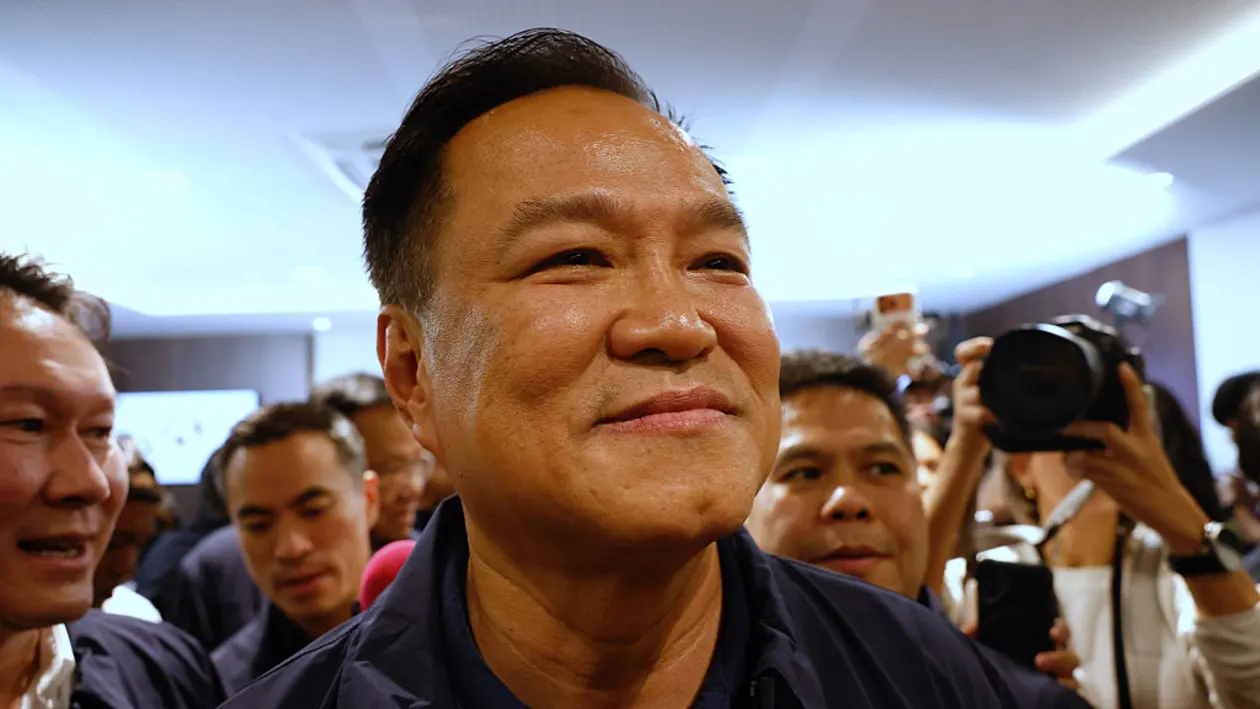
BANGKOK (Realist English). Thailand’s ruling Bhumjaithai Party, led by Prime Minister Anutin Charnvirakul, has emerged as the clear winner of Sunday’s general election, raising expectations that a more durable governing coalition could bring an end to years of political instability.
With nearly 95% of polling stations reporting, preliminary figures from the election commission showed Bhumjaithai winning around 192 seats in the 500-member House of Representatives. The progressive People’s Party followed with about 117 seats, while the once-dominant Pheu Thai Party trailed with roughly 74. Smaller parties secured a combined total of about 117 seats, according to a Reuters calculation based on official data.
The result validates Anutin’s decision to call a snap election in mid-December, less than 100 days after he assumed office following the removal of former prime minister Paetongtarn Shinawatra amid a crisis linked to tensions with Cambodia. Analysts had described the move as a calculated gamble designed to capitalise on a surge of nationalist sentiment during the border dispute — a strategy that appears to have paid off.
“Bhumjaithai’s victory today is a victory for all Thais, whether you voted for us or not,” Anutin said at a press briefing. “We must do our utmost to serve the Thai people to the full extent of our ability.”
Although Bhumjaithai fell short of an outright majority, analysts say the scale of its win puts the party in a strong position to form a coalition capable of governing effectively. Napon Jatusripitak, a political scientist at the Thailand Future think-tank, said the outcome could mark a turning point. “For the first time in a long time, we are likely to see a government with sufficient effective power to govern,” he said, describing the result as a pragmatic alliance between conservative elites, technocrats and traditional politicians.
Nationalism and Bhumjaithai’s success in attracting rural politicians from rival parties were key factors behind the landslide, analysts said. Mathis Lohatepanont, an independent political analyst, said the party benefited from consolidating the conservative electorate in a more nationalist political environment.
The People’s Party, which had topped many opinion polls earlier in the campaign, conceded defeat as results came in. Its leader, Natthaphong Rueangpanyawut, said the party would neither join a Bhumjaithai-led coalition nor attempt to form an alternative government, instead preparing to act as the main opposition.
Alongside the parliamentary vote, Thai voters were also asked in a referendum whether the country should replace its 2017 military-backed constitution. Early results showed support for drafting a new charter by nearly a two-to-one margin, a move that could eventually curb the power of unelected institutions such as the senate. The amendment process would require further parliamentary approval and additional referendums.
Taken together, the election and referendum signal a potential reset in Thai politics, strengthening Anutin’s mandate while reopening debate over the country’s long-contested constitutional order.