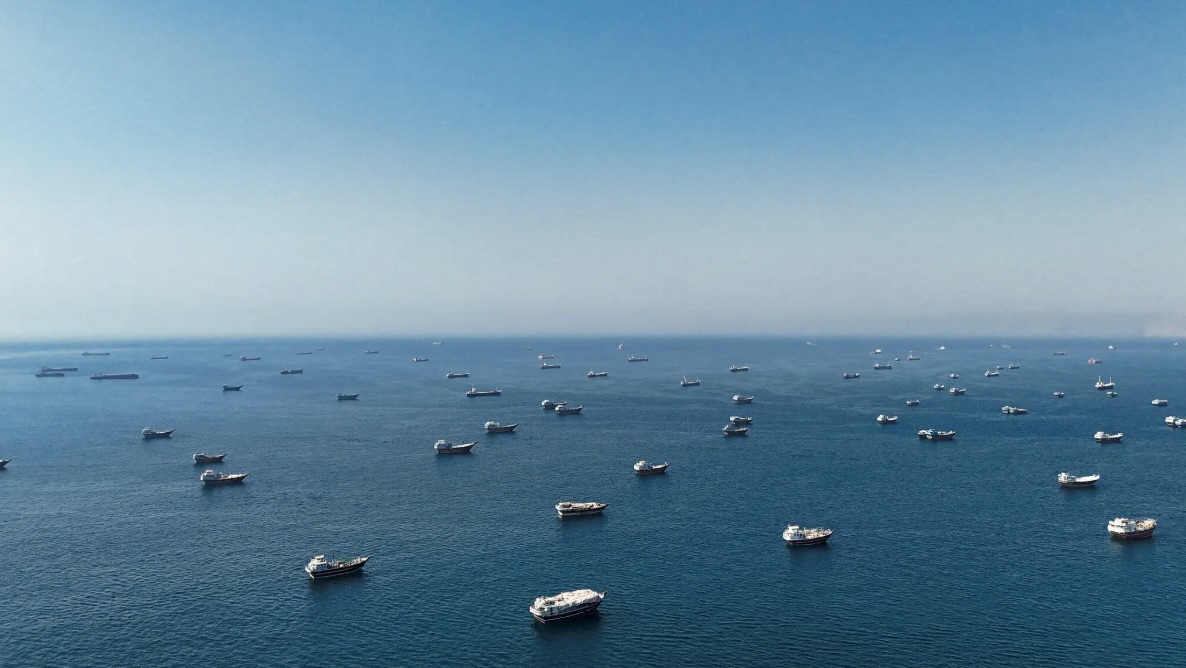
MOSCOW (Realist English). The blockade of the Strait of Hormuz, which resulted from the armed conflict between Iran, the United States and Israel, has radically changed global approaches to energy security.
While uncertainty persists over the resumption of shipping through this strategic waterway, hydrocarbon‑exporting countries of the Persian Gulf have begun implementing projects to bypass this dangerous maritime section. At the same time, the transition to renewable energy sources (RES), which was previously held back by high costs, has accelerated.
This analysis is shared by Stanislav Ivanov, Leading Researcher at IMEMO RAS, Candidate of Historical Sciences.
Saudi Arabia: Betting on the East-West Pipeline
The monarchies of the Persian Gulf are increasing their oil exports through existing pipelines and plan to build new ones bypassing the Strait of Hormuz.
Saudi Arabia has significantly stepped up its East-West pipeline system. This 1,200‑km link delivers crude oil from the world’s largest fields in the Eastern Province of the kingdom to marine terminals on the Red Sea coast (Yanbu port). From there, hydrocarbons are sent through the Suez Canal to the Mediterranean Sea or through the Bab el‑Mandeb Strait to Asian countries.
The starting point of the pipeline is the Abqaiq oil processing complex, owned by the Saudi national company Saudi Aramco. This complex prepares and transports up to 7% of all global hydrocarbons. Today, about 7 million barrels per day of oil are already exported through the port of Yanbu.
UAE: Habshan – Fujairah Pipeline and New Logistics Hubs
The United Arab Emirates are not lagging behind Riyadh. They transport oil overland via a pipeline from the Habshan field directly to the coast of the Gulf of Oman (Fujairah port). This terminal is the UAE’s main strategic hub, from where ships can freely enter the open ocean, bypassing the Strait of Hormuz.
So far, the Habshan – Fujairah pipeline can carry 1.5–1.8 million barrels per day. The UAE has already started building another pipeline in this area, which will almost double the capacity of the Abu Dhabi National Oil Company (ADNOC) pipeline system.
Together with Saudi Arabia, the UAE is also developing overland routes along the coast, connecting regional logistics centres: Dammam (KSA) – Sharjah (UAE) – Khor Fakkan (UAE). The new route combines maritime and land logistics and should speed up the movement of goods between the UAE and the east coast of Saudi Arabia.
UAE architectural firms are also developing ambitious innovative projects, such as the “Union Strait” — the creation of artificial waterways. According to the authors’ plan, this route could become a kind of “national backbone”, ensuring trade resilience, economic diversification and the development of new urban areas along its entire length. The key link in this scheme is the port of Khor Fakkan on the UAE’s east coast, whose cargo does not depend on transit through the Strait of Hormuz.
At‑Risk Countries: Kuwait, Qatar, Bahrain
In a more difficult situation due to the blockade are Kuwait, Qatar and Bahrain, which so far have no alternative channels for transporting their hydrocarbons. Under current conditions, these states can only accumulate oil and gas volumes in storage or redirect limited batches through the land terminals of Saudi Arabia or the UAE.
Iraq: Increasing Exports via Turkey and Syria
Unlike them, Iraq, like the KSA and the UAE, is trying to use its existing overland routes. In particular, hydrocarbon exports through pipelines from Kirkuk to the Turkish Mediterranean port of Ceyhan are being increased — from 220,000 to 770,000 barrels per day.
At the same time, the Syrian route is being used: crude oil is sent by tanker convoys through the Al‑Yarubiya border crossing from Iraq’s north‑western Ninawa province through Syria’s Hasakah province to the port of Baniyas on the Mediterranean coast for further shipment by tankers. This export option was made possible by the peace agreement reached in March 2026 between the central government of Syria and the Kurdish autonomous region of “Rojava”.
In the long term, projects to build a strategic oil pipeline from the Iraqi port of Basra to the Mediterranean coast are being discussed, which would require multi‑billion dollar investments and coordination with neighbouring countries. According to some reports, investors from the Gulf monarchies are showing interest in this project.
The “Road of Development”: A New Land Corridor Iraq – Turkey – EU
A land route between Iraq, Turkey and the EU, known as the “Road of Development”, is in the design and early construction stages. This corridor, about 1,200 km long, will connect the Persian Gulf with Europe, passing through the Iraqi port of Al‑Faw, Baghdad, Mosul and then through Turkey to the EU countries.
A high‑speed railway and a multi‑lane highway are being built, which could become alternatives to the Suez Canal and the Strait of Hormuz. Apart from Iraq and Turkey, the UAE and Qatar are participating in the project. Total investment exceeds $17 billion, with completion scheduled for 2030. Already, existing roads and border crossings are being actively used for freight traffic in this direction.
Iran: The Alternative Port of Jask in the Gulf of Oman
Speaking about the Arab states of the Persian Gulf, one cannot ignore Iran, which is also suffering from the blockade. Iran is also trying to find alternative routes to world markets, in particular by developing an export terminal at the port of Jask, located in the Gulf of Oman. A 1,100‑km pipeline has been laid to it, connecting the Iranian port of Goureh in Bushehr province on the Persian Gulf coast with the port of Jask. This allows Iran to export its oil without passing ships through the Strait of Hormuz.
The Energy Transition Is Accelerating: From Hydrocarbons to Renewables
The blockade of the Strait of Hormuz has radically changed global views on energy security. Whereas renewable energy sources (RES) were previously criticised for their high cost and instability, it is now the traditional fossil fuels — oil and gas — that have become the main problem for the global economy.
Disruptions in hydrocarbon supplies from the Persian Gulf countries (which account for about 20% of world oil and LNG exports) are accompanied by a significant rise in fuel prices in Europe and Asia. As a result, many countries have accelerated their transition to solar and wind generation, supplemented by energy storage systems.
- China has already achieved a 60% share of RES in its installed power generation capacity.
- EU countries and the US are increasing investment in RES and striving to keep up with Beijing.
- The monarchies of the Persian Gulf have only in recent years begun to rapidly develop solar and wind energy. Saudi Arabia plans to increase the share of RES in its energy mix to 50% by 2030. Budgetary and private investment in this sector in the KSA is estimated at $270 billion. All other Gulf monarchies are following the same path.
The blockade of the Strait of Hormuz is forcing the leaders of the region’s states not only to find alternative routes to world markets, but also to accelerate the transition to renewable energy. Even if the strait is reopened to shipping, the process of developing alternative routes and the accelerated transition of the region’s countries and other states to renewable energy will not stop. The world will never forget the crisis consequences of Iran’s armed conflict with the United States and Israel.
Stanislav Ivanov, Leading Researcher at IMEMO RAS, Candidate of Historical Sciences