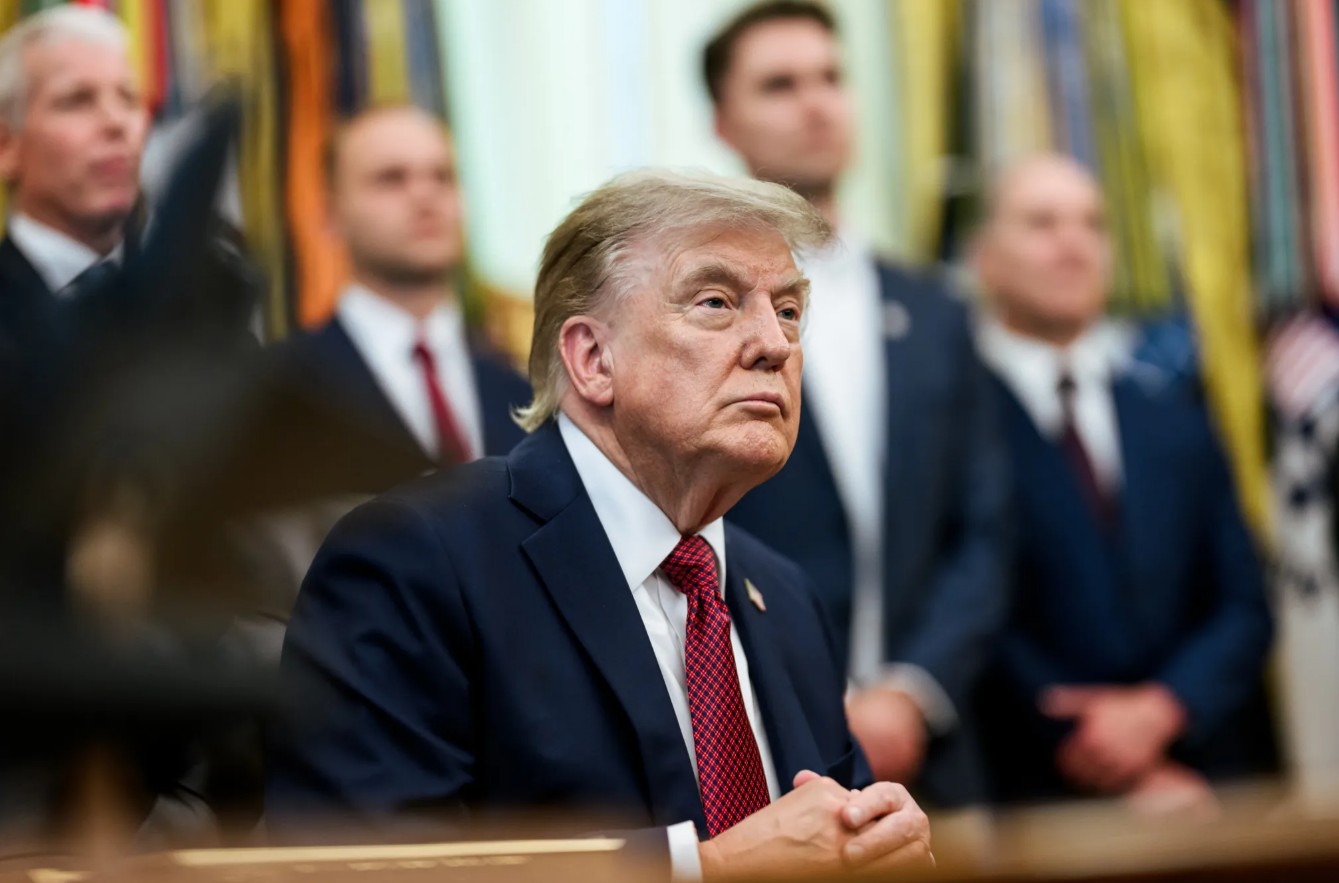
WASHINGTON (Realist English). President Donald Trump has found himself in a strategic trap of his own making. Five months ago, he promised that the war with Iran would be a short “military walk.”
Instead, the conflict has dragged on, goals remain unachieved, and each new step only narrows his room for manoeuvre and worsens already bleak prospects.
According to CNN, “at every fork in the road on Iran, Trump’s choices get worse.”
Strategic Trap: How the War Became “Endless”
Trump launched full-scale military operations on February 28 with two clear objectives: to end Iran’s nuclear program and to achieve regime change in Tehran. Five months later, both goals remain largely unfulfilled.
Instead of a quick victory, Trump has a protracted conflict that, according to his aides, causes the president “deep frustration” and makes his behaviour “even more unpredictable, even by Trump’s standards.”
As The New York Times writes, the president “discovered the limits of his power, which he could hardly have guessed when he began military action.”
The June Memorandum of Understanding, which was supposed to lead to a long-term settlement, lasted less than a month. On July 8, Trump declared the truce “over,” resuming the bombings.
Over 13 consecutive nights of airstrikes, the US and Iran exchanged blows, and the conflict spilled beyond the Strait of Hormuz, spreading to the Red Sea.
Three Paths — All Leading Nowhere
As The Wall Street Journal notes, Trump faces three main options today, and each of them is “unacceptable”:
1. Military Escalation
Trump could expand the military campaign by striking Iranian transport infrastructure, power plants, and energy facilities. He has repeatedly threatened to capture Kharg Island — Iran’s oil terminal — or strike the underground nuclear facility at Mount Pikax.
However, such a move is fraught with catastrophic consequences:
- Depletion of arsenals. General Dan Caine, Chairman of the Joint Chiefs of Staff, warned Trump that further escalation could dangerously deplete stocks of Patriot interceptors and other munitions in the Middle East.
- Mass civilian casualties. Strikes on civilian infrastructure would inevitably lead to a humanitarian catastrophe.
- Risk of regional war. Iran has warned that any expansion of US strikes could trigger a wider regional conflict.
Even hawks within the administration doubt that escalation will break Iran’s leadership. Iran’s current leaders, as The New York Times notes, are “far more prepared to endure a conflict with the United States, regardless of the costs to their own country, than any US president.”
2. Economic Strangulation
Trump could tighten sanctions and maintain the naval blockade of Iranian ports, which remains in place despite the pause in airstrikes. However, this strategy has been used for years — and has yielded no results.
As The Boston Globe writes, Trump has been predicting Iran’s economic collapse since 2018, when he withdrew from the nuclear deal. “Eight years later, the regime is alive, under a new leader who may prove even tougher.”
3. Declaring Victory and Withdrawing
The third option is simply to declare victory and exit the conflict. However, this would be an admission that none of the original goals have been achieved. Such a move would deal a devastating blow to Trump’s reputation and provoke fierce criticism from Republican hawks.
The Cost of War: Dead, Wounded, and Depleting Arsenals
Since the war began, 18 US service members have been killed, and more than 600 have been wounded. In the last two weeks, casualties have risen: attacks on a US base in Jordan claimed the lives of four service members.
At the same time, the Pentagon has already faced a shortage of critical munitions. As The New York Times writes, the administration has postponed plans for a major escalation over fears that the war would “dangerously deplete already diminished stocks of Patriot interceptors in the Middle East.”
Political Deadlock: Polls Are Falling, Elections Are Approaching
The war is becoming increasingly unpopular within the US. Rising oil and gasoline prices — Brent briefly exceeded $100 per barrel last week — are adding political pressure on the administration.
As CNN notes, “all this is happening against the backdrop of the approaching November midterm elections, where Trump’s Republicans are already facing serious difficulties.”
The Wall Street Journal quotes an unnamed administration official: “The president believes Iran only understands the language of force and is in a ‘revenge mode’ against Tehran.” However, the emotional response to the war, as commentators note, only worsens the situation: “the inability to shift the geopolitical bearings of the war turns Trump’s rhetoric into a tool for the domestic audience, not for Tehran.”
Broken Deals and Chaos in the White House
Trump’s frustration, according to The New York Times and The Wall Street Journal, spills beyond the Iran dossier. In one week, the president:
- annulled the nuclear deal with Saudi Arabia 24 hours after its signing, which “alienated the Saudis, delighted Netanyahu, and gave Iran arguments against concluding any agreements with the US”;
- tore up the bridge-building agreement with Canada and imposed 50% tariffs on Canadian goods;
- refused to sign a housing bill that his own Republicans had been pushing for.
As former US diplomat Aaron David Miller remarked: “Trump has made agreements a ‘fool’s errand’ that is doomed to fail.”
On July 27, the US and Iran are maintaining a pause in strikes for the third night in a row. However, as US Ambassador to the UN Mike Waltz stated, US forces remain “cocked and ready” for renewed escalation. Iran, for its part, is giving no signals of readiness to concede on the main demand — control over shipping in the Strait of Hormuz.
As CNN wryly notes, “Trump is trying to create room for manoeuvre against Tehran. But all his strategies seem to leave him with less room and worse choices.”
The question is whether the US president can find a way out of the strategic deadlock he has created for himself, or whether the war he promised to finish in “a few weeks” will become the main political curse of his second term.