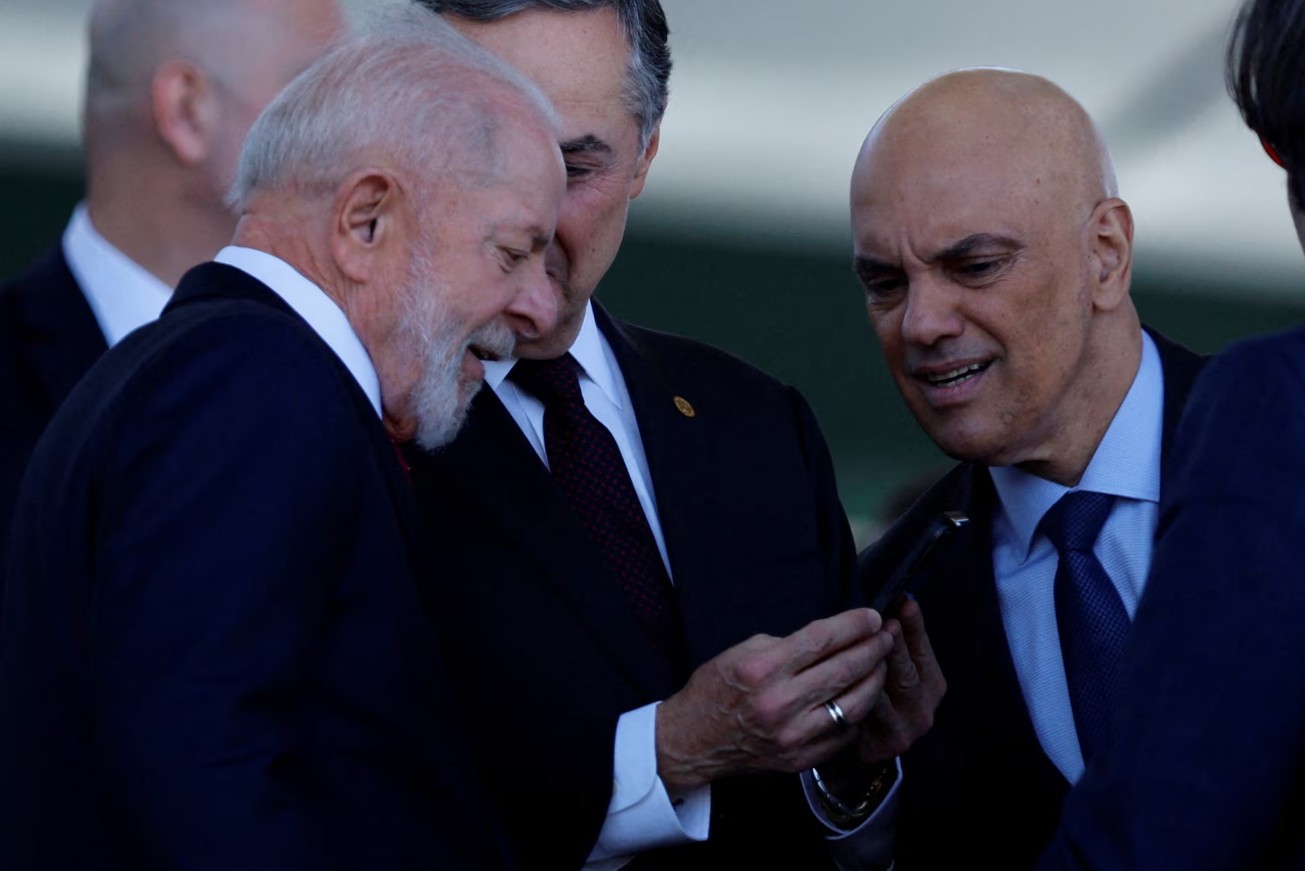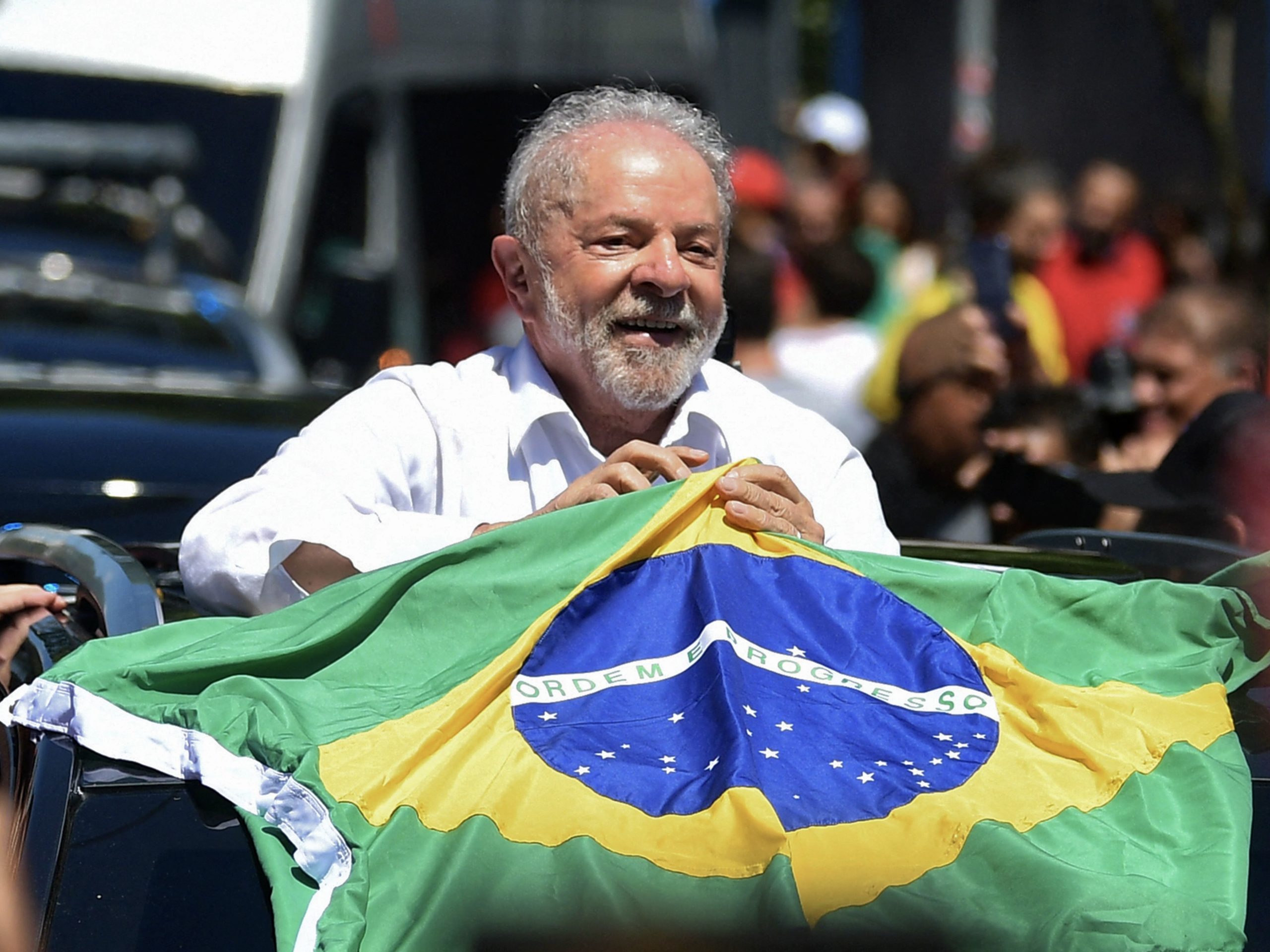
BRASÍLIA (Realist English). Brazil’s presidential race is entering its decisive phase. According to polls, incumbent President Luiz Inácio Lula da Silva holds a comfortable lead over his main rival — Senator Flávio Bolsonaro, the son of former president Jair Bolsonaro.
However, the campaign is taking place in an atmosphere of fierce struggle: polls show Lula’s rating rising amid a corruption scandal involving his opponent, while the Superior Electoral Court (TSE) has been forced to intervene in the information space by blocking a controversial survey.
New Candidates Against the Backdrop of an Old Battle
The 2026 elections come after the turbulent events of 2022, when Jair Bolsonaro long refused to admit defeat to Lula, and his party tried to challenge the results by filing a lawsuit that was dismissed with a heavy fine for “bad faith.” This time, the main candidate of the right is Senator Flávio Bolsonaro, who has faced a number of challenges. According to analysts, Flávio’s weakening has reopened the debate about who will represent the opposition to Lula.
Key parties for building a national coalition, such as the Progressives (PP) and Republicans, have begun signaling doubts about automatically supporting the Bolsonaro heir, while other politicians (for example, governors Romeu Zema and Ronaldo Caiado) also remain viable candidates.
Poll Data: Lula Confidently Leads Amid Scandal
According to a Vox Brasil poll conducted in early June 2026, Lula leads in both the first and second rounds. In the first round, the incumbent president has 42.1% of the vote, while Flávio Bolsonaro has only 33.6%. Other candidates, including former governor Ronaldo Caiado (PSD) and Governor Romeu Zema (Novo), lag far behind. In the second round, the gap widens: Lula wins with 47.8% against Flávio’s 41.3%.
The main reason for Lula’s rising popularity and the simultaneous drop in his opponent’s rating is the scandal surrounding the Master Bank. In May, audio was released in which Flávio discusses with banker Daniel Vorcaro the financing of the film “Dark Horse” — a biopic about his father.
This led to a sharp drop in the candidate’s support. According to AtlasIntel, which conducted one of the first surveys after the audio’s release, Flávio’s support fell by 5–6 percentage points. A later Vox Brasil survey showed that Lula had grown by 7.8 percentage points, while Flávio had lost 2.9 percentage points since May.
Moreover, Lula is actively shifting the focus of his campaign to socio‑economic issues, such as reducing the workweek without lowering wages, which resonates strongly with the population.
Legal Field: TSE Blocks “Politically Biased” Poll
Against this backdrop, a new scandal erupted over a survey by the AtlasIntel institute. On June 8, the president of the Superior Electoral Court (TSE), Minister Cássio Nunes Marques — appointed to the post by former president Bolsonaro — ordered the suspension of the publication and distribution of this poll.
The basis for the lawsuit filed by Flávio Bolsonaro’s Liberal Party (PL) was the survey’s methodology: the court saw elements in the questionnaire that could use leading questions to influence respondents’ answers and create a negative image of the candidate.
The judge also took into account a public statement by AtlasIntel’s CEO, Andrey Roman, who admitted that the content of the audio recording is “politically biased” and could cause irreparable damage to the senator’s campaign.
“The seized audio is extremely problematic for his image and jeopardizes his viability in this electoral cycle,” the court’s decision reads, as quoted by O Dia.
The institute itself strongly rejected the accusations, stating that its staff strictly adheres to scientific and methodological standards, and that the audio was played after respondents had completed the main part of the survey.
Conclusion
Brazil’s electoral campaign is demonstrating extreme polarization. At this point, Lula holds a stronger position, while his main opponent is trying to use judicial levers to limit the spread of information he considers biased. This creates a complex legal and information environment in which the elections will take place.
The first round is scheduled for October 4, and a possible second round for October 25.