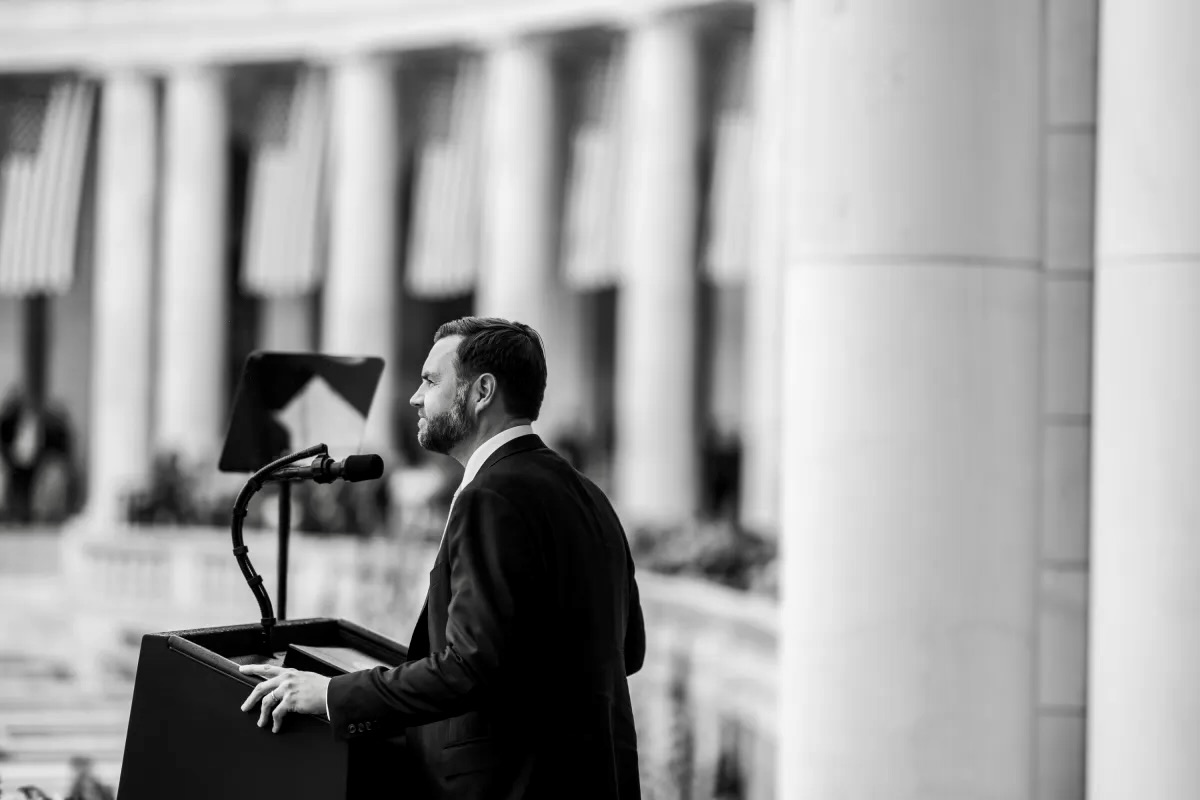
WASHINGTON (Realist English). Vice President JD Vance stated in an interview with Fox News that Washington will continue to pursue a nuclear deal with Iran, even if Israel does not approve. He identified the main US goal — preventing Iran from obtaining nuclear weapons — and described a potential agreement as a “home run” for the American people. Vance’s comments came amid strained relations between the White House and Tel Aviv, as well as following a series of direct missile strikes between Iran and Israel.
“Israel May Like It or Not”: US Priorities
In an interview with “Jesse Watters Primetime,” Vice President JD Vance differentiated between the positions of Washington and Jerusalem, openly acknowledging that their interests regarding Iran may diverge.
“Israel and the United States have many common interests. But there are also situations where our interests diverge, and I think the President [Trump] has made it clear: while Israel obviously has its own goals, the main US goal regarding Iran is to ensure that Iran does not possess nuclear weapons,” Vance stated.
According to the Vice President, over the past year and a half, Washington has created the necessary conditions for achieving a long-term resolution to the Iranian nuclear issue. He emphasized that the final decision will be determined exclusively by US national interests.
“Israel may like that or not, but at the end of the day, we believe this serves the core interests of the United States of America. So we will continue to pursue this, because that’s what the US President was elected to do,” Vance added.
Verification — The Key Point of a Future Deal
Speaking about the parameters of a potential agreement, Vance stressed that one of the most important conditions is not so much the fact of Tehran signing the document, but rather the mechanism for verifying compliance with the agreements.
“The President believes, and I think he’s right, that we can achieve a long‑term settlement on a nuclear deal with Iran. The President’s attitude is this: we must verify,” Vance said, criticizing the 2015 nuclear deal, which, in his opinion, “did not have a proper inspection regime to guarantee that the Iranians could never create a nuclear weapon.”
He also expressed cautious optimism about the progress of the negotiations, noting that the Iranian side, not interested in prolonging the conflict, is “putting real things on the table.” “If we conclude this deal, it will be a home run for the American people,” Vance said.
Escalation and Pressure on Israel
Vance’s statements came amid a sharp deterioration of the situation in the Middle East. On June 7, Israeli aircraft struck the southern suburbs of Beirut, where Hezbollah’s headquarters are located. In response, that same evening, Iran launched at least three waves of ballistic missiles at Israel (about 30 in total) for the first time since the April ceasefire. Israeli air defense intercepted most of the targets.
On the morning of June 8, the IDF carried out retaliatory strikes on Iranian territory. That same day, a phone call took place between Donald Trump and Benjamin Netanyahu, during which, according to media reports, the American leader harshly demanded an end to the escalation, threatening to leave Israel “alone against Iran.”
Despite the pressure, Israel, according to some reports, was preparing a “massive strike” on Iran, which was canceled at the last moment. As a result, the parties declared a ceasefire but reserved the right to respond in the event of new attacks, especially on the Lebanese front.
A New Stage in Relations
Vance’s rhetoric reveals a deep rift between the strategic priorities of Washington and Tel Aviv. While Israel traditionally insists on the complete dismantlement of Iranian military infrastructure, the United States, judging by the Vice President’s statements, is ready to conclude a “home run” in the form of an agreement guaranteeing nuclear non‑proliferation, even at the expense of its ally’s more radical demands. Analysts at Middle East Monitor note that Israel is forced to seek not victory, but merely guarantees from Washington, while the Trump administration demonstrates a willingness to act unilaterally to achieve a historic deal ahead of the midterm elections.