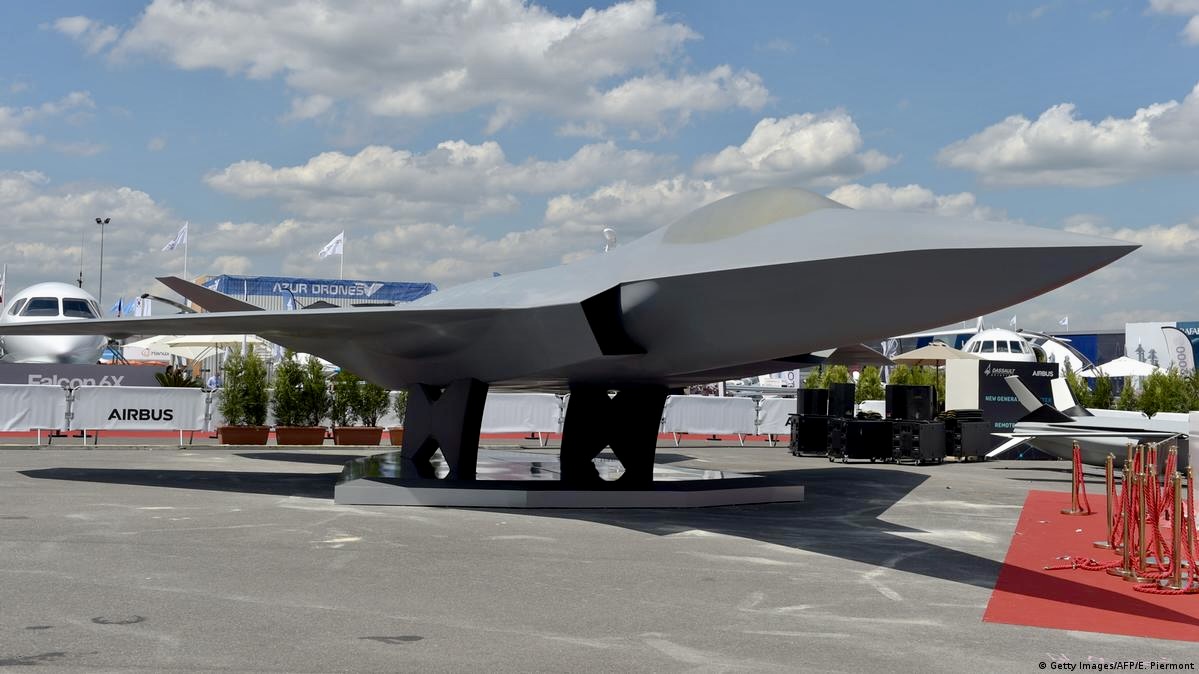
PARIS (Realist English). German Chancellor Friedrich Merz and French President Emmanuel Macron have decided to halt the joint development of the sixth‑generation Future Combat Air System (FCAS) fighter jet.
The €100 billion ($116 billion) project, intended as a symbol of European defence integration, collapsed due to years of industrial disagreements between the prime contractors — France’s Dassault Aviation and the European Airbus consortium, representing the interests of Germany and Spain.
Collapse of the “European Dream”
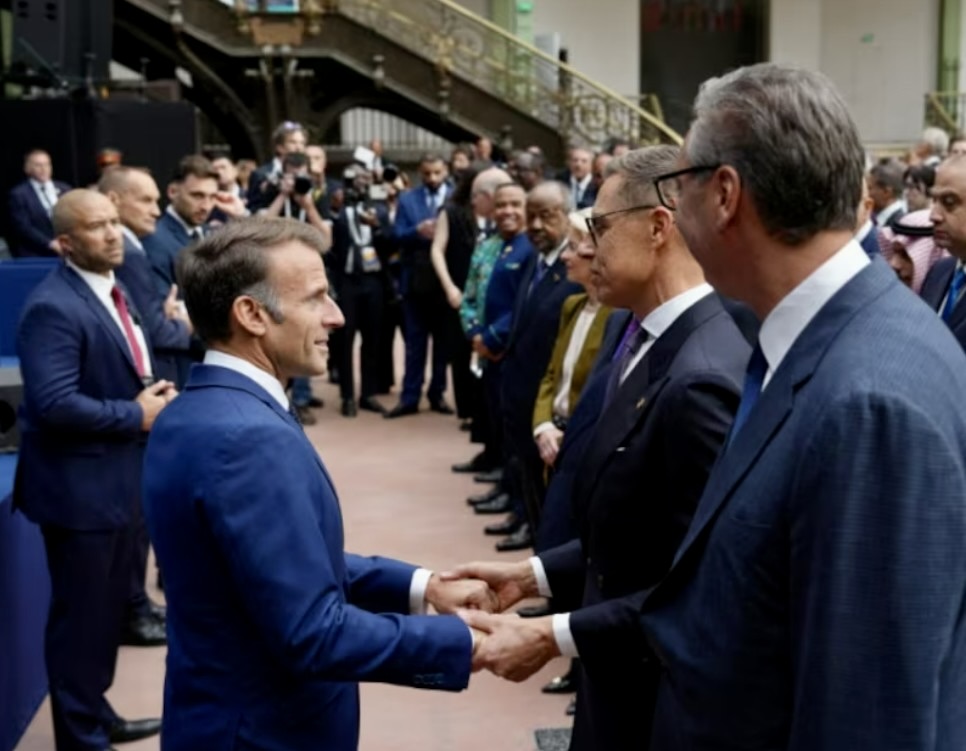
The decision was made on June 5 on the sidelines of the EU‑Western Balkans summit in Montenegro. The official announcement of the termination of work on the combat aircraft came on June 8. Both leaders concluded that the industrial partners could not reach an agreement on jointly developing the fighter.
“Merz proposed to Macron that they should not continue building the joint combat aircraft,” a German government spokesman said.
It was stressed, however, that the project is not being completely scrapped: work is to continue on the so‑called “Combat Cloud” system, which is meant to connect manned aircraft, drones, sensors and satellites into a single network.
Industrial and Political Deadlock
The main reason for the failure is the insurmountable disagreements between Dassault and Airbus, which had dragged on for years:
- Control and intellectual property. Dassault demanded a dominant role in the project, citing its experience developing the Rafale fighter, and insisted on protecting its know‑how while providing only limited technology transfer to its partner. Airbus, for its part, sought an equal partnership involving substantial technology exchange.
- Different requirements for the aircraft. France needs a fighter capable of carrying nuclear weapons and operating from aircraft carriers. Germany does not need such characteristics for its own air force and is instead interested in a long‑range bomber.
- Fundamental differences over development stages. The conflict over the division of work in producing demonstrators and prototypes (stages 1B and 2) became critical. According to sources, the companies could not agree on the distribution of work or patent rights.
Merz publicly questioned the feasibility of developing a sixth‑generation manned fighter as early as February 2026 and warned that without resolving the disagreements the project would be shut down. He pointed out that Germany does not need an aircraft capable of carrying nuclear weapons and landing on an aircraft carrier.
Futile Attempts to Save the Flagship Project
The ambitious FCAS programme, launched in 2017 by Angela Merkel and Macron, was supposed to replace French Rafale and German (as well as Spanish) Eurofighter Typhoon aircraft by 2040, become the foundation for a new generation of European combat aviation and serve as a symbol of EU defence integration.
In March 2026, Merz and Macron appointed two mediators to develop proposals for saving the programme. However, those efforts failed. Moreover, the CEO of Airbus publicly stated in May that the FCAS programme no longer met current conditions and required a radical overhaul.
According to sources, the French president had hoped to save the flagship project ahead of the April 2027 elections. But he too had to admit defeat. The chairman of the French Senate’s Foreign Affairs and Defence Committee, Cédric Perrin, noted that Macron “was the only one who still believed in FCAS’s survival”.
The Future Without FCAS: “Combat Cloud” and Possible Alliances
Immediately after the project’s cancellation, Germany began discussing alternative ways to develop its combat aviation. Options under consideration include cooperation between Airbus and the Swedish company Saab (developer of the Gripen), as well as joining the British‑Italian‑Japanese GCAP programme to build a sixth‑generation fighter.
Dassault, for its part, intends to focus on further upgrading the Rafale.
At the same time, the two sides agreed to continue joint work on the “Combat Cloud” (FCAS Combat Cloud) system, which is to network existing and future manned aircraft, drones, sensors and satellites. The defence ministries of the two countries will present concrete plans at the Franco‑German Council of Ministers in mid‑July.
Geopolitical Consequences
The decision jeopardises not only one of Europe’s most ambitious defence projects but also the whole concept of European defence integration. This comes at a critical moment when European militaries are insisting on the need to strengthen defence capabilities in the face of the Russian threat and the simultaneous weakening of security guarantees from the United States.
“This is hardly an ideal signal either for Washington or for Moscow,” said Douglas Barrie, senior fellow for military aerospace at the International Institute for Strategic Studies (IISS).
The German trade union IG Metall, by contrast, welcomed the “difficult but necessary decision”.