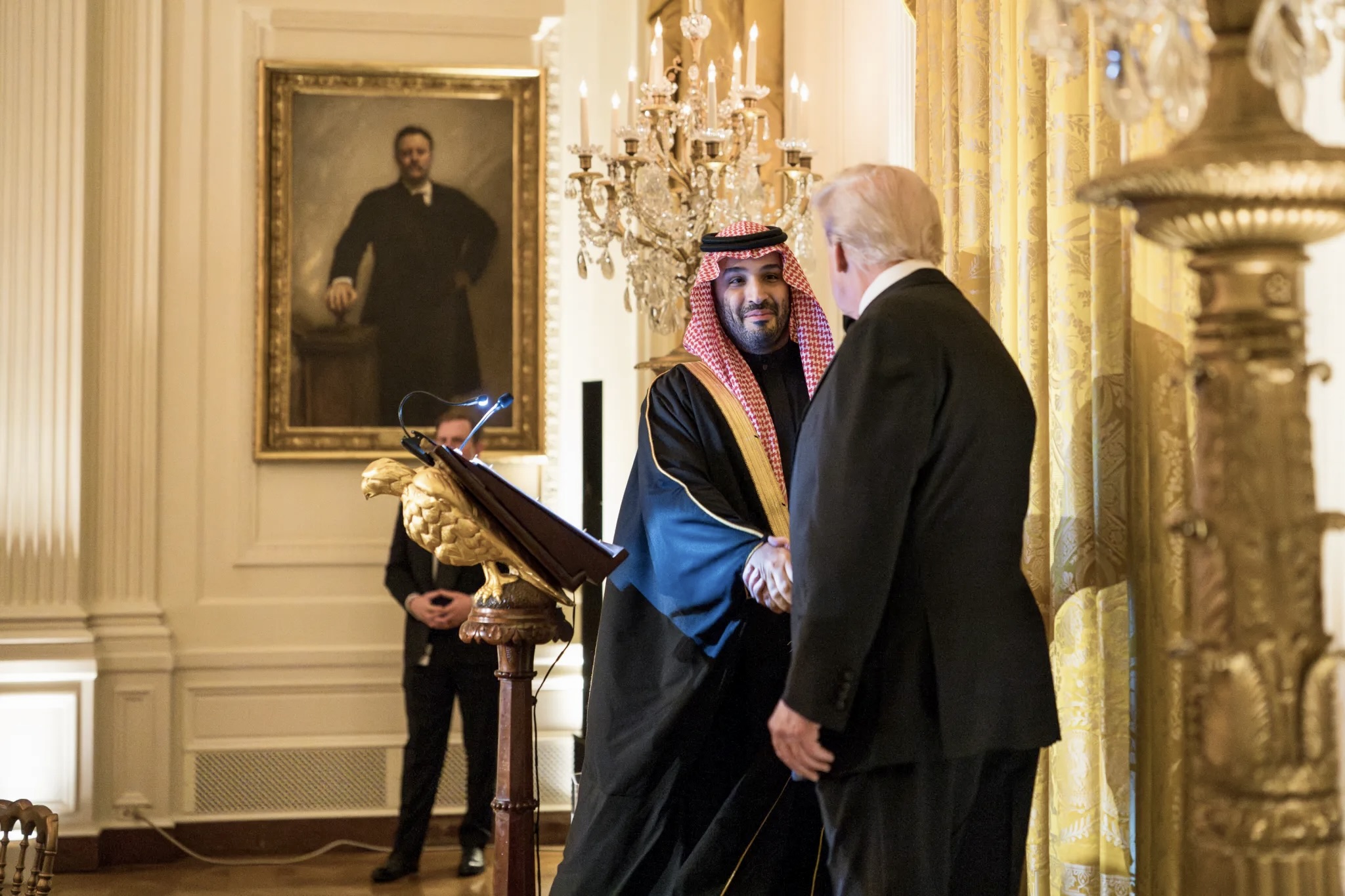
WASHINGTON (Realist English). On July 22 in Washington, an event occurred that diplomats had awaited for more than two decades: US Energy Secretary Chris Wright and his Saudi counterpart, Prince Abdulaziz bin Salman, signed a historic civilian nuclear agreement between the United States and Saudi Arabia.
The document opened the way for the construction of US nuclear reactors in the kingdom and, in essence, gave Riyadh the “green light” for uranium enrichment.
However, the celebration lasted less than a day. On the morning of July 23, President Donald Trump on his Truth Social platform effectively nullified the freshly signed agreement, putting forward a new, previously unnegotiated condition.
Ultimatum on Social Media: “Deal Approved, But on One Condition”
In his post, Trump stated: “The Civil Nuclear Energy Agreement (no enrichment of materials!)… will be approved, but is fully contingent on Saudi Arabia joining the very respected and successful Abraham Accords.”
The president also stressed that the deal “concerns only non‑military use” and that the US is “not against civilian (non‑enriched) nuclear facilities.”
The post came like a bolt from the blue. The agreement signed the previous day contained not a single mention of Israel or the Abraham Accords. Moreover, as CNN reports, the normalisation condition came as a complete surprise to the administration’s own nuclear negotiators.
Chaos in the Administration: Who Is to Blame?
Trump’s reversal was the result less of a strategic reassessment than of chaos inside the White House and pressure from conservative media.
Timing and Presidential Anger
As CNN learned, Trump was “already furious” at the very fact that the deal was announced. Energy Secretary Wright, according to sources, did not warn the president that he would hold a signing ceremony. The White House had supposedly asked Wright to hold off on the announcement, but he ignored the instruction and even gave an interview to Fox Business.
Some Trump aides considered the deal “not finalised” since notifications to Congress had not yet been sent. The president and his senior advisers were “livid” that Wright had “gone rogue.”
The Press as Catalyst
The decisive factor pushing Trump toward his reversal was the reaction of his allies in the conservative media. The Wall Street Journal published a scathing editorial, noting that the Biden administration had once tried to use nuclear cooperation as leverage to pressure Saudi Arabia into normalisation with Israel, while Trump was “rewarding” Riyadh without securing the same concessions.
Fox News also expressed surprise that the deal was concluded without commitments to the Abraham Accords. Just minutes after the Fox broadcast, Trump posted his ultimatum.
White House Press Secretary Karoline Leavitt tried to salvage the situation, stating: “The president is the ultimate dealmaker.” She also stressed that Trump had “many times” discussed this condition with the Saudis and that “if they don’t join the Abraham Accords, the deal is off.”
What This Means for Saudi Arabia and the Middle East
Trump’s ultimatum places Riyadh in an extremely difficult position. Saudi Arabia has for years stated that it will not recognise Israel without the creation of a viable Palestinian state. This position has only hardened since the Gaza war.
Crown Prince Mohammed bin Salman had previously warned that Saudi Arabia would “without delay” follow Iran’s example if Tehran acquired nuclear weapons. It was precisely this statement that made the nuclear deal with the US especially valuable to Riyadh.
Now Trump has effectively stripped Saudi Arabia of the main diplomatic prize it had sought for years. As CNN notes, the deal gave the Saudis “much of what they wanted.” But within 24 hours, they were left with nothing.
Nuclear Proliferation Threat
The issue of uranium enrichment remains a key bone of contention. Trump claimed in his post that “no enrichment of materials will occur,” but this contradicts what was signed the day before. According to the original agreement, a two‑year study on the economic feasibility of uranium enrichment was envisaged.
Furthermore, the deal does not appear to require Saudi Arabia to sign the IAEA Additional Protocol, which provides for stricter inspections. This has alarmed non‑proliferation experts, given Prince Mohammed’s stated intention to acquire nuclear weapons if Iran succeeds.
Israel’s Reaction
Israel, which is widely believed to be the only nuclear power in the Middle East (though it does not officially confirm this), welcomed Trump’s statement. Prime Minister Benjamin Netanyahu’s office said Saudi Arabia’s joining the Abraham Accords would be a “historic leap forward for peace in the Middle East.”
However, not everyone in Israel shares this enthusiasm. Former Defence Minister Avigdor Lieberman warned: “Every military nuclear programme begins with a civilian one.”
The Trump administration now finds itself in a difficult position. On one hand, the president has publicly stated that without the Abraham Accords, there will be no deal. On the other, Riyadh has not yet responded to the ultimatum.
Congress will have 90 days to review the agreement. However, given Trump’s stance, the deal’s fate now depends exclusively on the Saudis’ willingness to take a historic step — recognition of Israel without the creation of a Palestinian state. The question is whether Riyadh is ready to pay that price for access to US nuclear technology.