WASHINGTON (Realist English). A twelfth consecutive night of US airstrikes on Iran has not delivered the main result Washington is seeking: the Strait of Hormuz remains effectively closed to commercial shipping.
Despite a large‑scale air campaign, shipowners and insurers still do not consider passage through the strategic waterway safe.
Experts agree that to reopen the strait by force, the US would need something far more significant than airstrikes — namely, a ground operation involving tens of thousands of troops.
Air Campaign: Effect, But No Result
Since the resumption of hostilities on July 8, 2026, the US has conducted 12 consecutive nights of airstrikes on Iranian targets. The stated objective, as repeatedly declared by US Central Command (CENTCOM), is to “degrade Iran’s ability to attack commercial vessels in the Strait of Hormuz.”
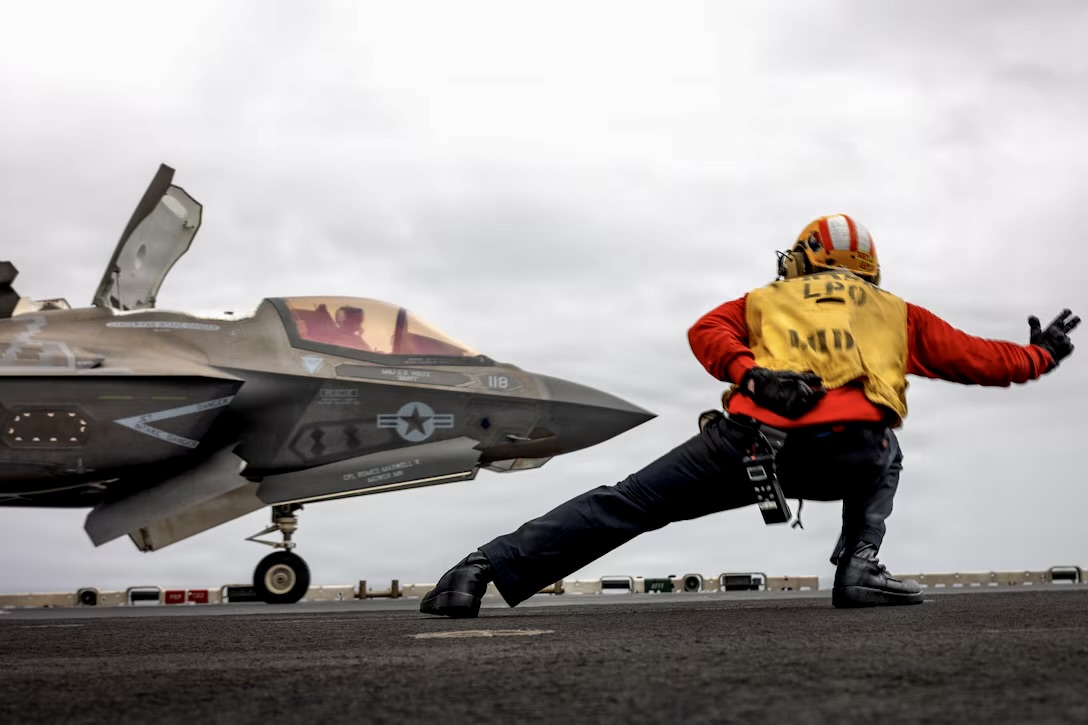
The US Navy has 19 warships in the region, including two aircraft carriers and an amphibious assault ship carrying more than 1,000 marines, as well as hundreds of combat aircraft operating in the Middle East.
However, as experts note, daily strikes may produce dramatic footage but do little to actually reopen the strait. Iran remains capable of striking vessels in the narrow waterway with drones and missiles hidden in caves and buildings along the coast.
As Jason Campbell, senior fellow at the Middle East Institute and former Pentagon spokesman, stated: “Iran has been preparing for this kind of asymmetric conflict for decades. They are beginning to show why no US president since Reagan has dared to engage them at this level — they have the ability to completely disrupt shipping in the Strait of Hormuz.”
Why Airstrikes Don’t Work: Four Key Limitations
- Dispersion of Iranian forces. Iranian missile launchers and launch sites are dispersed across a country roughly the size of one‑third of the US. Many are hidden in caves and underground, making them invulnerable to airstrikes.
- Inability to eliminate the threat from the air. As Campbell stresses, “it is very difficult to imagine a scenario in which the security of the Strait of Hormuz could be adequately ensured without ground forces.” This would require tens of thousands of troops, not only to destroy hidden munitions but also to take control of hundreds of miles of coastline and vast inland areas.
- Iranian threats frighten shipowners. Even if the US strikes military targets, Iranian threats alone can deter vessels. Shipowners and insurers will not resume passage through the strait until they are confident of its complete safety.
- Shortage of forces and resources. According to expert estimates, maintaining constant control over the strait would require at least 12 ships permanently stationed in the waterway, plus additional vessels to enforce the blockade. At the same time, analysts note, Trump is neither ready for large‑scale casualties nor for a major troop surge in the region.
Blockade and “Tariff”: A Tactic That Failed
Alongside the strikes, the Trump administration reimposed a naval blockade of Iranian ports. The blockade was first introduced in mid‑April, lifted in mid‑June after a temporary ceasefire, and then reinstated.
Trump also announced plans to impose a 20% levy on all ships passing through the strait, but soon abandoned the idea after pressure from Gulf allies.
Nevertheless, even this tactic has not yielded the desired result. As The Economist notes, Trump has no effective strategy — military or otherwise — for reopening the Strait of Hormuz. Iran continues to maintain control over the strait, using it as a powerful lever of influence in future negotiations.
“Forever War” and Economic Consequences
The conflict, which was supposed to be “limited,” increasingly resembles a full‑scale war of attrition. As CNN notes, Trump “is heading into the midterm elections with his own self‑inflicted endless war — a ‘forever war lite.’ It is a conflict with an uncertain rationale, shifting goals, and fading domestic support against an enemy with greater focus and resilience.”
The economic consequences are already being felt. Brent exceeded $100 per barrel for the first time since May, triggering a sell‑off in US stock markets and rising inflation expectations. Gasoline in the US reached $4 per gallon — a level not seen since 2022. Analysts warn that if escalation continues, oil could reach $120 per barrel in the fourth quarter.
The Trump administration continues to strike, but strategic progress is nowhere in sight. Iran shows no signs of capitulation, and shipping through the Strait of Hormuz remains paralysed. The question of whether Trump will authorise a ground operation in Iran remains open.
However, as sources note, the war, now nearly five months old, could enter its most dangerous phase — with unpredictable consequences for the global economy and energy security.