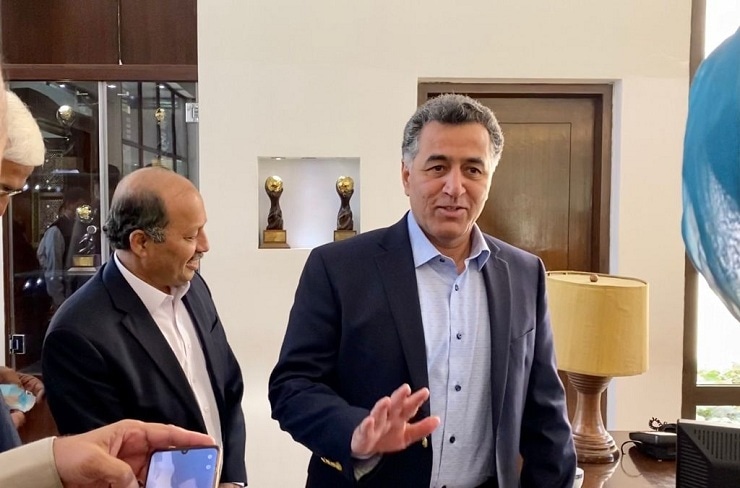
ISLAMABAD (Realist English). Lieutenant General Faiz Hameed, who headed Pakistan’s powerful Inter-Services Intelligence (ISI) during the premiership of Imran Khan, has been sentenced to 14 years of rigorous imprisonment by a military court, marking the first time a former spy chief has been convicted and jailed in Pakistan.
According to a statement released on Thursday by the military’s media wing, the Inter-Services Public Relations (ISPR), Hameed was found guilty on four charges, including engaging in political activities while in service, violating the Official Secrets Act, misusing state resources, and causing financial loss to the government. The sentence amounts to hard labour under Pakistan’s military justice system.
Hameed’s lawyer, Ali Ashfaq, said his client would appeal the verdict, describing the proceedings as a “sham” trial. Speaking to AFP, Ashfaq said Hameed had no legal representation during the trial and that neither his defence team nor his family had been notified in advance of the hearing on 11 December. He said he learned of the conviction only through the army’s official press release and has yet to receive a written copy of the ruling.
“My client categorically rejects the charges from the beginning of such sham trial proceedings,” Ashfaq said, adding that an appeal would be filed “within the next few days.” He told the BBC that the first avenue of appeal would be to the army chief, as provided under military law.
Court-martial proceedings against Hameed began on 12 August 2024 under provisions of the Pakistan Army Act. ISPR said he retains the right to appeal the conviction.
The verdict represents a dramatic fall for Hameed, once regarded as one of the most influential figures in Pakistan’s security establishment. He was personally appointed ISI chief by Khan in 2019 and was widely seen as a key ally of the former prime minister.
Political implications
The case is widely interpreted in Pakistan as a signal to Imran Khan and his supporters. Political analyst Arifa Noor told AFP that the conviction should be viewed in a broader context. “Everything is a message for Imran Khan these days, including this,” she said.
Khan, who was elected prime minister in 2018, was removed from office through a parliamentary no-confidence vote in 2022 and has been in prison since August 2023. He maintains that the military orchestrated his ouster and has since targeted his Pakistan Tehreek-e-Insaf (PTI) party and close associates.
A separate investigation is also under way into allegations that Hameed played a role in protests following Khan’s arrest on 9 May 2023.
Khan has faced multiple legal cases since his removal from power. While some convictions have been overturned, he remains incarcerated pending other trials and appeals. In recent statements from prison and messages posted by his family, Khan has accused the military leadership — particularly Army Chief Field Marshal Asim Munir — of political persecution and violations of constitutional and human rights.
The sentencing of Faiz Hameed underscores the deepening rift between Pakistan’s military establishment and Khan’s camp, and signals a rare willingness by the armed forces to publicly discipline one of their own at the highest level — a move that could reshape civil-military dynamics in the country.