BERLIN (Realist English). Germany has invited the United States to join a high-level meeting in Berlin early next week focused on a possible ceasefire in Ukraine, Chancellor Friedrich Merz said on Thursday after talks with NATO Secretary-General Mark Rutte.
The meeting is expected to bring together key European leaders and Ukrainian President Volodymyr Zelenskyy in an effort to align positions as diplomatic efforts intensify. Merz said Washington has been asked to participate, but stressed that U.S. attendance will “very much depend” on progress in negotiations over the weekend involving the so-called E3 — the United Kingdom, France and Germany — alongside Ukraine and the United States.
Those discussions include a European proposal on potential territorial arrangements, which Merz said was sent to Washington late on Wednesday. “It mainly concerns the question of what territorial concessions Ukraine is prepared to make,” the chancellor said.
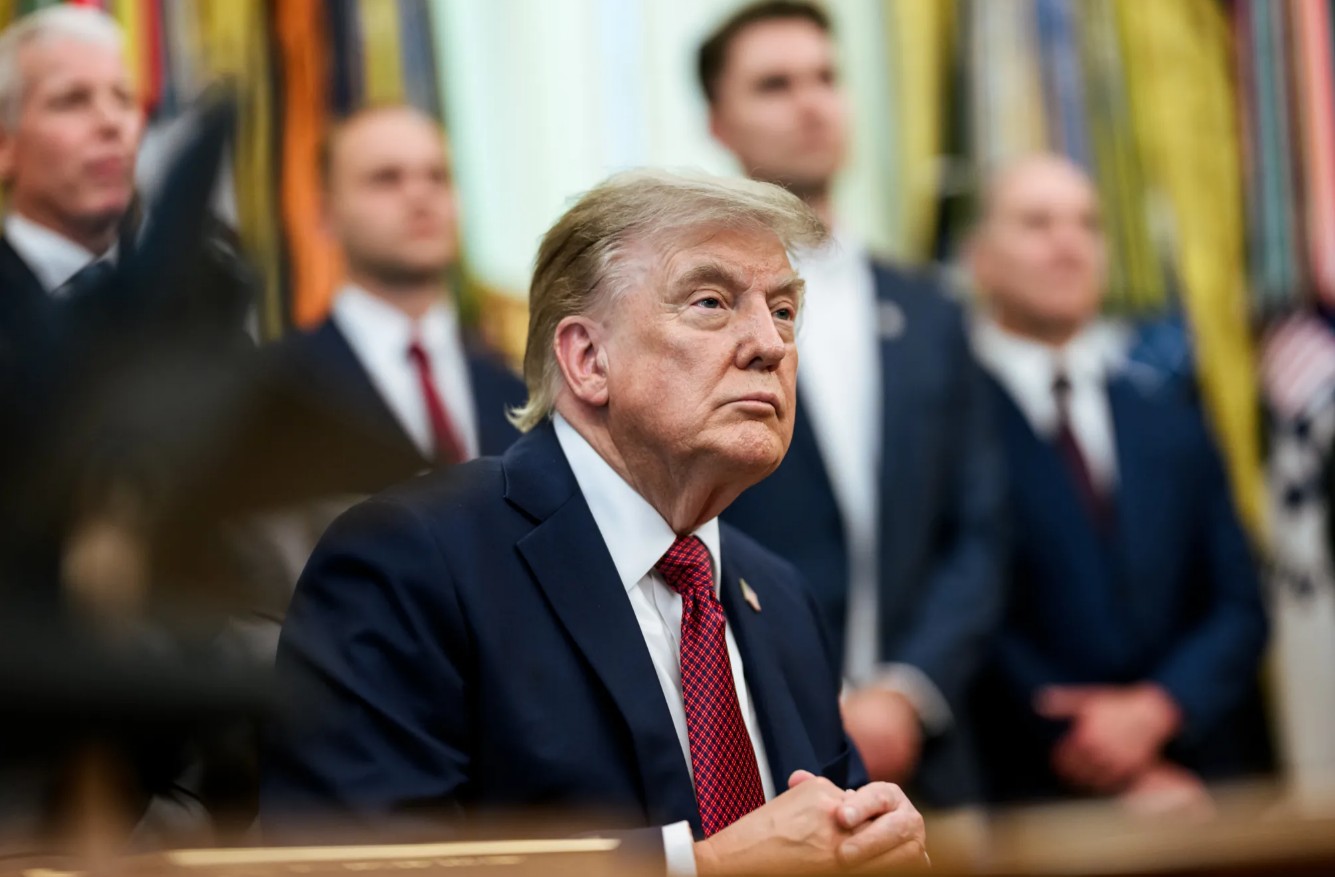
The invitation follows a tense phone call on Wednesday between Merz, French President Emmanuel Macron, British Prime Minister Keir Starmer and U.S. President Donald Trump, during which the sides struggled to narrow differences over the direction of the peace effort. Trump later acknowledged the friction, saying that “pretty strong words” were exchanged — a rare public admission of disagreement among allies.
European leaders are increasingly concerned that U.S.-backed proposals could tilt toward Russian interests and impose terms Kyiv cannot accept. Merz underlined that any decisions on concessions rest solely with Zelenskyy and the Ukrainian public, and insisted that any ceasefire must be underpinned by strong security guarantees to prevent renewed Russian aggression.
“No peace must be made without us being involved,” Merz said, arguing that Europe’s security interests must be explicitly reflected in any agreement.
Russia, however, has pushed back. The Russian Foreign Ministry told the newspaper Izvestia that Kyiv is setting “unacceptable” conditions in response to a peace framework promoted by the White House.
Later on Thursday, Starmer is due to host a meeting in London of the “Coalition of the Willing” — a group of Ukraine’s supporters expected to include around 30 leaders. British officials said the gathering is intended to drive concrete progress rather than serve as a symbolic forum, following Trump’s sharp criticism of what he has portrayed as European weakness.
Starmer’s spokesperson said allies have provided “sustained support” to Ukraine and that “intensive work” on a peace plan is continuing. Britain’s national security adviser Jonathan Powell is expected to hold talks this weekend with German and French counterparts, U.S. special envoy Steve Witkoff, and Ukrainian representatives, according to officials familiar with the plans.
Merz sought to portray Europe as a constructive partner rather than an obstacle, saying he believed Trump was “willing to embark on this path together with us.” His remarks come after the release of the latest U.S. National Security Strategy and Trump’s comments portraying European leaders as “weak” and the European Union as a hindrance to U.S. policy.
“The U.S. still finds it difficult to understand that the EU is a strong union,” Merz said.
Trump has meanwhile intensified pressure on Zelenskyy, telling POLITICO that the Ukrainian leader would need to start “accepting things” because “you’re losing.”
Whether the Trump administration ultimately joins the Berlin meeting remains uncertain, underscoring how fragile coordination between Washington and its European allies remains — even as several capitals view the current moment as the closest yet to a negotiated pause in the war.