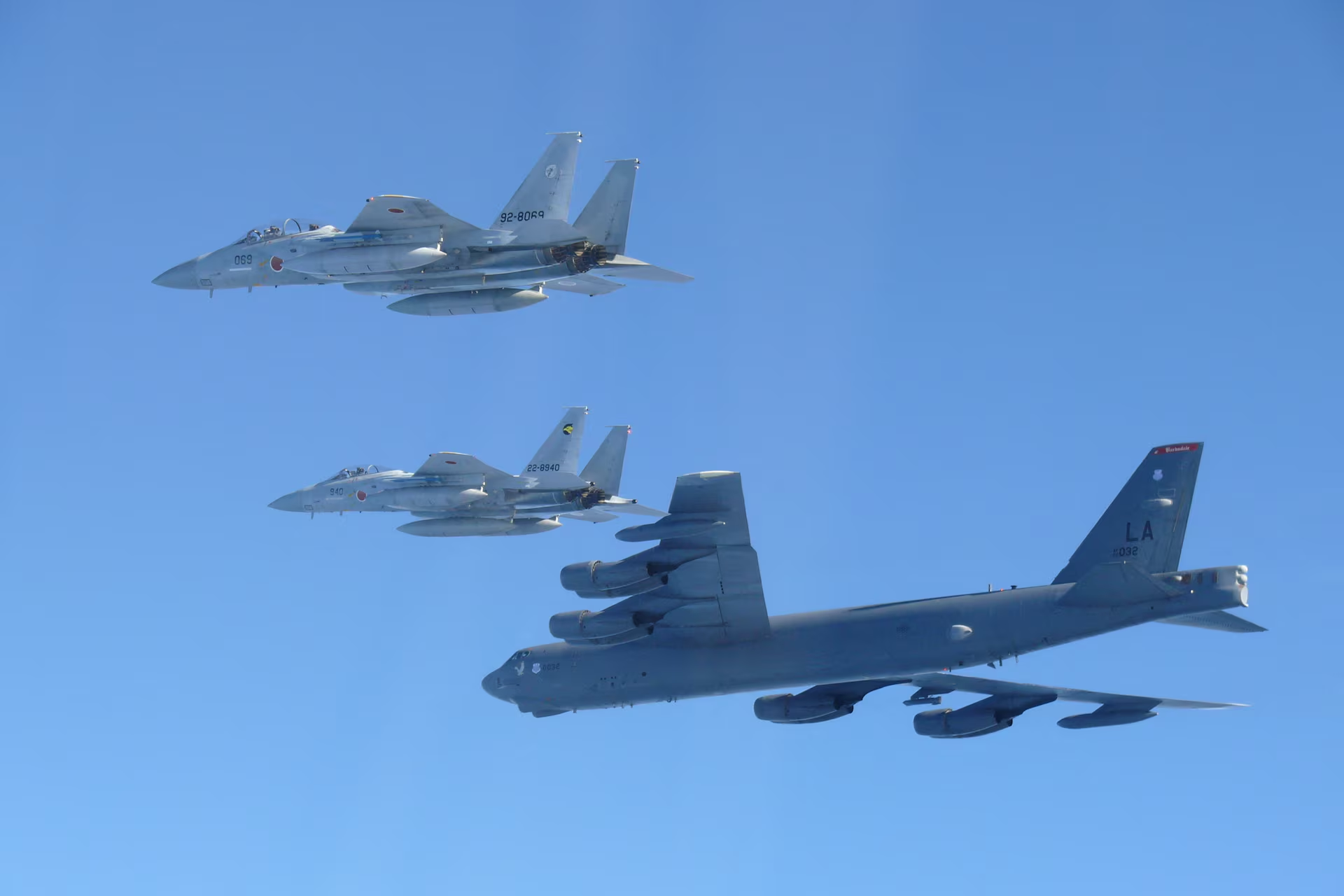
TOKYO (Realist English). The United States deployed nuclear-capable B-52 bombers over the Sea of Japan on Wednesday in joint flights with Japanese fighter jets, Tokyo said — a demonstration of allied resolve after Chinese and Russian military activities intensified around Japan and South Korea.
In a statement on Thursday, Japan’s defence ministry said the exercises reaffirmed the two countries’ determination to block “any unilateral attempt to change the status quo by force” and confirmed the readiness of Japan’s Self-Defense Forces and U.S. forces.
The mission involved two U.S. B-52 strategic bombers, three Japanese F-35 stealth fighters, and three F-15 air-superiority jets. It was the first visible U.S. military assertion in the area since China launched region-wide drills last week amid heightened tensions between Beijing and Tokyo.
A U.S. official, speaking anonymously, downplayed the timing, saying the flights were planned well before the latest Chinese-Russian drills. Similar joint sorties, including with U.S. B-1B bombers, took place last month.
At the White House, spokesperson Karoline Leavitt said President Donald Trump could maintain a “good working relationship” with China while preserving a “very strong alliance” with Japan. “Japan is a great ally of the United States… With respect to China, the president also has a good working relationship with President Xi,” she said.
Rising regional tensions
The U.S. flights came after a joint patrol by Chinese and Russian strategic bombers through the East China Sea and western Pacific on Tuesday. Separately, Chinese carrier-based aircraft conducted drills that prompted Japan to scramble fighter jets, with Tokyo accusing Chinese planes of locking radar onto Japanese aircraft. Beijing denied the claim, saying Japan endangered its operations.
The incident triggered criticism from the U.S. State Department, though Trump — who plans to visit Beijing next year for trade talks — privately urged Japanese Prime Minister Sanae Takaichi last month to avoid further escalation over Taiwan, according to Japanese officials.
Tensions surged after Takaichi told parliament that a Chinese attack on Taiwan — located just over 100 km from Japanese territory — could trigger a Japanese military response. Beijing rejected the stance, while Washington restated that its alliance with Japan was “unwavering.”
Japan and South Korea scramble jets
Japan’s Chief of Staff General Hiroaki Uchikura said the Chinese-Russian joint bomber mission was an unmistakable show of force. “We consider it a grave concern for Japan’s security,” he told reporters.
Defense Minister Shinjiro Koizumi raised the issue in a call with NATO Secretary General Mark Rutte, while U.S. Defense Secretary Pete Hegseth discussed China’s activities and Japan’s expanding defence posture in a separate phone call on Thursday.
China rejected the criticism. Foreign Ministry spokesperson Guo Jiakun said the joint drills with Russia were part of an annual cooperation plan, urging Japan not to “make a fuss about nothing.”
South Korea also scrambled jets on Tuesday when Chinese and Russian aircraft entered its air defense identification zone — a buffer area used for early warning that extends beyond national airspace.
China intensifies pressure on Taiwan
Taiwan’s defence ministry reported a second straight day of heightened Chinese military activity on Thursday. It detected 27 aircraft, including nuclear-capable H-6K bombers, conducting a “joint combat readiness patrol” alongside PLA warships around the island.
Chinese warplanes and ships now operate near Taiwan almost daily, part of what Taipei calls Beijing’s sustained pressure campaign to erode the island’s security.