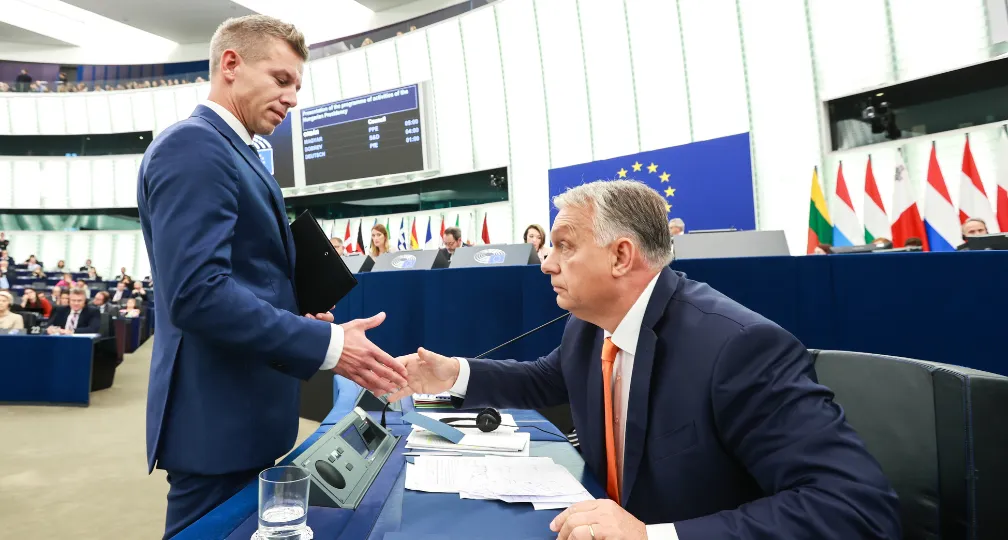
BUDAPEST (Realist English). Hungary is heading into one of its most consequential elections since the end of communism, with Prime Minister Viktor Orban facing his strongest challenge in more than a decade from opposition leader Peter Magyar.
Polling averages ahead of the April 12 vote show Magyar’s Tisza Party at around 48%, compared with 42% for Orban’s ruling Fidesz — a narrow but significant lead that reflects shifting political dynamics.
Orban, in power since 2010, has long dominated Hungarian politics, reshaping institutions and consolidating control over media and the judiciary. He has positioned himself internationally as a defender of national sovereignty, gaining support among right-wing movements in Europe and the United States, while maintaining pragmatic ties with leaders such as Vladimir Putin.
However, recent corruption scandals and sluggish economic growth have eroded his support base. Magyar, a former Fidesz insider, has capitalised on this discontent by reframing his party as an anti-corruption force promising a “modern, European Hungary.”
Despite the opposition’s momentum, structural advantages built into Hungary’s electoral system may still favour Orban. Reforms introduced after 2010 increased the weight of single-member districts, where Fidesz traditionally performs well, and reduced the total number of parliamentary seats.
Analysts estimate that Tisza may need to outperform Fidesz by at least three to six percentage points nationally to secure a parliamentary majority — a threshold that current polling only narrowly meets.
Polling itself remains contested. Government-aligned pollsters show Fidesz maintaining a comfortable lead, while independent and opposition-leaning surveys suggest Magyar could win decisively. The divergence highlights the uncertainty surrounding the outcome.
Magyar’s rise has been rapid. Since taking control of Tisza in 2024, he has transformed it from a marginal party into a central political force, focusing on corruption, public services and economic grievances rather than divisive geopolitical issues such as the war in Ukraine.
The election is being closely watched internationally, as it may signal whether Hungary continues along its current political trajectory or shifts toward a more pluralistic model. For Orban, the vote represents a test of a system he has shaped over 16 years. For Magyar, it is a chance to convert public dissatisfaction into a historic political breakthrough.
The result will not only determine Hungary’s domestic direction but could also influence broader debates within the European Union over governance, democracy and the future of populist leadership in Europe.