WASHINGTON (Realist English). Relations between India and the United States, which appeared set for a breakthrough at the start of 2025, have slid into stalemate as trade negotiations fail to overcome political and strategic obstacles.
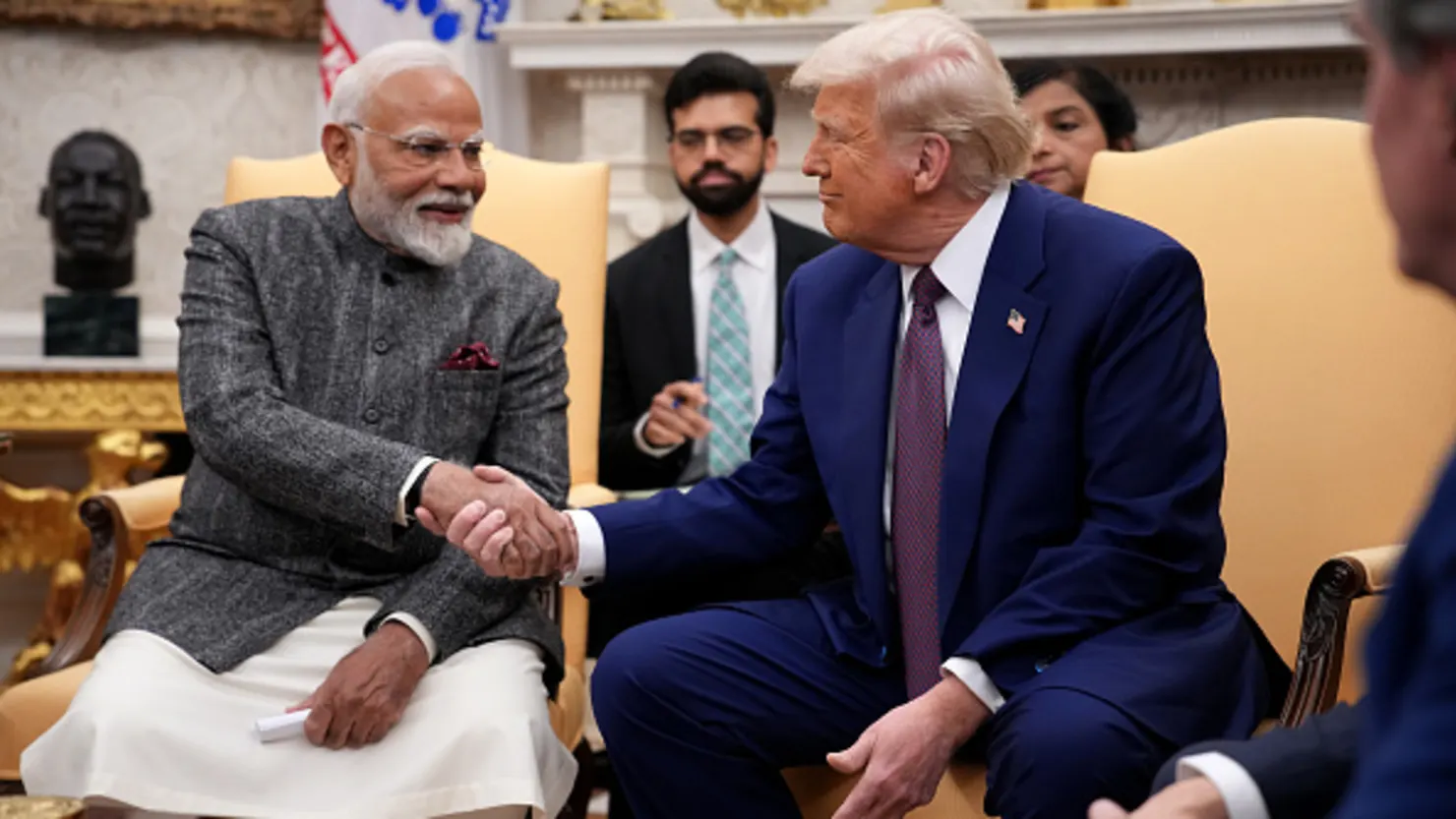
Early in the year, Indian Prime Minister Narendra Modi was among the first foreign leaders to meet newly elected US President Donald Trump in Washington. The meeting, held just hours after Trump signed an order introducing “reciprocal tariffs”, was framed as a reset in ties. Both leaders pledged to double bilateral trade to $500 billion by 2030 and signalled a near-term agreement.
By December, however, India had become one of the most heavily tariffed US trading partners, facing duties that in some cases exceed those imposed on China. Multiple rounds of negotiations have failed to deliver a breakthrough, despite what economists describe as strong mutual incentives: Washington wants reliable supply-chain partners beyond China, while New Delhi needs sustained access to the US market to support export-led growth.
Talks have foundered mainly on tariffs, agriculture and energy. The United States is pressing for wider access to India’s farm sector and higher purchases of US energy products. India has resisted, citing domestic political risks and opposition from powerful farming lobbies. Progress has been limited to partial energy cooperation, with no agreement on genetically modified crops or dairy exports.
Geopolitics has further complicated negotiations. The US has urged India to curb imports of Russian oil, arguing that such purchases undermine Western sanctions. In August, Washington imposed an additional 25% tariff on Indian goods, lifting total duties to as much as 50%. India has declined to formally link its energy sourcing to US policy, stressing the need to secure affordable supplies for its population.
The prolonged impasse is carrying economic costs. Analysts estimate that sustained high tariffs could shave around 0.5–0.6 percentage points off India’s GDP growth, while contributing to currency volatility and investor caution. US economists, meanwhile, warn that tariffs on Indian imports are adding to inflationary pressures and raising costs for American consumers and businesses.
Despite the headwinds, Indian exports have shown resilience, and the US remains one of India’s top export destinations. Still, with no deal in sight as the year ends, analysts say expectations have reversed sharply: India was once seen as the most likely partner to clinch an early agreement with the Trump administration, but now stands as one of the last major economies still without a trade deal.
Whether 2026 brings fresh compromises or a continued standoff will depend on how far both sides are willing to absorb domestic political risks to unlock the strategic and economic potential of the relationship.