WASHINGTON (Realist English). US President Donald Trump has announced the completion of a peace deal with Iran, ending nearly four months of war that claimed thousands of lives and destabilized global energy markets.
Pakistan, which served as the key mediator, confirmed that both sides agreed to an “immediate and permanent cessation of military operations on all fronts, including Lebanon.”
However, behind the triumphant headlines lies a troubling reality: this is not a comprehensive peace but a fragile truce hastily cobbled together. The key objectives for which the US and Israel launched this war — the destruction of Iran’s nuclear program and regime change in Tehran — have completely failed.
Pakistan’s triumph: Islamabad challenges Washington
Contrary to diplomatic tradition, the main architect of the agreement was not Washington but Islamabad. Pakistani Prime Minister Shehbaz Sharif personally announced the breakthrough, stating that the official signing ceremony would take place on June 19 in Switzerland.
Trump himself succinctly commented on his Truth Social platform: “Deal with the Islamic Republic of Iran is done. Ships of peace, start your engines. Let the oil flow,” adding that he would authorize the “immediate lifting of the US naval blockade.”
Tehran, however, deliberately distanced itself from Trump’s loud statements. Iranian officials emphasized that the agreement was not signed on June 14 — the US president’s birthday — so as not to create the impression that Tehran had “given him a gift.”
The price of the truce: nuclear deadlock and billion-dollar handouts
The 14-point draft memorandum of understanding published by Iranian media reveals the unsavory essence of the deal.
A ceasefire and the reopening of the Strait of Hormuz come at the cost of US capitulation on a number of fundamental issues:
- Lifting the blockade: The US withdraws its naval forces from the region within 30 days.
- Asset unfreezing: Iran gets back $24 billion in frozen funds, with half released before final negotiations.
- A “Marshall Plan” for Tehran: The US and its allies commit to presenting a plan to rebuild the Iranian economy worth at least $300 billion.
- Nuclear program: The uranium enrichment issue is postponed for 60 days. Iran does not dismantle its facilities, only “reaffirms its commitment” to the NPT.
- Tehran’s red lines: Iran’s missile program and support for proxy groups are categorically excluded from the negotiating agenda.
This is a defeat for American diplomacy, acknowledging Washington’s inability to impose its will on Tehran.
Israel furious: ‘catastrophe’ and a rift with its ally
The betrayal by Washington was felt most acutely in Jerusalem. Israel, which started this war shoulder to shoulder with the US, has found itself completely excluded from the negotiating process.
Israel’s leading newspaper Yediot Aharonot ran a two-word headline: “Bad Deal.” Former Defense Minister Avigdor Lieberman called what happened “a catastrophe from Israel’s perspective.”
Opposition leader Yair Lapid stated that this is “one of the most shocking failures of Israel’s foreign and defense policy.”
Former Netanyahu national security adviser Yaakov Nagel summed up:
“It’s easy to talk about which topics will be discussed. But Iran’s ballistic missiles and its support for proxy groups do not even appear in the public details of the agreement.”
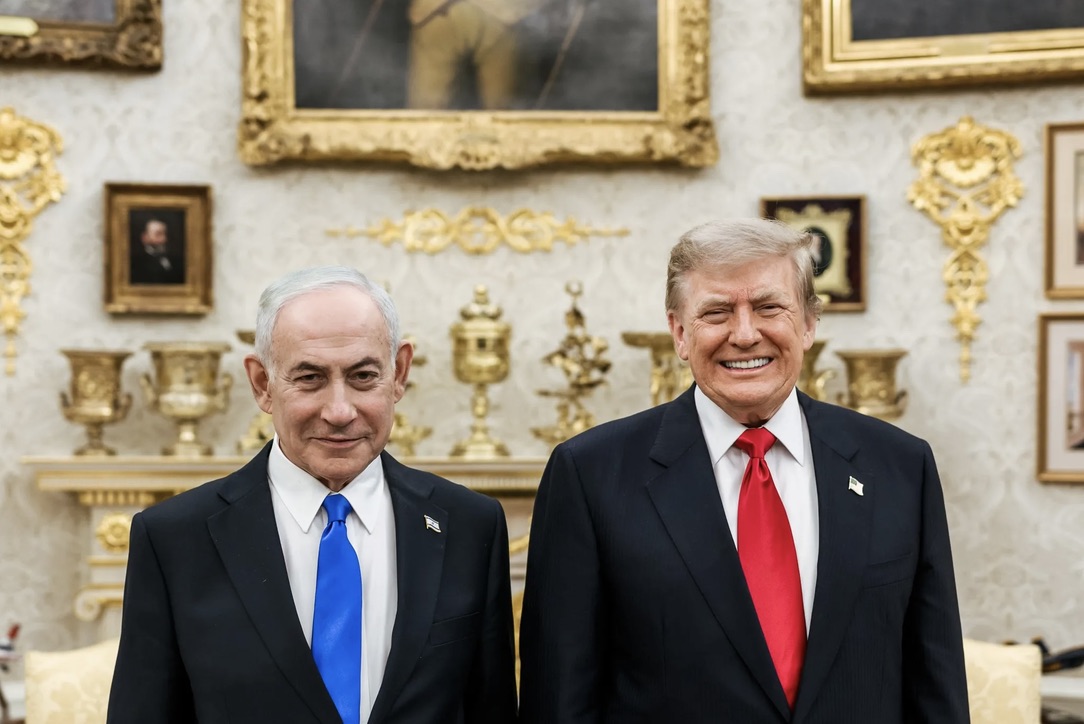
National Security Minister Itamar Ben-Gvir openly stated that the agreement is not binding on Israel. Moreover, the Israeli Air Force struck Beirut just hours before the deal was announced, drawing Trump’s anger; he publicly accused Netanyahu of lacking “judgment.” The conflict between the allies has come to the surface.
Riyadh’s silence and the interests of Arab monarchies
The reaction of the Gulf Arab monarchies was notably restrained. Saudi Arabia, which Trump tried to draw into the Abraham Accords in conjunction with an Iranian deal, gave no official comment. Riyadh insists on linking normalization with Israel to progress on the Palestinian issue, and the Iranian dossier is not a priority there.
The only one who openly welcomed the agreement was Turkish President Recep Tayyip Erdogan, who called it an “important development for peace and stability in the region” and thanked Pakistan for its mediation.
A truce that solves nothing
The memorandum being signed is not peace, but merely a 60-day reprieve. The fate of highly enriched uranium and the future sanctions regime have been postponed indefinitely, while Iran retains its full military potential.
Donald Trump, eager to fulfill his campaign promise to stop wars and lower fuel prices before the elections, has sacrificed the United States’ long-term strategy in the Middle East. He conceded on all fundamental positions, achieving only a formal ceasefire and the reopening of the strait.
Analysts agree that this truce has every chance of becoming yet another “frozen conflict,” and the contradictions embedded within it could trigger a new round of violence within months. Israel has already made it clear that it does not intend to abide by conditions to which it was not a party.