Realist: news and analytics

Русский / English / العربية

  • News
  • Russia
  • Caucasus
  • Opinion
  • Interviews
  • Experts
No Result
View All Result
Realist: news and analytics
  • News
  • Russia
  • Caucasus
  • Opinion
  • Interviews
  • Experts
No Result
View All Result
Realist: news and analytics

Iranian Shahed drones reshape battlefield as Gulf states face mass attacks

Low-cost “kamikaze” UAVs challenge air defenses despite high interception rates.

   
March 6, 2026, 00:32
Security & Defense
Iranian Shahed drones reshape battlefield as Gulf states face mass attacks

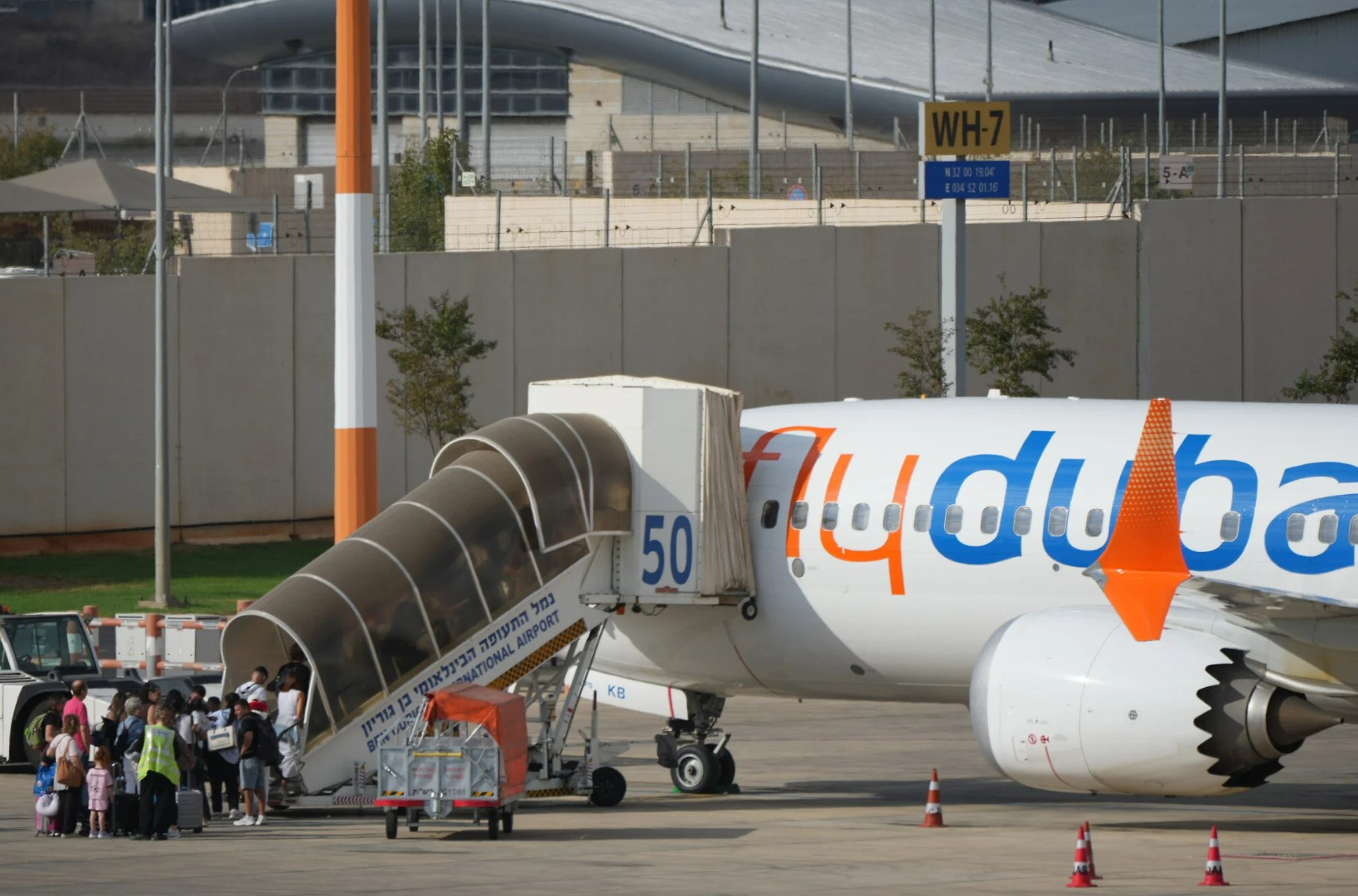
DUBAI (Realist English). The ongoing confrontation involving Iran, the United States and Israel has brought a weapon long familiar to Ukrainian soldiers to the skies over the Persian Gulf: the Iranian-designed Shahed-136 loitering munition.

Originally developed in Iran and widely used by Russia during the war in Ukraine, the Shahed drone has now become a central component of Tehran’s retaliation strategy against the United States and its regional partners.

Since the start of the conflict, Iran has reportedly launched thousands of drones toward targets across the region. Although many have been intercepted by advanced air defense systems such as the US-supplied Patriot missile batteries, some have managed to strike infrastructure.

The United Arab Emirates Ministry of Defence said that of the 941 Iranian drones detected since the beginning of the war, 65 reached Emirati territory, causing damage to ports, airports, hotels and data facilities.

Despite its growing notoriety, the Shahed-136 is technically modest compared with modern precision weapons. Analysts sometimes describe it as a “poor man’s cruise missile.” Yet its effectiveness lies less in technological sophistication than in cost and scale.

According to US government assessments, the Shahed-136 is a one-way attack drone produced by Iranian manufacturers linked to the Islamic Revolutionary Guard Corps. It typically flies at relatively low speeds and altitudes and carries a warhead of roughly 30–50 kilograms.

The drone is also relatively inexpensive. Public estimates suggest a single Shahed unit costs between $20,000 and $50,000. By contrast, many missile interceptors used by air defense systems in Israel and Gulf states cost between $3 million and $12 million each.

This disparity creates a strategic dilemma for defenders. Intercepting large numbers of low-cost drones can quickly consume expensive air defense missiles, gradually weakening protective systems.

“The Shahed-136 allows states like Russia and Iran to impose disproportionate costs on their adversaries,” said Patrycja Bazylczyk, an analyst with the Missile Defense Project at the Center for Strategic and International Studies.

She noted that such drones force opponents to expend costly interceptors while simultaneously creating persistent pressure on both military infrastructure and civilian populations.

Military analysts say Iran’s approach relies heavily on volume. Swarms of inexpensive drones can overwhelm defensive systems and potentially create openings for more powerful weapons, including ballistic missiles.

“The logic is to expend drones early while preserving ballistic missiles for later stages of the conflict,” Bazylczyk said.

Iran’s ability to sustain such attacks will depend on its manufacturing capacity and supply chains. Western governments have attempted to disrupt production by imposing sanctions on companies suspected of supplying drone components through networks in countries such as Turkey and the United Arab Emirates.

However, Russia’s wartime production of Shahed-based drones has demonstrated that such systems can still be manufactured at scale even under sanctions.

US officials estimate that Iran had already launched more than 2,000 drones during the current conflict. Military experts believe Tehran may possess substantial stockpiles and the capacity to produce hundreds more each week.

Security analysts warn that Gulf states could eventually face pressure on their interceptor inventories if attacks continue at the current pace.

“The risk is not immediate depletion, but it is a serious concern,” said Joze Pelayo, a Middle East security analyst at the Atlantic Council.

The Shahed-136 first gained global attention in 2022 when Russia began deploying the drones extensively in Ukraine. Since then, the Kremlin has reportedly produced thousands of units based on Iranian designs, demonstrating how easily the system can be replicated.

Some experts believe Iran has also incorporated lessons from Russia’s battlefield experience, adding features such as anti-jamming antennas and improved navigation systems.

The proliferation of low-cost attack drones is forcing militaries to search for more sustainable countermeasures. Ukraine, for example, has successfully used fighter-jet cannon fire to shoot down drones and has begun developing cheaper interceptor drones designed specifically to neutralize Shahed-type systems.

Other methods under development include electronic warfare systems targeting drone navigation signals, short-range air defense missiles and directed-energy weapons such as Israel’s Iron Beam.

Despite these efforts, analysts say Gulf states currently lack high-volume anti-drone systems capable of dealing efficiently with large swarms.

Developing and deploying such defenses could take years, suggesting that inexpensive loitering drones like the Shahed-136 are likely to remain a defining feature of modern warfare for the foreseeable future.

IranIran WarMiddle EastMost Popular
Previous Post

Lavrov warns of global consequences from Middle East escalation

Next Post

Global conflicts disrupt travel as Middle East war triggers aviation chaos

Related Posts

Germany plans to become Europe’s strongest military within 15 years
Security & Defense

Germany plans to become Europe’s strongest military within 15 years

23 April, 2026
US Navy secretary fired amid Iran blockade: conflict with Pentagon chief leads to dismissal
Security & Defense

US Navy secretary fired amid Iran blockade: conflict with Pentagon chief leads to dismissal

23 April, 2026
US military creates autonomous warfare command in South America: drones against cartels
Security & Defense

US military creates autonomous warfare command in South America: drones against cartels

22 April, 2026
Germany seeks replacement for US nuclear umbrella
Security & Defense

Germany seeks replacement for US nuclear umbrella

21 April, 2026
US notifies Estonia and Lithuania of delays in weapons deliveries due to Middle East conflict
Security & Defense

US notifies Estonia and Lithuania of delays in weapons deliveries due to Middle East conflict

20 April, 2026
Missile by 2035 and drones from Renault: France spends €6 billion on ammunition and prepares for major war
Security & Defense

Missile by 2035 and drones from Renault: France spends €6 billion on ammunition and prepares for major war

19 April, 2026
Most Popular
Most Popular
«The Kurdish card is a weapon of major powers»: Yaşar Yakış on why Turkey missed its chance to solve the Kurdish issue

«The Kurdish card is a weapon of major powers»: Yaşar Yakış on why Turkey missed its chance to solve the Kurdish issue

18 April, 2026

ANKARA (Realist English). Yaşar Yakış — a Turkish diplomat and statesman who served as Turkey's Minister of Foreign Affairs, ambassador to Saudi...

Dmitry Novikov on his path to politics, the intelligentsia, the left movement, and why US aggression against Iran is a threat to Russia

Dmitry Novikov on his path to politics, the intelligentsia, the left movement, and why US aggression against Iran is a threat to Russia

12 April, 2026

MOSCOW (Realist English). Dmitry Novikov, Deputy Chairman of the CPRF Central Committee and First Deputy Chairman of the State Duma...

“We Are Witnessing the Messianic Footsteps”: Avigdor Eskin on Israel’s War with Iran

“We Are Witnessing the Messianic Footsteps”: Avigdor Eskin on Israel’s War with Iran

11 April, 2026

JERUSALEM (Realist English). Israeli public figure and publicist Avigdor Eskin argues that we live in an era of “incredible acceleration,” when...

“Israel is not fighting the Iranian people, but the regime”: Alexander Tsinker on the goals of the operation against Iran

“Israel is not fighting the Iranian people, but the regime”: Alexander Tsinker on the goals of the operation against Iran

9 April, 2026

TEL AVIV (Realist English). The war in the Middle East, which began with US-Israeli strikes on Iran, has entered its fifth...

Opinion

Venezuela after Maduro: oil instead of democracy?

Venezuela after Maduro: oil instead of democracy?

22 April, 2026

CARACAS (Realist English). When U.S. forces swooped into Caracas in January 2026 and seized President Nicolás Maduro, many Venezuelans inside and outside...

The deal was close, but Trump blew it up with social media posts

The deal was close, but Trump blew it up with social media posts

21 April, 2026

WASHINGTON (Realist English). Toward the end of last week, the US and Iran appeared to be closing in on a deal...

The story of Russian girl Kristina Romanova: a Mexican thriller with a terrible ending

The story of Russian girl Kristina Romanova: a Mexican thriller with a terrible ending

20 April, 2026

MEXICO CITY (Realist English). Tatyana Poloskova, Doctor of Political Science, First Class State Advisor of the Russian Federation, based on her...

From Ayatollahs to Generals: Has Iran Shifted Under the Rule of Security Forces?

From Ayatollahs to Generals: Has Iran Shifted Under the Rule of Security Forces?

19 April, 2026

TEHRAN (Realist English). The Islamic Republic of Iran was built to be governed by clerics. It is now widely acknowledged as...

All rights reserved.

© 2017-2026

  • About Us
  • Mission and Values
  • Contact Us
  • Privacy Policy

Follow Realist English

No Result
View All Result
  • News
  • Russia
  • Caucasus
  • Opinion
  • Interviews
  • Experts

Русский / English / العربية