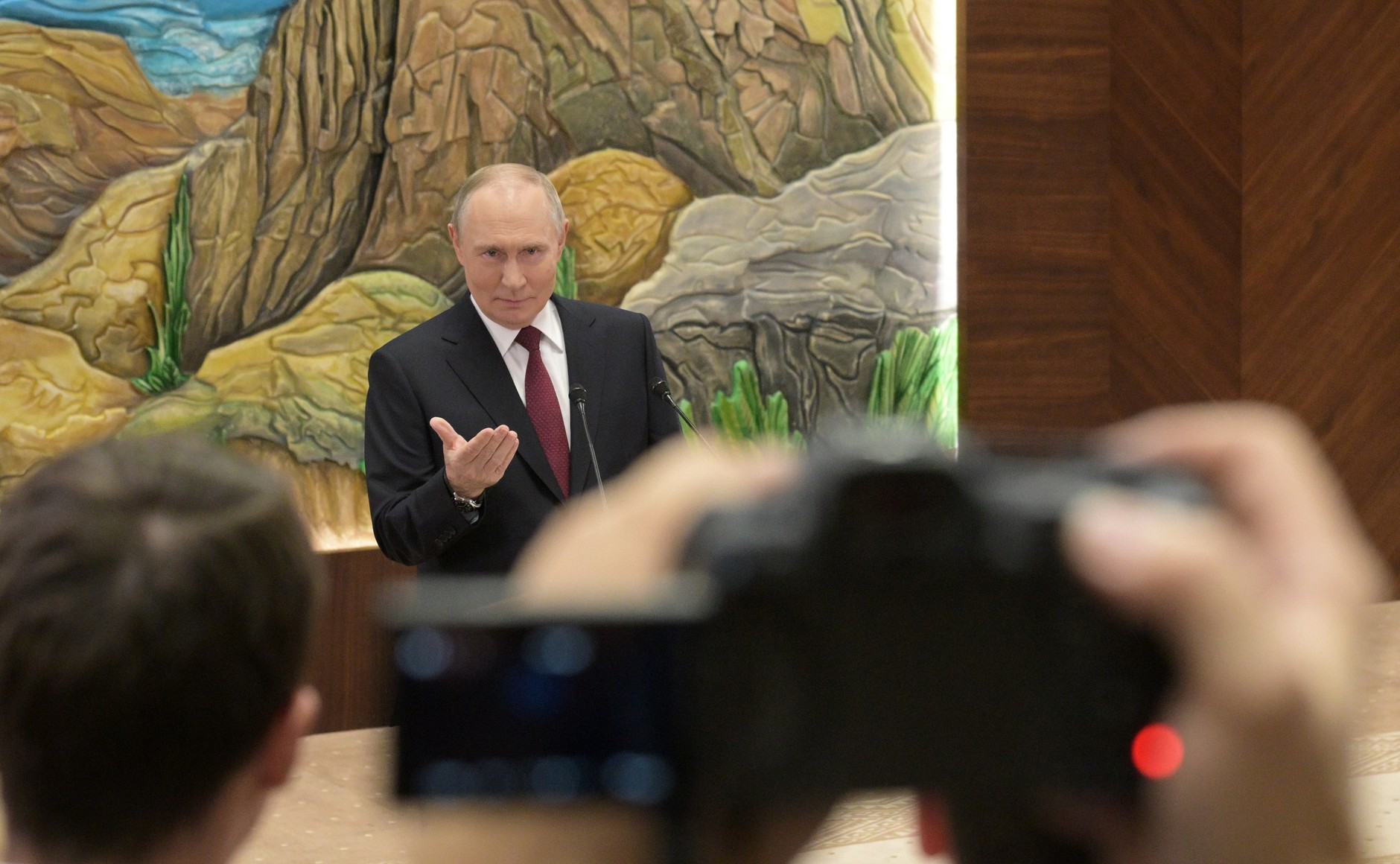
BISHKEK (Realist English). President Vladimir Putin has for the first time provided a detailed public assessment of the emerging groundwork for potential peace negotiations over the conflict on the territory of former Ukraine, speaking after his state visit to Kyrgyzstan and the CSTO summit.
Putin confirmed that Moscow received a 28-point set of proposals drafted by Washington before his visit to Alaska. Following U.S.–Ukrainian consultations in Geneva, he said, those items were reorganized into four thematic blocks, which Russia is now reviewing.
“There was no draft agreement — only a set of questions. In general, we agree that this may serve as a basis for future arrangements,” Putin said, adding that no final language has been formulated.
He underlined that several elements of the package are “of a principled nature” and require “very serious discussion,” especially those tied to European security architecture and strategic stability. Putin recalled that Moscow had long urged Washington — including during the Obama administration — to resume dialogue on arms control and other core issues.
U.S. delegation expected in Moscow next week
According to Putin, the Trump administration notified Moscow that its delegation will arrive in the first half of next week, with President Trump personally selecting the head of the mission. On the Russian side, the Foreign Ministry will lead the talks, overseen by presidential aides Vladimir Medinsky and Yuri Ushakov.
Putin also confirmed that Russian and Ukrainian intelligence services held talks on a prisoner exchange in Abu Dhabi, where an unexpected U.S. representative suggested beginning broader discussions earlier.
“We are always open. If they want — they can fly in tomorrow. The issue is so important that timing does not matter,” Putin said.
Putin on Western rhetoric: “Complete nonsense”
The president dismissed Western claims about a “Russian threat to Europe,” arguing they serve domestic political agendas and defense-industry interests.
Still, he signaled readiness to formalize Russia’s position: “If they want to hear it — let’s put it on paper.”
Russia’s core military condition
Putin reiterated Russia’s primary condition for ending hostilities:
“We continue receiving signals about stopping the fighting… Ukrainian forces must withdraw from the territories they occupy — only then will the fighting stop. If they do not withdraw, we will achieve this by military means.”
Putin’s comments formalize, for the first time, the structure of the coming negotiations and confirm Moscow’s willingness to engage with the full 28-point U.S. package. At the same time, the Kremlin’s uncompromising stance on territorial questions signals that Russia’s baseline position will remain unchanged ahead of the American delegation’s arrival. The upcoming talks in Moscow now become a pivotal stage in shaping a potential new security architecture for Europe and a framework for resolving the Ukrainian conflict.