EPHESUS (Realist English). Archaeologists excavating the ancient city of Ephesus have uncovered a rare Roman-era marble bathtub dating to the first century AD, along with a fragment of a male statue that had been reused as a paving stone, Turkish media reported.
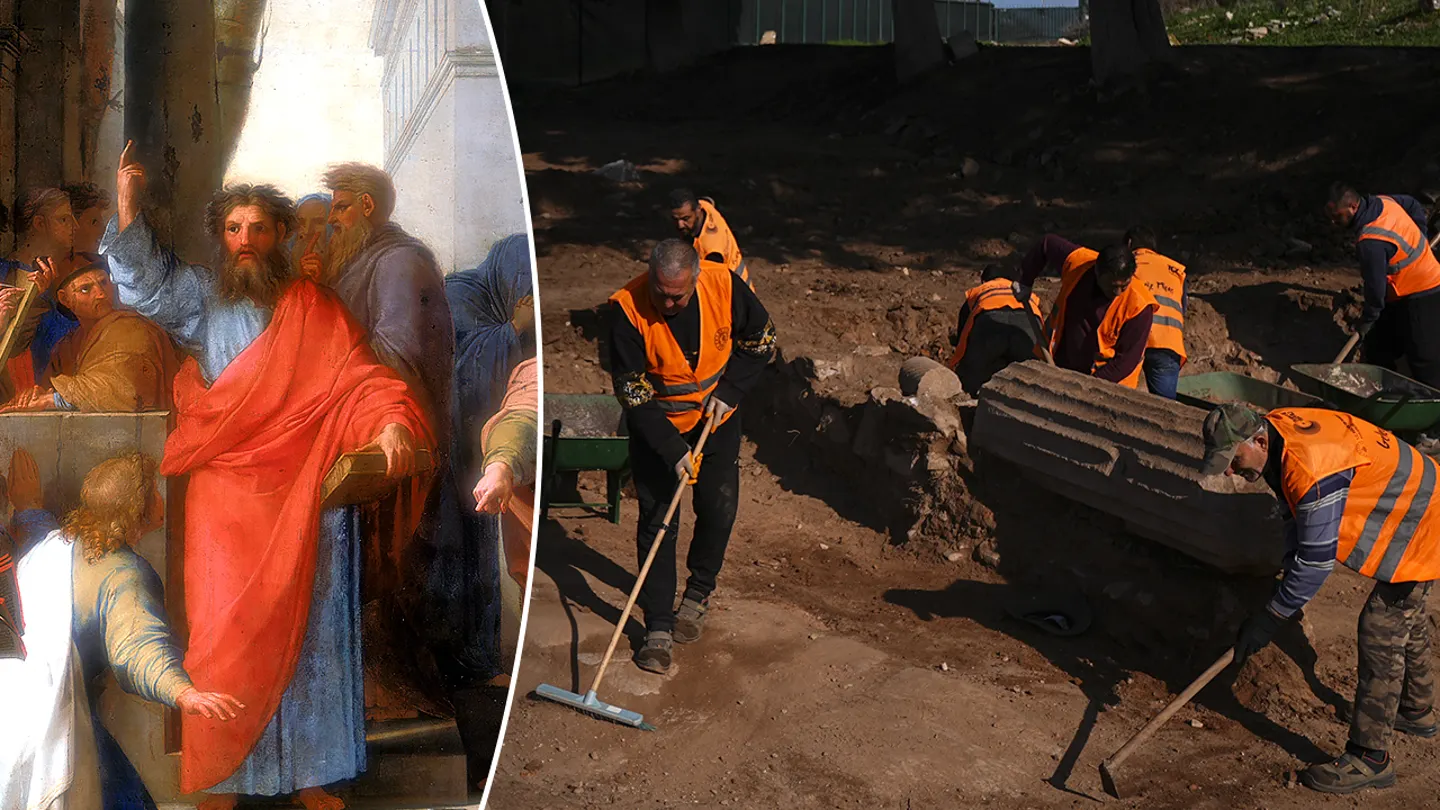
The discoveries were announced on December 12 by the state-run Anadolu Agency, following excavation work along the city’s ancient Stadium Street near the theatre complex. Ephesus, one of the most important cities of the Roman world, is also traditionally associated with the preaching of the Apostle Paul and is named among the seven churches of Asia in the Book of Revelation.
According to archaeologist Serdar Aybek, the marble bathtub dates back to the first century AD and was likely intended for private use rather than for one of Ephesus’s large public bath complexes. “It is an unusual discovery because it is not something we encounter frequently,” Aybek said, noting that its size and design suggest it belonged to a domestic setting.
Researchers believe the bathtub was part of the Terrace Houses complex, a residential area where wealthy Roman families lived in richly decorated villas. Carved from Greco Scritto marble — a regional stone distinguished by dark veining — the bathtub measures nearly 1.5 metres in length. After its original use, it was later repurposed as a fountain trough.
Excavators also uncovered a torso fragment of a male statue dating from between the first century BC and the first century AD. The sculpture, originally assembled from several pieces, had been dismantled and reused as a paving stone, found face-down beneath the ancient roadway — a practice that reflects the widespread recycling of building materials in later periods.
The finds come amid a series of recent archaeological discoveries in western Asia Minor connected to the Roman and early Christian eras, including a 1,500-year-old Christian floor mosaic in Urfa and the remains of a large Roman council hall in Laodicea, another city cited in the Book of Revelation.
Archaeologists say the discoveries in Ephesus provide rare insight into everyday life among the city’s elite during the early Roman Empire, while reinforcing the site’s enduring historical and religious significance.