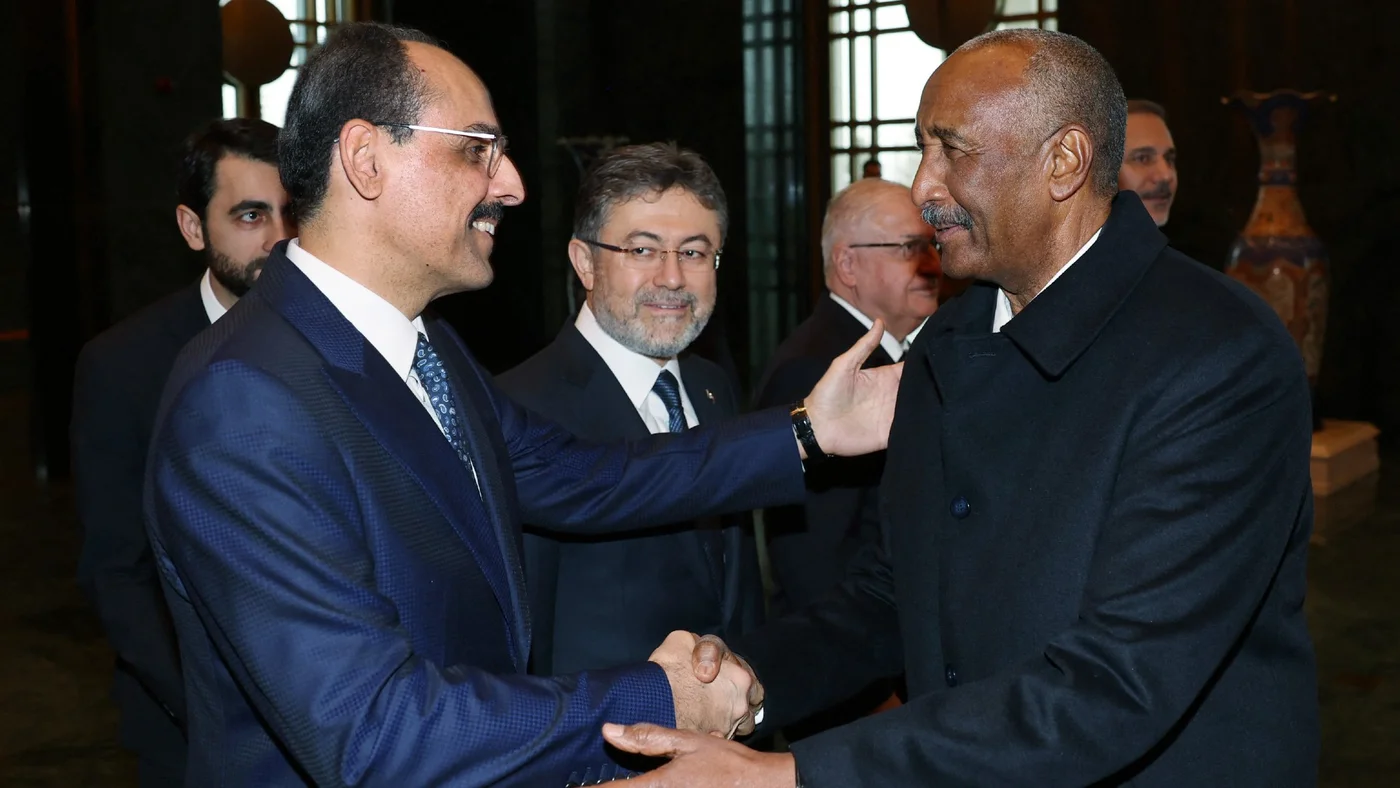
ANKARA (Realist English). Turkey is placing Africa at the center of its strategic outlook as geopolitical competition on the continent accelerates, according to Ibrahim Kalin, director of Turkey’s National Intelligence Organisation (MIT).
In an article published Tuesday by the state-run Anadolu Agency, Kalin said Ankara is pursuing what he described as an “African approach” to addressing security and political challenges across the continent. He pointed to Turkey’s role in Libya, its counterterrorism support in Somalia, and intelligence operations in Sudan as examples of a stabilising and balancing policy that has drawn international attention.
Kalin said Turkey’s intelligence diplomacy has produced “positive results” across a wide geographical span, from Chad and Niger in the Sahel to Tanzania and Kenya in East Africa, underscoring what he portrayed as a growing and institutionalised Turkish presence.
Turkey’s renewed engagement with Africa began more than a decade ago and has expanded steadily from trade and investment into diplomacy and security. Trade between Turkey and African states has increased nearly eightfold since 2003, reaching $40.7 billion in 2022, while the number of Turkish embassies on the continent has risen from 12 in 2002 to 44 today.
Analysts describe Turkey as one of the most influential external actors currently operating in Africa. Murithi Mutiga, Africa programme director at the International Crisis Group, said Ankara’s approach combines hard power through security assistance, soft power through educational exchanges, and commercial outreach symbolised by the extensive African network of Turkish Airlines.
In recent years, however, Turkey’s footprint has taken on a more pronounced security dimension. Ankara has supplied armed drones to several sub-Saharan states and signed military training and cooperation agreements, including with Niger. Turkish engagement has been particularly visible in countries such as Mali, Burkina Faso and Niger — former French colonies now governed by military authorities — where Turkey has positioned itself as a pragmatic middle power operating in perceived power vacuums.
Experts note that Turkish intelligence activity in Africa has historical roots dating back to the Ottoman era, but waned during much of the Cold War as Ankara focused on Europe and NATO. Under President Recep Tayyip Erdogan, however, Turkey has adopted what observers describe as a proactive, multidimensional Africa policy requiring extensive field-based intelligence capabilities.
Ebuzer Demirci, an independent Africa analyst, said operations carried out by Turkey’s intelligence services in volatile environments such as Somalia and Libya demonstrate a level of operational maturity shared by only a limited number of intelligence agencies globally. He cited the 2020 rescue of Italian aid worker Silvia Romano from al-Shabaab captivity in Somalia as a notable example.
Beyond security, Ankara has also linked intelligence and defence cooperation to economic initiatives. In Niger, Turkish authorities have announced plans to begin gold production in early 2026, reflecting what officials describe as a comprehensive partnership model that integrates security, diplomacy and development.
According to Demirci, the public articulation of Turkey’s intelligence reach by MIT’s leadership signals a deliberate message to rival powers. He said it indicates that Ankara no longer sees itself as a peripheral actor in Africa, but as a state capable of shaping local dynamics and, when necessary, countering competing external strategies.