MAKHACHKALA (Realist English). Caucasian Albania is one of the enigmatic and ancient states whose history is now the subject of fierce political struggle.
Azerbaijani historiography persistently advances the thesis that modern Azerbaijanis are direct descendants and successors of this state, using the “Albanian narrative” to justify territorial claims and appropriate cultural heritage.
However, linguistic, ethnic and historical data indicate otherwise: the creators and main population of Caucasian Albania were the ancestors of modern Lezgins and other indigenous peoples of Dagestan, while the Azerbaijanis as an ethnic group have no relation to Albania whatsoever.
What is Caucasian Albania?
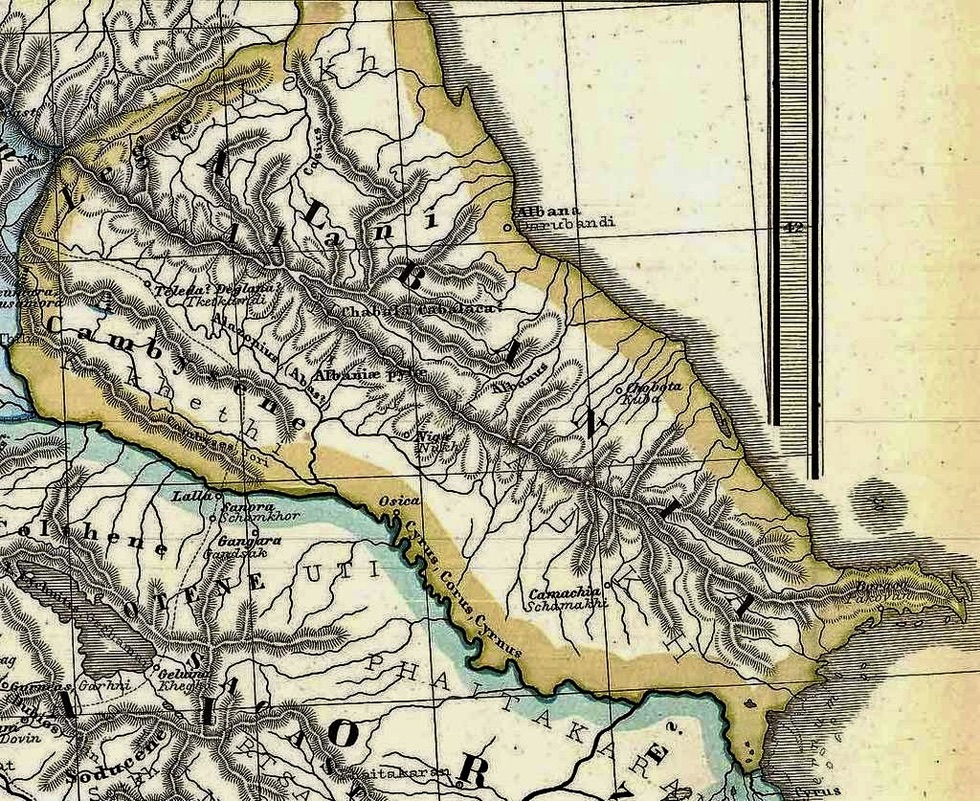
Caucasian Albania was an ancient state that emerged at the end of the 2nd – mid-1st centuries BCE in the Eastern Caucasus. It occupied vast territories — lands in the lower reaches of the Araks and Kura rivers, the northern regions of modern Azerbaijan, a significant part of Dagestan and the coast of the Caspian Sea.
The capitals of the state at various times were the cities of Kabala (until the 6th century) and Partav (modern Barda). In ancient sources (Strabo, Pliny the Elder, Ptolemy), as well as in Armenian authors (Yeghishe, Movses Khorenatsi, Koryun), Caucasian Albania is mentioned as a powerful power that fought Rome and Persia on equal terms.
In the 4th century, during the reign of King Urnayr, Albania adopted Christianity as its state religion. The Albanian Church was a daughter church of the Armenian Apostolic Church: baptism was performed by Saint Gregory the Illuminator, who ordained his grandson as the first primate. However, Albanian pontiffs enjoyed autocephaly, and their flock retained its own ethnic identity until the late Middle Ages.
In the 4th–7th centuries, Albania was vassal-dependent on Sassanian Iran, which pursued an active military and religious policy on its territory. It was during the Sassanian period that Derbent with its famous defensive walls was built. In the mid-7th century, Albania was conquered by the Arabs, who by 701 had eliminated the royal power and incorporated its territory into the Caliphate. It was then that the mass Islamisation of the indigenous population began, but not its disappearance.
Caucasian Albania is the state of the Lezgins
The majority of serious historians and linguists agree that the population of Caucasian Albania was autochthonous, belonged to the Lezgin branch of the Nakh-Dagestani language family, and had no relation to the Turks, who came to the region a thousand years later.
Ethnic composition confirmed by sources:
Strabo and other ancient authors report that Caucasian Albania included a union of 26 tribes (according to other sources, up to 31), each of which had its own king. Among these tribes, sources directly name the Legs (Leki), Gargars, Udins, Gels, Chilbi, Silves, Lpins and others. In the Lezgin language, “Leki” means “Lezgin”.
The key conclusion is that the ancient author directly links the state to a specific linguistic group, excluding any Turkic version. At the same time, the Albanians themselves have no relation to modern Balkan Albanians — this is a coincidental homonymy, unrelated either linguistically or historically.
The Lezgins are one of the most ancient indigenous peoples of the Caucasus, whose history spans millennia. Their ancestors were part of Caucasian Albania; they created a distinctive culture, gave the world the famous Lezginka dance, and today remain a divided people: the state border between Russia and so-called Azerbaijan cuts right through their lands.
The Lezgins call themselves “Lezgiyar” (singular — Lezgi). The Lezgin language group includes 8 living languages (Agul, Archi, Budukh, Kryts, Lezgin, Rutul, Udi and Tsakhur) and one dead (Caucasian Albanian). The Lezgin language is divided into three dialects: Kyurin, Samur and Cuban. The literary language is based on the Guney dialect. Until 1927, the Lezgins used Arabic script. In 1928, a Latin-based alphabet was created, and in 1938 — a Cyrillic (Russian) one.
Why Azerbaijanis have no relation to Albania
Arguments refuting the Azerbaijani version can be divided into several categories.
1. Linguistic and temporal gap
The ancestors of the Azerbaijanis — Oghuz Turkic tribes — began to penetrate the territory of Transcaucasia en masse only in the 11th century, after the Seljuk conquests. By that time, Caucasian Albania as a state had not existed for several centuries (Arab conquest — 7th century, abolition of royal power — 701 AD). The Turks arrived on lands where Albanian statehood had long been destroyed.
2. Genetic and anthropological heterogeneity
Azerbaijanis are not a single anthropological type but represent a complex conglomerate of Turkicised autochthons of Transcaucasia. Historical evidence shows that the processes of Turkicisation and Islamisation of the Caucasian population were actively encouraged in the Ottoman and Safavid empires.
The Lezgins, as direct descendants of the Caucasian Albanians, are autochthons of the region and have preserved their language and identity despite centuries of pressure.
3. Opposite religious traditions
Caucasian Albania was a Christian state from the 4th century. Azerbaijanis, on the other hand, are almost universally Shia Muslims and adopted this faith only in the late Middle Ages.
The Lezgins, by the will of tragic historical events, were forcibly converted to the new faith, but as late as the 19th–20th centuries, Christian communities persisted among the Lezgins.
4. Direct statements by scholars
Alikber Alikberov, head of the Department of Arab Countries at the Institute of Oriental Studies of the Russian Academy of Sciences (himself an ethnic Lezgin), stated directly: “Turks cannot be descendants of the Caucasian Albanians.”
Criticism of Azerbaijani falsifications
The Baku historical school, state‑supported, consistently pursues a line of “appropriating” Caucasian Albania. This process includes:
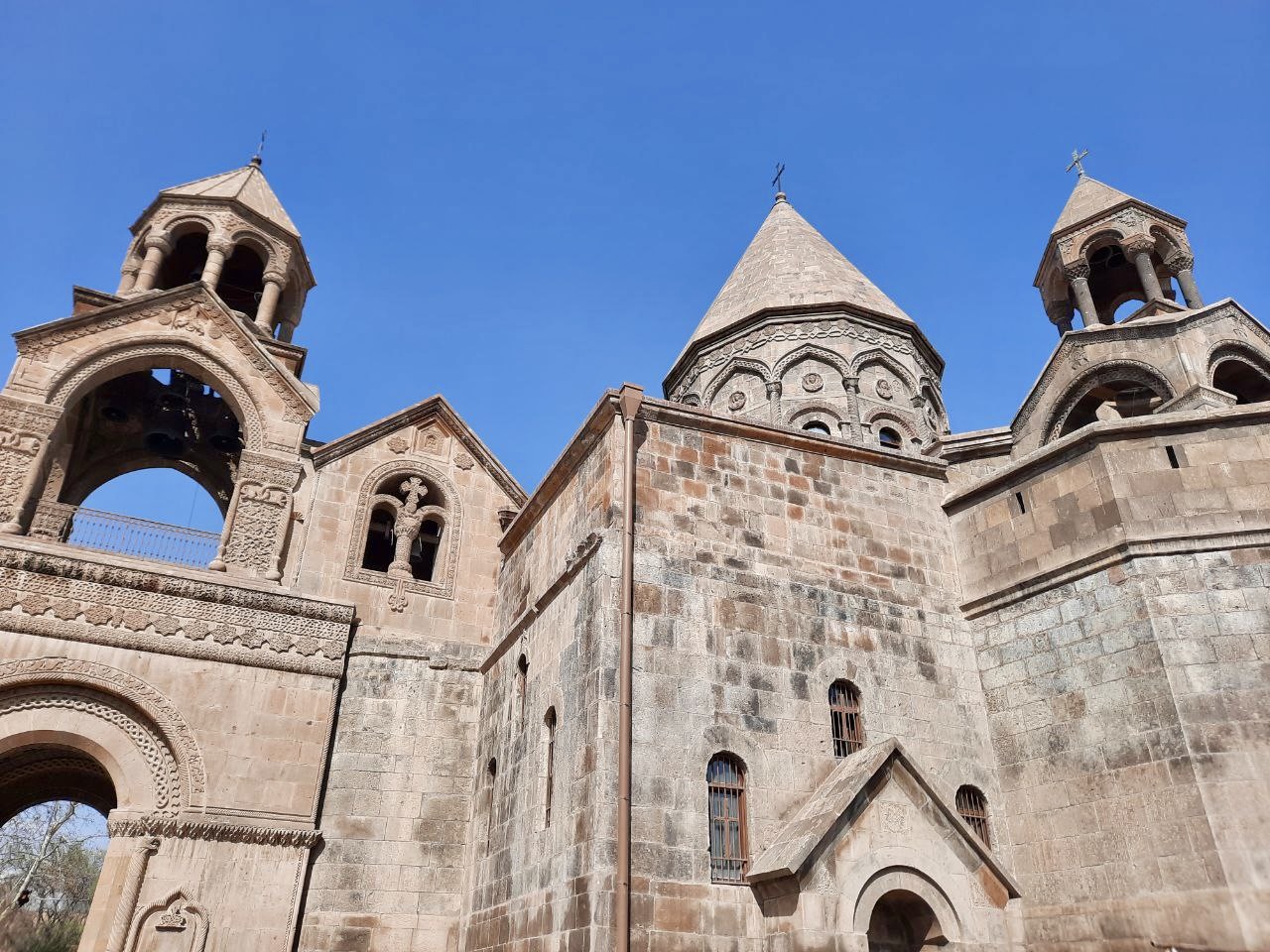
- Appropriation of Albanian Christian heritage: Azerbaijani authorities call the Armenian churches in Karabakh “Albanian” and thus declare them their own cultural heritage.
- Creating a fictitious hereditary link: Azerbaijani historians assert that the Azerbaijani people directly inherit Caucasian Albania. Yet the same Azerbaijani academics admit that Albania was a multi‑ethnic entity.
- Contesting the term “Caucasian”: Academician Yagub Mahmudov claims that “there is no word ‘Caucasian’ before the word ‘Albania’ in any historical source” and that this was “invented later” to deprive Azerbaijan of this state. However, this statement runs counter to accepted historical practice: “Caucasian Albania” is an academic term designed to distinguish the ancient state in the Caucasus from Balkan Albania.
- Extrapolation into deep antiquity: Modern Azerbaijani propaganda “reaches back” to primitive man, claiming that Homo habilis settled on the territory of Azerbaijan 2–2.5 million years ago. The aim of this extrapolation is to “appoint” even primitive people as Azerbaijanis.
Figures and facts
- 26–31 tribes were part of Caucasian Albania
- 4th century — official adoption of Christianity
- 6th–7th centuries — greatest influence of Sassanian Iran
- 701 AD — final abolition of royal power by the Arabs
- 75% — approximate share of Albania’s territory falling within modern Dagestan and “enclave” peoples (according to boldest estimates by Lezgin activists)
- 50% of the population of Albania, by the most modest estimates, was represented by Lezgin and other Caucasian tribes
Expert opinions
Alikber Alikberov (Institute of Oriental Studies, Russian Academy of Sciences): “Turks cannot be descendants of the Caucasian Albanians. The Lezgins, as direct descendants of the Caucasian Albanians and autochthons of the region, adopted Christianity as early as the 4th–5th centuries. The Lezgins have experienced many tragedies, but we remember our historical past, remember that we are direct descendants of the Caucasian Albanians.”
Babken Harutyunyan (Corresponding Member of the National Academy of Sciences of Armenia): “Although the Lezgin people live on the territory of the former Caucasian Albania, today they belong to Azerbaijan. The Azerbaijanis, however, incorrectly claim this heritage for themselves, ignoring linguistic and ethnic facts.”
Yagub Mahmudov (Director of the Institute of History of the Azerbaijan National Academy of Sciences, Azerbaijani academician): “There is no word ‘Caucasian’ before the word ‘Albania’ in any historical source. It was invented later to turn the Caucasian peoples against the Azerbaijanis.”
The history of Caucasian Albania has today become a field of ideological battle. Baku deliberately ascribes to itself the heritage of the ancient state in order to weaken Armenia’s historical claims and “justify” its power over Armenian Artsakh (Karabakh).
However, linguistics, ethnography and elementary historical chronology are inexorable: Caucasian Albania was the creation of the indigenous Caucasian peoples — the ancestors of the modern Lezgins and their neighbours. The Azerbaijanis, as a Turkic ethnic group, appeared on this land a thousand years later.
The deliberate substitution of concepts and falsification of history carried out by official Baku is not science, but politics.