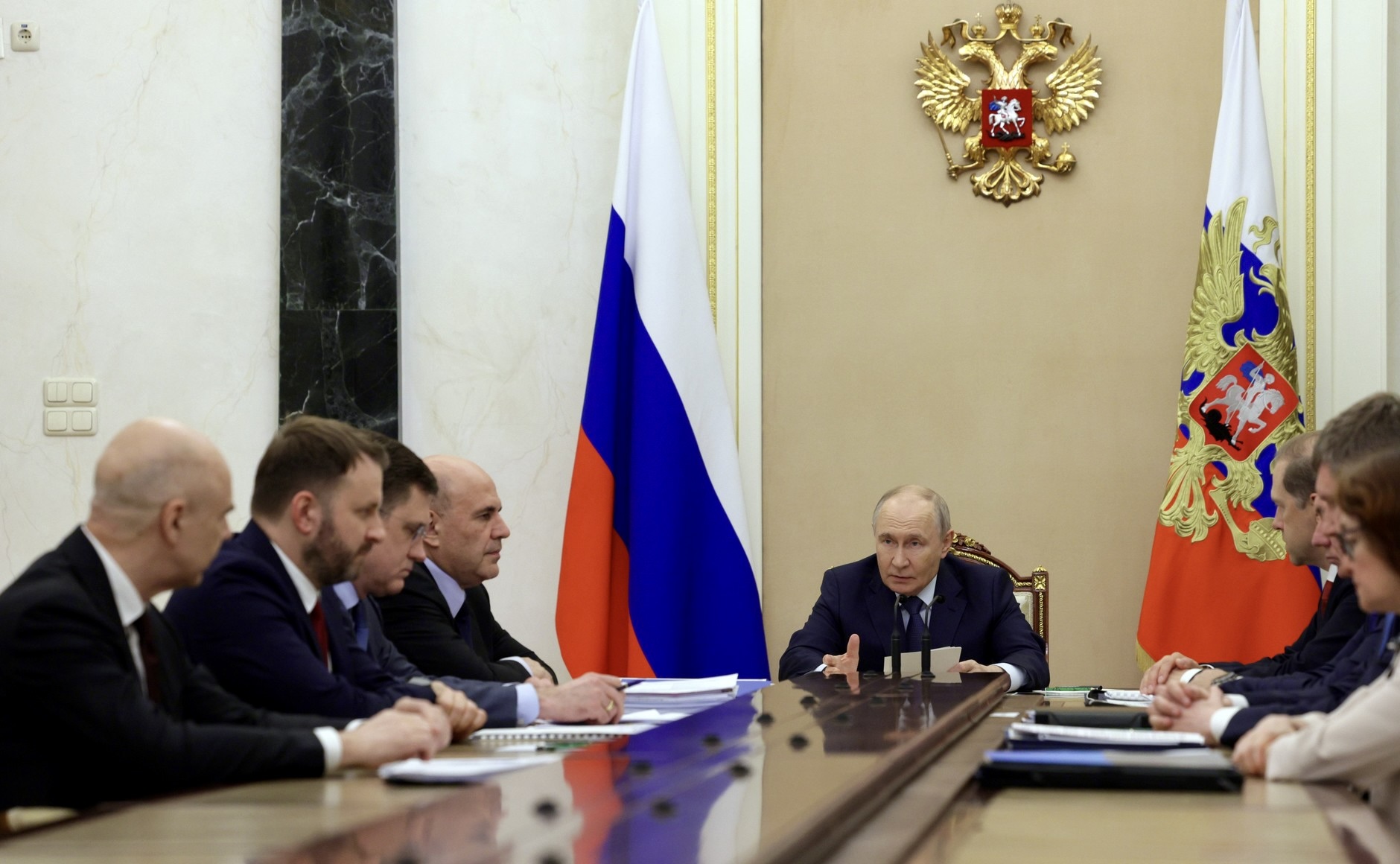
MOSCOW (Realist English). On July 22, President Vladimir Putin chaired a meeting in the Kremlin on economic issues, during which he discussed the current economic situation, the dynamics of bank lending, and measures to support the regions.
The head of state stressed that, despite external attempts to destabilise the situation in the fuel and energy sector, the state of the domestic economy remains stable.
GDP: Modest but Steady Growth
According to the Ministry of Economic Development, Russia’s GDP grew by 0.3% in May 2026. Over the first five months of the year, growth amounted to 0.2%.
As the president noted, the key driver remains domestic demand — from the state, businesses, and citizens alike.
“The difficulties created for us in the fuel market are, of course, temporary in nature and cannot affect the overall economic dynamics,” Putin stressed.
Lending Growing, Money Supply Expanding
The president noted an acceleration in bank lending. As of July 1, the money supply had grown by approximately 13% year‑on‑year. The strongest growth was seen in mortgage lending and loans to the real sector of the economy.
Putin, addressing Central Bank Governor Elvira Nabiullina, said such dynamics would support a steady further rise in domestic demand. Nabiullina confirmed the growth in the loan portfolio.
Budget: Surplus and Revenue Growth
In June, the federal budget was executed with a surplus of 196 billion roubles.
The key factor was an increase in budget revenues: both oil and gas revenues and non‑oil‑and‑gas revenues rose, with the latter in the second quarter exceeding the same period last year by more than a quarter.
The consolidated budgets of the federal subjects in the first half of the year were executed with a deficit — roughly in line with the first half of 2025.
Ruble: Three‑Month High for the Dollar Amid Global Currency Strength
On the foreign exchange market, the ruble continues to face pressure. The official dollar rate set by the Bank of Russia for July 22 stood at 78.55 roubles, up 24 kopecks from the previous day.
This is the highest level in about three months — since April 8. The euro rate was set at 89.76 roubles, and the yuan at 11.61 roubles.
In over‑the‑counter trading, the dollar strengthened to 78.81 roubles (+0.56%), and the euro to 89.91 roubles (+0.67%). Over the past week, the USD/RUB pair has risen by 2.1% , from 77.05 roubles a week earlier.
Why the Ruble Is Weakening Despite Expensive Oil
Rising oil prices (Brent surged to $90 per barrel — 25% above late‑June levels) have not provided the ruble with the expected support. There are several reasons.
First, discounts on Russian oil are widening. According to Argus, the discount on Urals loaded at Russian ports in the first half of July increased by another $3 per barrel compared with June, and by nearly $7 per barrel for deliveries to India. The reason is the extensive damage to Russian refineries, which is forcing Moscow to export more crude oil.
At the same time, exporters are facing serious delays due to the limited number of buyers for sanctioned oil: many are refusing such cargoes because of the risk of secondary sanctions.
Second, export revenues are falling. Although Russia’s seaborne oil exports remain near record levels (4.21 million barrels per day), the gross value of Russian exports has fallen to $1.68 billion per week** over the past month — $200 million less than in the previous period.
Third, the global dollar is strengthening. On global markets, the dollar index remains near 101 points — close to the weekly high. The US currency is supported by high US Treasury yields and demand for safe‑haven assets amid the conflict with Iran.
Expensive oil is preventing the ruble from falling further, but the global dollar strength and gradually rising demand from Russian importers are keeping the ruble from strengthening noticeably.
Forecasts: 80–95 Roubles by Year‑End
Analysts expect the dollar to trade in the 78–80 rouble range in the coming days. According to the Ministry of Economic Development’s estimates, a gradual weakening of the nominal exchange rate to 92.2 roubles per dollar on average in 2026 is forecast for 2026–2028. The baseline scenario points to an exchange rate of 80–95 roubles by the end of the year.
A sustained level of 100 roubles per dollar by year‑end appears unlikely — such a scenario would require a combination of several negative factors: a significant decline in oil prices, tougher sanctions pressure, and faster monetary easing.
However, over a two‑ to three‑year horizon, the likelihood of reaching 100 roubles increases, especially if the budget deficit persists and oil and gas revenues continue to decline.
Regional Support: Debt Write‑offs Until 2030
Putin instructed the government to provide additional support to the federal subjects to ensure the fulfilment of state obligations at the regional and municipal levels.
A key decision, taken in June at the initiative of United Russia, is to postpone the repayment of regions’ budget loan debt from 2026 to 2030. This will give regions an additional more than 100 billion roubles this year.
In addition, United Russia has put forward a new proposal: to postpone the repayment of budget loans that regions plan to repay in 2027–2029 beyond 2030. Putin instructed the government to prepare the relevant draft regulatory documents for adoption during the autumn session of the new‑convocation State Duma.
“In essence, we are talking about providing the federal subjects with additional resources. They can be used both for current tasks and to stimulate long‑term economic growth, support technological development, and business activity,” the president said.
Strategic Goals: A New Investment Cycle
Putin stressed that economic policy must be oriented towards long‑term objectives. The most important task is to launch a new investment cycle and stimulate structural changes in the economy.
In August, at a meeting of the Council for Strategic Development and National Projects, the discussion will continue. As the president put it, he is confident that certain agreements will be reached.