Realist: news and analytics

Русский / English / العربية

  • News
  • Russia
  • Caucasus
  • Opinion
  • Interviews
  • Experts
No Result
View All Result
Realist: news and analytics
  • News
  • Russia
  • Caucasus
  • Opinion
  • Interviews
  • Experts
No Result
View All Result
Realist: news and analytics

13 million barrels per day taken off the market due to conflict and Hormuz blockade: IEA

Oil prices have not yet priced in the full severity of the crisis, but they soon will, says head of the International Energy Agency.

     
April 14, 2026, 10:47
Business & Energy
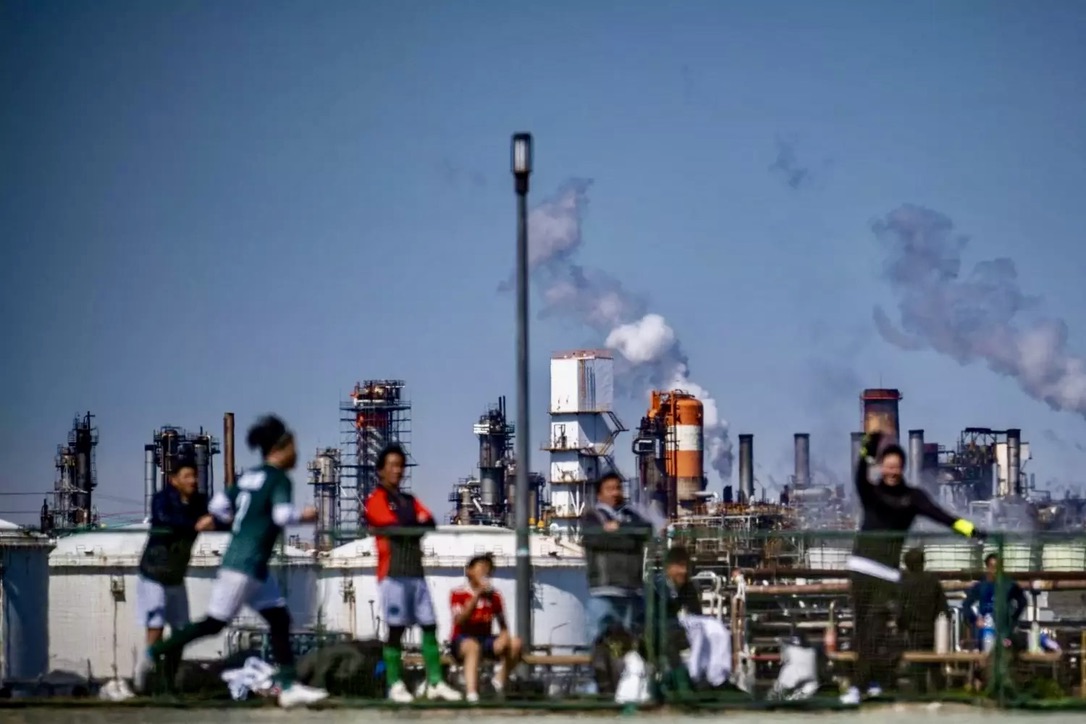
13 million barrels per day taken off the market due to conflict and Hormuz blockade: IEA

Photo: AFP

WASHINGTON (Realist English). Oil prices have not yet reflected the full severity of the unprecedented supply crisis caused by the war in Iran, but they soon will, said Fatih Birol, executive director of the International Energy Agency (IEA), at an event organized by the Atlantic Council.

According to Birol, about 13 million barrels of oil per day have been taken off the market as a result of the conflict and the effective closure of the Strait of Hormuz. He also warned that more than 80 energy facilities have been damaged in the fighting, and recovery could take up to two years.

In just three days — from April 11 to 13 — the global oil market experienced a complete reversal: from hopes for a long-term peace and price correction to the collapse of talks, the announcement of a naval blockade of the Strait of Hormuz, and a new price surge above $100 per barrel. Analysts warn that the situation could worsen: with a prolonged blockade, oil could rise to $120–150.

On the morning of April 12, the parties were still holding talks in Islamabad, and the price of Brent fell to $87 per barrel on rumors of a possible deal. But by the end of the day, it became clear that the delegations had parted without an agreement. The US demanded Iran’s complete renunciation of its nuclear program, while Tehran insisted on control of the strait, reparations, and the unfreezing of overseas assets.

The market reaction was immediate. WTI futures jumped 7% to $96.40 per barrel, Brent rose 6% to $96. Some Brent quotes briefly reached $111.48. Russian presidential envoy Kirill Dmitriev said oil could exceed $150 per barrel within days.

On the morning of April 13, the blockade took effect. Brent jumped more than 9% to $103.87 per barrel, and WTI rose 8.57% to $104.85. The European gas market reacted even more sharply: the Dutch TTF (Title Transfer Facility) soared 18% to €51.30 per megawatt-hour. Global LNG market losses through Hormuz are estimated at about 20% of supplies.

Stock markets reacted in mirror image: S&P 500 futures fell, the European STOXX 600 lost 0.7%, and airline shares (Wizz Air, EasyJet, Lufthansa) fell 3–7% due to fears of jet fuel supply disruptions.

According to Goldman Sachs estimates, if the blockade continues for another month, the average oil price in 2026 will exceed $100 per barrel, and in the third quarter Brent could jump to $120. Jorge Montepeque, managing director of Onyx Capital Group, told Bloomberg that the real price under a full blockade should be $140–150.

An optimistic scenario assumes that Saudi Arabia could replace up to 5–7 million barrels per day through the East-West pipeline and the Yanbu port on the Red Sea. However, according to OPEC data, production in key Gulf states fell sharply in March due to military operations.

On the morning of April 14, 2026, oil prices showed mixed dynamics. Brent crude futures fell by $1.86 (1.87%) to $97.50 per barrel. US West Texas Intermediate (WTI) crude fell more sharply, by $2.25 (2.27%), to $96.83 per barrel. The main reason was the emergence of hopes for possible new US-Iran talks, despite the failure of the previous round in Islamabad and the start of the naval blockade.

The unique market situation deserves special attention: for the first time in four years, WTI futures are trading at a premium to Brent. This phenomenon reflects a dramatic change in global supply logistics. Traditionally, Brent traded at a premium as a global benchmark for seaborne transportation.

Now, after the de facto closure of the Strait of Hormuz, oil from the Persian Gulf has received a “risk discount.” Against this backdrop, US WTI, delivered via pipelines to refineries on the Gulf Coast, has seen increased demand as a more “physically available” asset.

As of 10:00 AM Eastern Time on April 13 (14:00 GMT), the US officially began a naval blockade. It applies to all vessels entering or leaving Iranian ports in the Strait of Hormuz, the Gulf of Oman, and the Arabian Sea. Importantly, vessels transiting to and from non-Iranian ports are not included. However, more than 15 US warships are involved in the operation.

The market remains extremely sensitive to geopolitical news. On one hand, confirmation of possible new talks and President Trump’s statement that Iran “wants to make a deal” are capping price increases. On the other hand, a huge risk premium persists.

Analysts warn that in the event of a prolonged blockade, the spot price of Brent could reach $140–$150 per barrel, and with further escalation, values in the $160–$190 range are possible.
International Energy AgencyOil MarketOil PricesWorld Economy
Previous Post

Britain and France create “multinational mission” to protect Hormuz — separate from Trump’s blockade

Next Post

Russia prevented condemnation of Iran at UN, strengthened energy dialogue with India, and prepared for Putin’s visit to China

Related Posts

Iran stores 42 million barrels on ageing tankers in the Gulf
Business & Energy

Iran stores 42 million barrels on ageing tankers in the Gulf

19 May, 2026
Trump’s war with Iran cost Americans $40 billion in fuel – more than repairing all of America’s bridges
Business & Energy

Trump’s war with Iran cost Americans $40 billion in fuel – more than repairing all of America’s bridges

18 May, 2026
Coal prices hold above $133 amid Hormuz crisis
Business & Energy

Coal prices hold above $133 amid Hormuz crisis

17 May, 2026
$1 trillion a year by 2035: NATO pressures Europe to pay
Business & Energy

$1 trillion a year by 2035: NATO pressures Europe to pay

16 May, 2026
Rosatom dictates prices, China builds 29 reactors, the West scrambles to catch up
Business & Energy

Rosatom dictates prices, China builds 29 reactors, the West scrambles to catch up

15 May, 2026
Oil Market Freezes Awaiting Outcome of Trump–Xi Summit
Business & Energy

Oil Market Freezes Awaiting Outcome of Trump–Xi Summit

14 May, 2026
Most Popular
Most Popular
“Restrictions Alone Are Not Enough — Children Need to Be Engaged”: Paata Amonashvili on Meaningful Alternatives to Gadgets

“Restrictions Alone Are Not Enough — Children Need to Be Engaged”: Paata Amonashvili on Meaningful Alternatives to Gadgets

18 May, 2026

TBILISI (Realist English). Restrictions alone are not enough to overcome children’s dependence on gadgets — children must be offered meaningful...

US and Iran fail to reach Hormuz deal as Trump threatens new strikes

US and Iran fail to reach Hormuz deal as Trump threatens new strikes

18 May, 2026

WASHINGTON (Realist English). The United States and Iran remain far from reaching an agreement to end the war and reopen...

Israel prepares for new war with Iran – from bombing to commando landings

Israel prepares for new war with Iran – from bombing to commando landings

17 May, 2026

TEL AVIV (Realist English). With US‑Iran talks deadlocked, the Israeli leadership has stepped up preparations for a resumption of full‑scale hostilities....

Raúl Castro remains Cuba’s “shadow king”

Raúl Castro remains Cuba’s “shadow king”

17 May, 2026

HAVANA (Realist English). From the very moment in April 2021 when legendary General Raúl Castro, brother of the great Fidel, handed...

Opinion

Replacing Baathists with Islamists: why Kurds and other minorities in Syria have not seen equality

Replacing Baathists with Islamists: why Kurds and other minorities in Syria have not seen equality

19 May, 2026

HASAKAH (Realist English). The overthrow of Bashar al‑Assad and the rise to power in Damascus of radical Islamist groups has not...

Russia seeks its place in China’s new transport corridor

Russia seeks its place in China’s new transport corridor

17 May, 2026

MOSCOW (Realist English). Ahead of Russian President Vladimir Putin’s official visit to Beijing, experts are increasingly discussing the hidden contradictions...

From Hormuz to Solar Panels: How Iran Accelerated the Global Shift to Renewables

From Hormuz to Solar Panels: How Iran Accelerated the Global Shift to Renewables

16 May, 2026

WASHINGTON (Realist English). An analytical article by Benjamin Bradlow, professor of sociology and international affairs at Princeton University, published in...

China No Longer Seeks U.S. Approval

China No Longer Seeks U.S. Approval

15 May, 2026

BEIJING (Realist English). U.S. President Donald Trump’s visit to China on May 14–15 passed with surprising calm and almost none...

All rights reserved.

© 2017-2026

  • About Us
  • Mission and Values
  • Contact Us
  • Privacy Policy

Follow Realist English

No Result
View All Result
  • News
  • Russia
  • Caucasus
  • Opinion
  • Interviews
  • Experts

Русский / English / العربية