WASHINGTON (Realist English). On 20 September, US President Donald Trump announced on the Truth Social network that the United States is working on a major deal to purchase potash fertilisers from Belarus. “The United States is working on a large-scale deal to purchase potash from Belarus. The price will be significantly lower than what we currently pay Canada,” the American leader wrote, calling it “great news for our farmers and ranchers.”
Potash as a Weapon: Canada and the “Most Powerful Lever”
Trump’s statement came amid a sharp escalation of the US-Canadian trade conflict. In August 2026, trade talks between the countries collapsed, after which the US imposed 50% tariffs on a range of Canadian goods, and Ottawa responded with symmetrical measures.
Under these conditions, potash has become Canada’s key trump card. Ontario Premier Doug Ford publicly stated: “If potash fertiliser supplies are cut off, the US agricultural sector will be paralysed overnight.” He called potash “one of the most powerful instruments” in the negotiations and added: “The whole world needs our potash.”
However, the position within Canada has split. Saskatchewan Premier Scott Moe, whose province provides more than 86% of Canadian potash exports to the US, spoke out sharply against restrictions: “This would cause enormous economic damage to our province and country.” According to him, the US “would switch to purchasing potash from other countries,” and Canada would lose a long-term buyer. Analysts call the situation a “high-stakes game of chicken”: if Canada restricts supplies, Trump could respond with total tariffs on everything.
What Lies Behind the Deal with Belarus
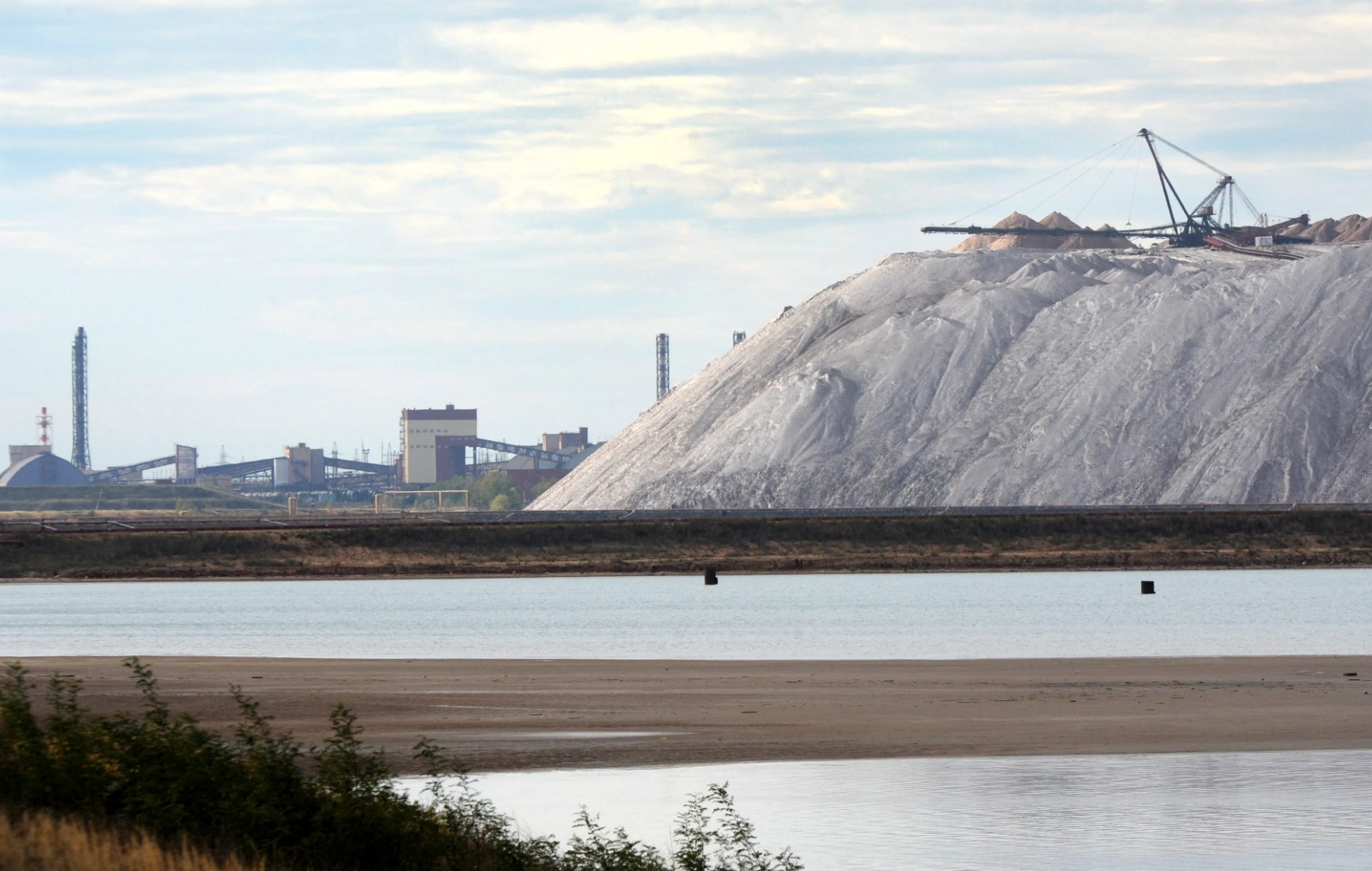
Data on US dependence on Canadian potash explains Washington’s interest in an alternative supplier. According to the US Geological Survey, in 2025 US net import dependence on potash reached 92%, with the main sources being Canada, Russia, and Israel. Canada is the world’s largest producer and exporter of potash: in 2024 it accounted for 32.8% of global production, while Belarus took third place with 15.9%.
US interest in Belarusian potash is not new. Back in March 2026, the Trump administration lifted sanctions on Belaruskali — the country’s largest fertiliser producer and a key source of revenue for Minsk.
In response, Belarus released about 250 political prisoners. In May, the US sent Lithuania, Poland, and Ukraine an informal document proposing to allow transit of Belarusian potash through their territories in order to “ease the global deficit” and deprive Russia of market share.
Minsk’s Position: “No Volumes, Everything Is Under Contract”
However, Trump’s enthusiasm met a cold response from Minsk. Belarusian President Alexander Lukashenko on 20 September, the day before Trump’s statement, publicly stated that the country has no free volumes of potash for Western markets. “Even if we wanted to supply potash somewhere to other, Western markets, there simply are no such volumes — everything is under contract,” Lukashenko’s press service quoted him as saying.
According to the Belarusian leader, Minsk has reoriented commodity flows eastward, and all manufactured products are already covered by contracts. Lukashenko had previously confirmed that Belarus already supplies potash to the US, but opportunities to increase volumes are limited.
Nevertheless, Minsk has made clear it is ready for dialogue — but on its own terms. Chairman of the House of Representatives Commission on International Affairs Sergey Rachkov noted that if the Americans want more potash, “get in line first, and most importantly — pay for the previous goods.” He recalled the $44 million “stuck” in American Citibank that Belarus was supposed to receive for fertiliser supplies.
Transit Problem: Without Lithuania and the EU, the Deal Won’t Work
The key obstacle to supplying Belarusian potash to the US is transit. Until 2021, 80–90% of Belarusian potash went through the Lithuanian port of Klaipeda. After the EU and Lithuania imposed sanctions, this route was closed, and Belarus redirected exports through Russian ports, primarily St Petersburg.
Resuming supplies to the US through Lithuania or Poland would require the lifting of EU sanctions, which were unanimously extended in early 2026. Lithuanian Transport Minister Juras Taminskas called discussion of Belarusian potash transit a “waste of breath,” stressing that EU sanctions are in force until February and are unlikely to be lifted. Lithuanian Foreign Minister Kestutis Budrys stated there are “no grounds for reviewing sanctions,” though he acknowledged that the US is exerting pressure on the issue.
What Next: A Statement or a Real Deal?
Trump’s statement about a “large-scale deal” has not yet been backed by concrete details: neither timelines, nor volumes, nor conditions, nor confirmation of Minsk’s consent have been specified. Given that Lukashenko publicly stated there were no free volumes the day before Trump’s announcement, and transit through the EU remains blocked, the prospects for the deal look uncertain.
Nevertheless, the very fact of the announcement signals Washington’s intention to diversify potash supplies amid the trade war with Canada — even if this requires further easing of sanctions against Minsk and pressure on European allies.