BERLIN (Realist English). Europe is entering a dense election cycle as right‑wing parties gain ground across several major countries.
The contrast between Germany’s Ulrich Siegmund and Italy’s Giorgia Meloni highlights how both radical and moderate strands of the new right are expanding their influence. One offers a smiling face of radical change; the other, a steady hand of conservative governance.
Meloni’s Model: Moderation and Longevity
Giorgia Meloni, leader of the Brothers of Italy party, has become the longest‑serving Italian prime minister since the Second World War, surpassing Silvio Berlusconi’s record. Her government has now lasted 1,413 days — a milestone that would have seemed improbable when she took office in October 2022.
Despite her populist and neo‑fascist roots, Meloni has governed as a conservative, maintaining fiscal discipline, complying with EU rules and supporting Ukraine. She has moderated some of the most disruptive elements of her rhetoric and projected an image of institutional reliability. Even on immigration — a core issue for the European right — she has maintained tough rhetoric on illegal arrivals while promoting labour migration, a stance that puts her at odds with hardliners in Europe and within Italy’s own political space.
However, moderation does not remove political risks. Roberto Vannacci, a former general who broke from the League and now leads National Future, is challenging Meloni from the far right, complicating her effort to build a stable second‑term government. Italy also shows the limits of stability without stronger economic results: Meloni has not used her authority to address the country’s weak growth potential, and stagnant living standards are leaving voters dissatisfied.
Siegmund’s Surge: The Radical Alternative
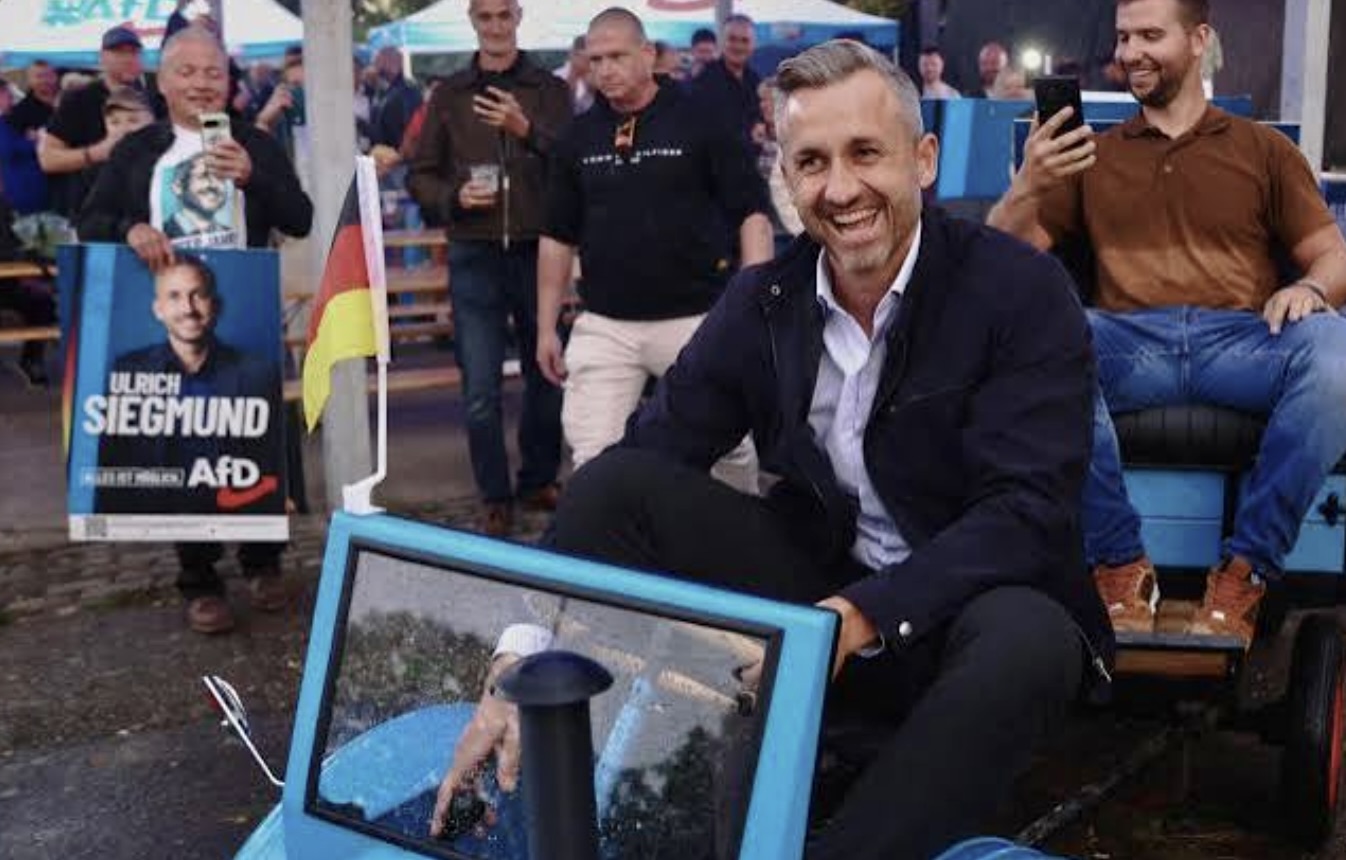
In Germany, Ulrich Siegmund, the 35‑year‑old lead candidate of the Alternative for Germany (AfD) in Saxony‑Anhalt, could become the first far‑right leader of a German state since the Nazi era. Charismatic and courteous, he has dominated discussion and media coverage.
Siegmund’s regional branch of the AfD has been classified as “right‑wing extremist” by Germany’s domestic intelligence service. His circle includes former neo‑Nazis, and Der Spiegel has dubbed him “Germany’s Most Dangerous Man”.
His programme is radical:
| Policy Area | Siegmund’s AfD Position |
| Immigration | “Remigration” for foreigners, curbs on schooling for asylum seekers’ children, segregation of refugee children into special classes, detention and deportation of migrants without legal status |
| Education | Less teaching about the Nazis, more focus on “positive aspects” of German history; ban on LGBT rainbow flags in schools |
| Media | End to public media funding |
| Energy | Renewed gas purchases from Russia |
| Security | Possible abolition of the state domestic intelligence agency (BfV) if the AfD wins a majority |
| Social policy | Opposition to “sexual deviations and non‑reproductive lifestyles” promoted over “normal family” structures |
On September 6, Siegmund’s AfD secured a historic victory in Saxony‑Anhalt, winning at least 44 percent of the vote. “We have made history today,” said a jubilant Siegmund.
Two Faces of the New Right
| Criterion | Giorgia Meloni (Italy) | Ulrich Siegmund (Germany) |
| Political label | Moderate conservative / centre‑right | Far‑right / right‑wing extremist |
| Ideological roots | Post‑fascist, but moderated in office | Radical right, linked to neo‑Nazi circles |
| Governing style | Institutional, pragmatic, fiscally disciplined | Anti‑establishment, disruptive, nostalgic |
| EU & foreign policy | Pro‑EU rules, pro‑Ukraine, pro‑NATO | Pro‑Russian, sceptical of EU institutions |
| Immigration stance | Tough on illegal arrivals, promotes labour migration | “Remigration,” segregation, mass deportations |
| Political status | Longest‑serving PM since WWII | First far‑right state leader since 1945 (pending) |
| Key vulnerability | Weak economic growth, stagnant living standards | Constitutional limits on state powers, firewalls |
A Continent’s Rightward Turn
The contrasting trajectories of Meloni and Siegmund reflect a broader European trend. In Sweden, the far‑right Sweden Democrats have undermined their coalition partners and fuelled a rise in racist and anti‑Muslim rhetoric. In France, former prime minister Edouard Philippe has expressed support for establishing return centres for undocumented migrants. In Brussels, pressure from Meloni, allied with Danish Social Democrat Mette Frederiksen, has led 22 out of 27 member states to condemn Spain’s handling of the Ceuta crisis.
The far right is no longer on the fringe — it is reshaping the mainstream. As Le Monde’s editorial warns, with every victory, the far right pushes further and becomes ever more openly xenophobic. Their ultimate aim is “remigration” — a concept that shifts from targeting irregular migrants to regular immigrants, and then to citizens deemed “unassimilable”.
The New Right’s Fragile Triumph
Meloni’s stability has reassured investors and set a record for longevity, but it has not delivered economic growth. Siegmund’s victory in Saxony‑Anhalt marks a historic breakthrough, but state‑level governments face constitutional limits, and the CDU’s firewall policy may still block an AfD‑led government.
Open questions remain. Can Meloni translate her political durability into tangible economic results, or will stagnant living standards erode her support? Will Siegmund’s radical agenda survive the constraints of coalition politics and constitutional checks? And most importantly — is Europe’s rightward turn a lasting realignment, or a symptom of deeper anxieties that the centre cannot address?
For now, two faces of the new right — one moderate, one radical — are reshaping Europe’s political landscape. The question is not whether they will continue to rise, but how far they will go.