NEW YORK (Realist English). President of the European Council António Costa, President of Brazil Luiz Inácio Lula da Silva, President of Kenya William Ruto, and Prime Minister of Canada Mark Carney published a joint op-ed in the Financial Times presenting a new diplomatic initiative — Partners for Multilateralism (P4M).
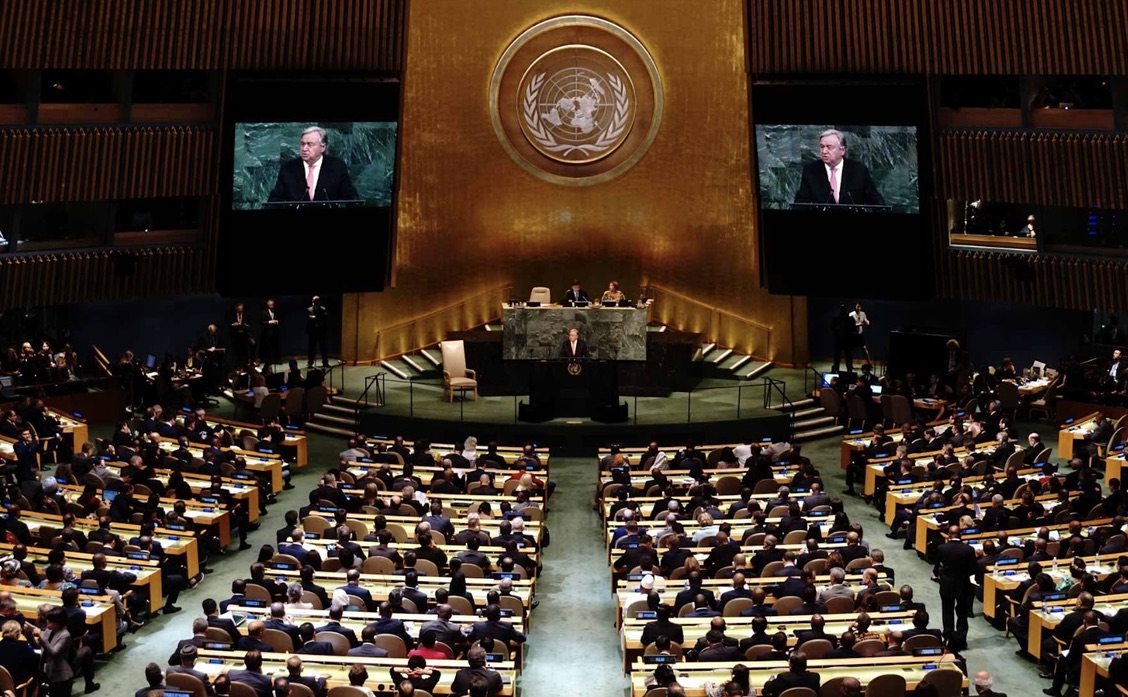
The publication is timed to coincide with the opening of the high-level week of the 81st session of the UN General Assembly in New York.
An Open Platform Instead of a New Bloc
P4M is conceived as an open group bringing together countries from different regions to work jointly on reforming the UN and other international institutions. The initiative does not involve creating a closed bloc or a new bureaucratic structure.
Its goal is to bring positions closer together and advance the reform of the multilateral system at the highest political level. The culmination will be the “Partners for Multilateralism” summit, which Costa, Ruto, and Carney will hold on September 21 on the margins of the General Assembly.
The Authors’ Position: ‘Cooperation is a Matter of Survival’
The key thesis of the article, voiced by Costa on social media, is: “Multilateralism is not an act of idealism; it is a practical necessity in today’s world.” In an official statement by the European Council, the formula is reinforced: “No country, however powerful, can tackle today’s challenges alone. Cooperation is not an act of idealism but a necessity and a matter of survival.”
Carney had previously repeatedly taken more radical positions: in January 2026, he warned that middle powers must unite to build a new order less dependent on the US, and ruled out a return to the status quo before Trump, proposing “coalitions of variable geometry.”
Lula, in turn, has consistently advocated the thesis of the need to “re-found” multilateralism on more just and inclusive foundations, rather than abandoning it.
Crisis of Trust and an Attempt to Seize the Agenda
The initiative appears at a moment when traditional global governance institutions are under growing pressure. The P4M summit is positioned as a platform to protect and strengthen the multilateral system, promote peace and inclusive prosperity. Costa will also speak on behalf of the EU at the General Assembly on September 24, reaffirming commitment to an “effective, inclusive and rules-based” system rooted in the UN Charter.
Notably, the co-authors do not include representatives of the US or China — the two key powers whose rivalry largely defines the crisis of the existing order. The composition of authors — EU, Brazil, Kenya, Canada — covers Europe, Latin America, Africa, and North America, but does not include any superpower.
Key Disagreement: Reform or Alternative?
Within the initiative itself and around it, subtle disagreements remain. Formally, P4M does not claim to create an alternative to the UN, but only to reform it. However, Carney’s line, declared back in January, on “coalitions of variable geometry” and rejection of a return to the previous order points to a deeper break with the traditional model than the cautious wording about “bringing positions closer” suggests.
The question remains open: will P4M become an instrument for real reform of existing institutions or a platform for building a parallel architecture in which the voice of middle powers carries more weight than in the current system.
The launch of P4M reflects a structural shift: middle powers are ceasing to be content with the role of observers in a system where rules are set by a narrow circle of superpowers. The formula “not idealism, but necessity” is not a call for a moral choice, but a statement of the changed balance of power. The question is whether this format can move from declarations to mechanisms capable of influencing real decisions.
For now, P4M remains more a claim to subjectivity than an institution. But the very attempt to seize the agenda from Washington and Beijing is telling: in conditions where the former guarantors of order are increasingly less willing to support it, middle powers are seeking their own points of support.