VLADIVOSTOK (Realist English). The Eastern Economic Forum 2026 (EEF 2026) traditionally took place from September 1 to 4 in Vladivostok. It brought together thousands of participants, from heads of Russian and foreign government bodies, ministries and agencies, to business representatives, media and experts.
The Forum not only discussed prospects for the development of the Far East but also saw multi-million-dollar deals signed. A cultural programme was prepared for the residents of Vladivostok, featuring stars of the Russian stage.
We note that over twenty years Vladivostok has turned into one of the most beautiful cities in Russia, becoming a major centre of business, socio-political and cultural life. It is no coincidence that President Putin, in his speech at the Eastern Economic Forum 2026, said that the adjective “far” no longer quite accurately reflects the real proximity of this region to the rest of Russia’s territories.
So, what are the main results of the Eastern Economic Forum 2026? Participants signed 318 agreements worth almost 7 trillion roubles (excluding documents whose terms are classified as commercial secrets). More than 9,300 people from 78 countries took part in the forum, including representatives of 18 states classified as unfriendly. I should note that I participated in the forum not only as an international expert but also as a representative of a large Singaporean company. As is known, Singapore has joined the sanctions against Russia, but nevertheless interest in cooperation with our country there is high.
The Forum’s agenda centred on a unified preferential regime for the Far East and the Arctic, development planning to 2036, transport projects, as well as urban and social infrastructure, personnel and technology. I was present at discussions of some of these issues. I found the presentations of the Far Eastern regions and their development prospects particularly interesting. As Russian and foreign media have already reported, several projects have been launched that are intended to create added value directly in the Far East.
Among them are a cathode copper plant at the Udokan Mining and Metallurgical Combine, the Nakhodka Mineral Fertiliser Plant, the pharmaceutical enterprise Pharmasyntez, the 500 kV Varyag substation and the corresponding power transmission line. An agreement was signed to create the Mokhe–Naiba–Magadan transport corridor worth 1.13 trillion roubles with a cargo flow of up to 30 million tonnes per year. The Power of Siberia 2 gas pipeline has been renamed the Power of Baikal with a capacity of up to 50 billion cubic metres per year.
Since the EEF is a major international platform, especially prestigious for ASEAN countries, naturally, in addition to economic issues, political statements were made during speeches by representatives of various Russian ministries and agencies. President Vladimir Putin noted that over 11 years the Far Eastern regions have attracted about 25 trillion roubles in capital investment. He stressed that the Far East and the Arctic are demonstrating high dynamics, and in a number of key parameters their development rates exceed the national average.
Putin emphasised that the most important thing is not state investment but private investment. The state’s task is to create favourable conditions for it. During his speech, the president commented on the situation with critical infrastructure, prices in the Far East, real wages (he reported that they had grown by 6.3%), the budget deficit and demography. In conclusion, Putin quoted the President of Indonesia: “One man in the field is not a warrior” — and added: “Together we will win,” emphasising the economic meaning of these words.
I personally very much liked the speech by Alexei Chekunkov, Minister of the Russian Federation for the Development of the Far East and the Arctic (Minvostokrazvitiya). It was businesslike, with an emphasis on practical recommendations. And professional. It is clear that the minister genuinely cares about the cause he serves. Minister Chekunkov spoke about plans for the development of the Northern Sea Route: the emerging trans-Arctic transport corridor should unite almost 300 projects with a total value of 32 trillion roubles.
For EEF 2026, Minvostokrazvitiya, together with other agencies, regions and experts, developed a Strategy for the Socio-Economic Development of the Far Eastern Federal District to 2030 with a forecast to 2036. Alexei Chekunkov stressed that this strategy was the result of a year of joint work, and on the sidelines of the forum the idea of uniting the Far East and the Arctic into a single geostrategic macro-region was voiced.
Business representatives who came from various countries were given the opportunity to hold negotiations, discuss possible deals, sign them, and familiarise themselves with the activities of interesting industrial and logistics facilities. And simply to communicate, as they say, to compare notes.
I would like to touch on one acute topic — the investment entry of Chinese neighbours into the Far East. By the way, this was one of the largest delegations at EEF 2026. Yes, this process is developing actively. But one should not think that Chinese colleagues can easily acquire any significant facility, for example, in the logistics sector. Ports and terminals are facilities of special importance in the border area, and it is now often simply impossible for a foreigner to enter there. For China, lately, due to geopolitical changes, things are generally not so simple.
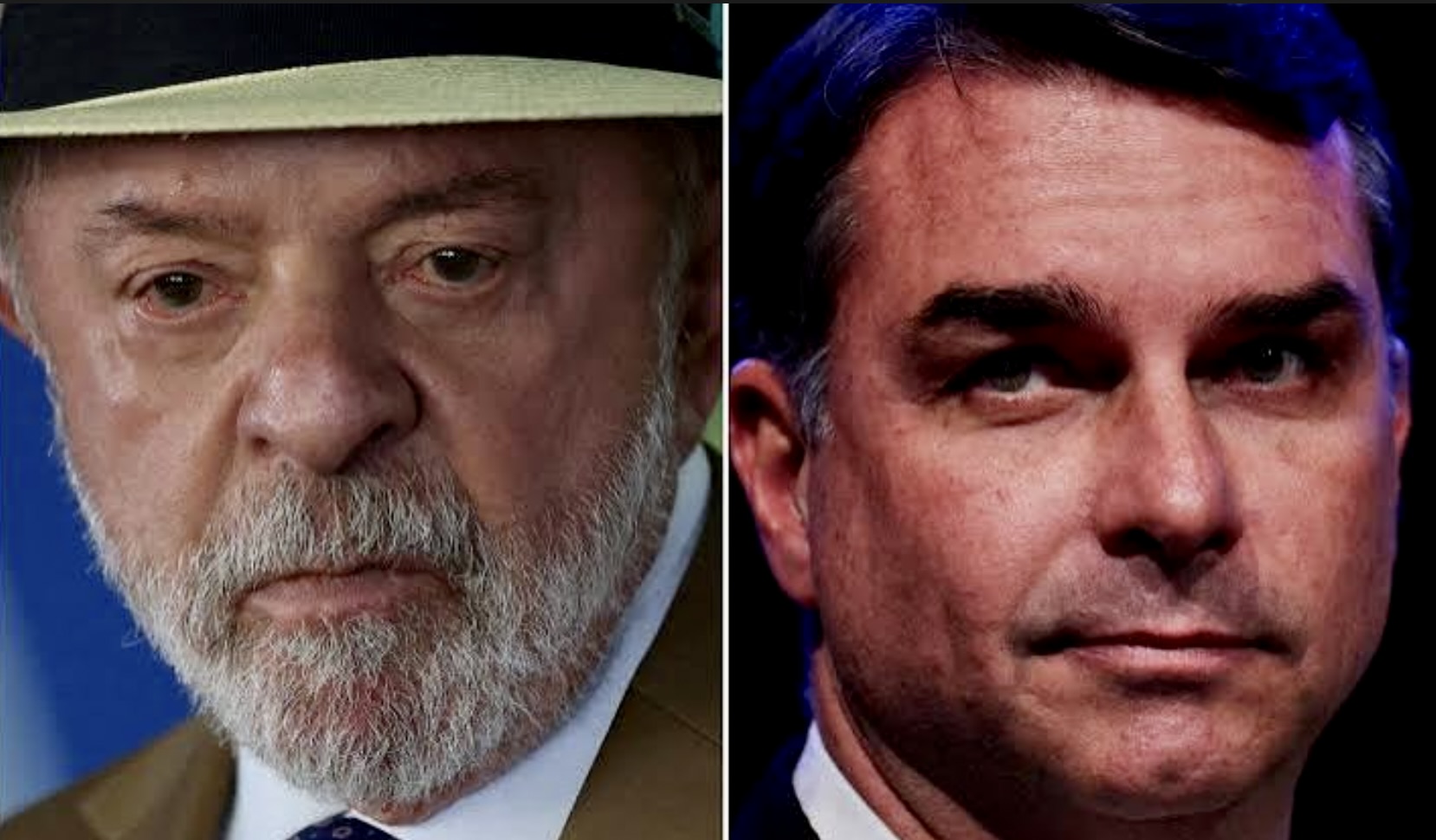
A serious blow for Beijing has been recent events in Latin America: in Panama (where for a long time Chinese owners held terminals on the state Panama Canal, and now, as a result of pressure from Trump, these terminals have gone to US citizens), in Venezuela, which is now, along with the largest oil reserves, under external US administration. It seems real changes are coming in Cuba. And finally, the outcome of the presidential elections in October in Brazil is unclear. If the left-wing politician Lula loses them, and such a possibility in the second round is not at all excluded, then all of China’s multi-billion-dollar investments will go into the US piggy bank (as already happened in Venezuela and Panama).
Moreover, if the right-wing candidate wins, Brazil will leave BRICS. And BRICS may not recover from such a blow. Right now, Chinese colleagues are preoccupied with Trump’s actions in Latin America, which they already considered “theirs” — after all, they invested billions. This is a mistake of many corporations that bet on expansion. And China, like the US, is a state-corporation.
North Korea has been “playing” interestingly in the region lately. One of the largest and, of course, most disciplined delegations at the Forum was the team from North Korea. I had the chance to talk with some of them. Contrary to traditional perceptions, no one prevented this communication. According to media reports, Russia paid one billion dollars for North Korea’s assistance in conducting the special military operation (I note that during EEF 2026, another figure was heard in the corridors — 11 billion dollars). Either way, this is gigantic money for Pyongyang, which needs to be invested somewhere. And preferably “closer.” In other words, a new unexpected investor has appeared in the Far East. And this is all against the backdrop of Trump’s recent statement about reducing military aid to South Korea. And a short but widely resonated incident with armed North Korean military entering South Korean territory, accompanied by a clash and gunfire.
As for Japan, despite unfriendly acts and statements, trade with Russia through third countries continues and is quite active.
The Far East impresses not only with its people. To be honest, they are kinder, more responsive and sincere than the residents of Central Russia. No one in business has cancelled this human factor either. But I will note once again: the Far East is indeed promising and can become a real pillar for Russia in its economic development.
In October, another landmark event will take place in the Far East — the Far Eastern Economic Forum in Khabarovsk. There is no doubt that important agreements and multi-million-dollar deals will also be signed there.
Tatiana Poloskova, Doctor of Political Sciences, State Advisor of the Russian Federation, First Class, specially for Realist English