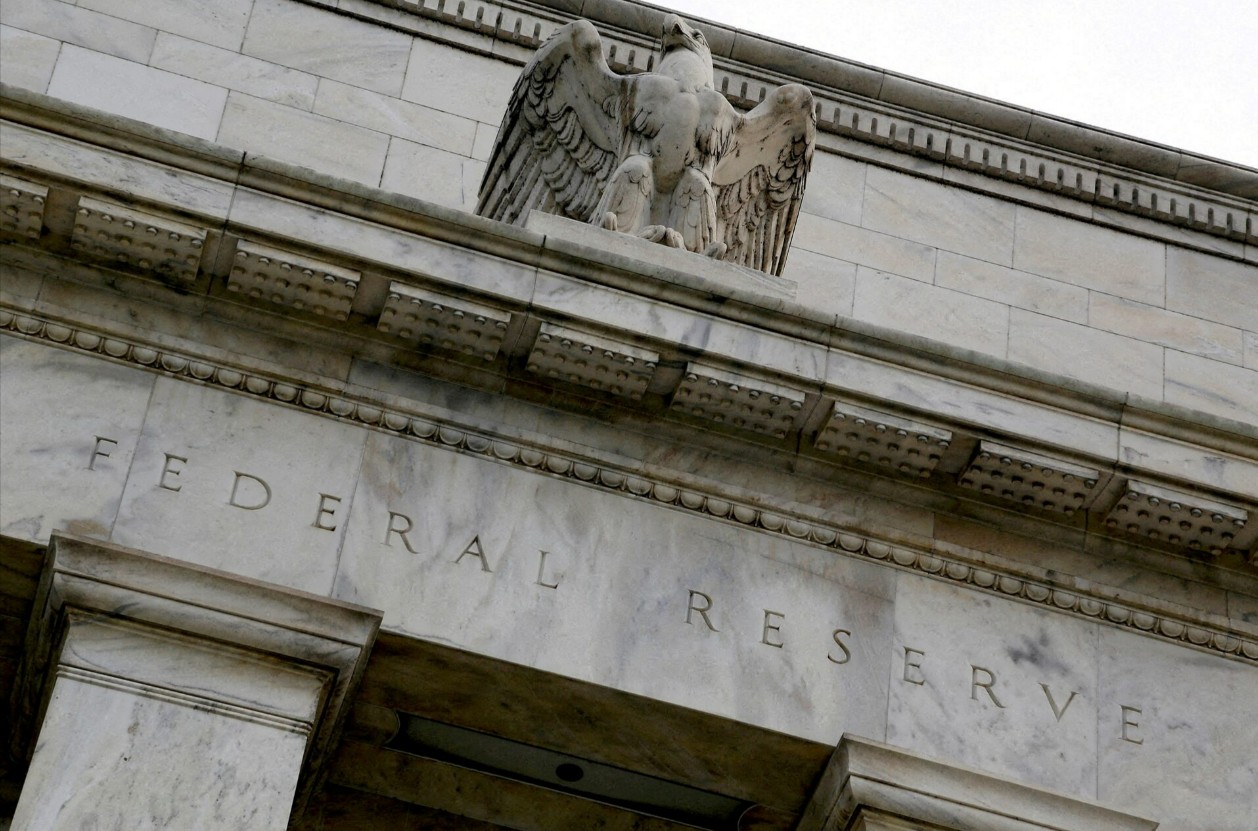
WASHINGTON (Realist English). The Federal Open Market Committee (FOMC) voted unanimously to raise the rate by 25 basis points. This is the first hike since 2023 and the first rate increase under Fed Chair Kevin Warsh.
The Essence of the Decision: “Hawkish” Consensus and a Shift in Inflation Perception
The assessment of the economy in the statement is notably optimistic: economic activity is expanding at a “solid pace,” productivity growth is “strong,” capital investment is “robust,” employment growth is broadly in line with labour force growth, and unemployment has changed little.
At the same time, inflation is described as “remaining elevated,” and the previous wording about an “energy supply shock” has been removed — instead, it is emphasised that “today’s policy action will support a more timely return of inflation to the 2% goal.”
This change in wording is of key importance: the Fed’s perception of inflation has shifted from a “temporary supply shock” to “broad, domestic price pressure,” meaning that price growth has spread to more areas and must be suppressed by tightening monetary policy through demand.
Dot Plot Significantly Raised: High Rates Will Persist Longer
The most unexpected signal from this meeting comes from a significant “hawkish” upward revision of the rate forecast dot plot. 16 of 18 officials expect at least one more hike by the end of 2026, and four expect two more. The median federal funds rate forecast for the end of 2026 has been raised from 3.8% in June to 4.1%.
More importantly, rate cut expectations have been significantly delayed: the median rate forecast for 2027 has been raised to 4.1%, and for 2028 to 3.9%. The logic of “rapid rate cuts” previously priced in by the market has been directly refuted, and the period of high rates has been substantially extended. The Fed expects inflation to return to its 2% target only by 2029.
Warsh said at the press conference that this hike is “removing one dose of stimulus,” and that it is “hard to describe current financial conditions as restrictive.”
Market Reaction: A Classic “Tightening Trade”
After the decision was announced, the market displayed classic signs of a tightening trade:
- Dollar strengthened: the dollar index rose 0.5–0.7%, reaching a seven-week high
- Treasury yields rose: 2-year yields climbed to 4.73%, 10-year yields exceeded the key 5% level
- Gold under pressure: spot gold fell about 2%, reversing gains ahead of the decision
- Equities under pressure: the Dow Jones fell 1.21%, the S&P 500 dropped 0.45%, but the Nasdaq was nearly unchanged, showing some resilience in tech stocks
Notably, the 10-year Treasury yield exceeding the 5% level is symbolically significant — it is the highest since 2007.
Global Spillovers: Asia Faces a New Test
The Fed’s “hawkish” pivot is causing a chain reaction worldwide. Oil prices had earlier exceeded $100, which had already created imported inflation pressure for Asian economies.
Asia is heavily dependent on energy imports, diesel and gasoline prices have risen faster than crude oil prices, and the room for fiscal and monetary policy was already narrow — now additional Fed tightening is increasing pressure on decision-makers.
In China, consumer inflation accelerated for the first time since April, and producer price growth exceeded expectations, mainly due to recovering food and energy prices. In the Taiwan region, CPI has exceeded the central bank’s 2% warning level for the fourth consecutive month.
In Europe, the European Central Bank raised rates by 25 basis points to 2.50% on 10 September, and its inflation forecasts for 2027 and 2028 were raised. The latest eurozone CPI was 3.2%, with core inflation at 2.4%.
Key Disagreement: Is This the “Beginning” or a “One-Off”?
Within the Fed, there are subtle disagreements in assessing the rate hike cycle. The unanimous vote itself underscores the “hawkish” consensus, but the market is divided on the future trajectory: federal funds rate futures show the market is pricing in two hikes by the end of the first quarter of next year, and the probability of a hike at the October meeting is approaching 60%.
Goldman Sachs considers October the most likely moment for the next hike, but “an additional hike is possible, though not the base case.”
On the other hand, there is a view that the market may be overestimating the future scale of hikes. Wasif Latif, Chief Investment Officer of Sarmaya Partners, noted: “Our view is that they have already completed this hike, and going forward the market may be pricing in too many hikes, when in fact there may be fewer — that would be good news for risk assets and commodities.”
Political Background: Ignoring Trump’s Pressure
This hike was carried out against the backdrop of continued public pressure from US President Donald Trump on the Fed to cut rates. Trump threatened that if the Fed did not cut rates, he would further escalate the trade war, and repeatedly stated that US borrowing costs should be the lowest in the world.
White House economic adviser Kevin Hassett also publicly opposed the hike but said the White House would respect the central bank’s decision.
Warsh reaffirmed the Fed’s commitment to policy independence, stressing that the committee will continue to fulfil its dual mandate — maintaining price stability and full employment.