BERLIN (Realist English). German Chancellor Friedrich Merz has said he will stay in office and continue his reform course, despite the CDU’s crushing defeat in regional elections in Mecklenburg-Vorpommern and Berlin.
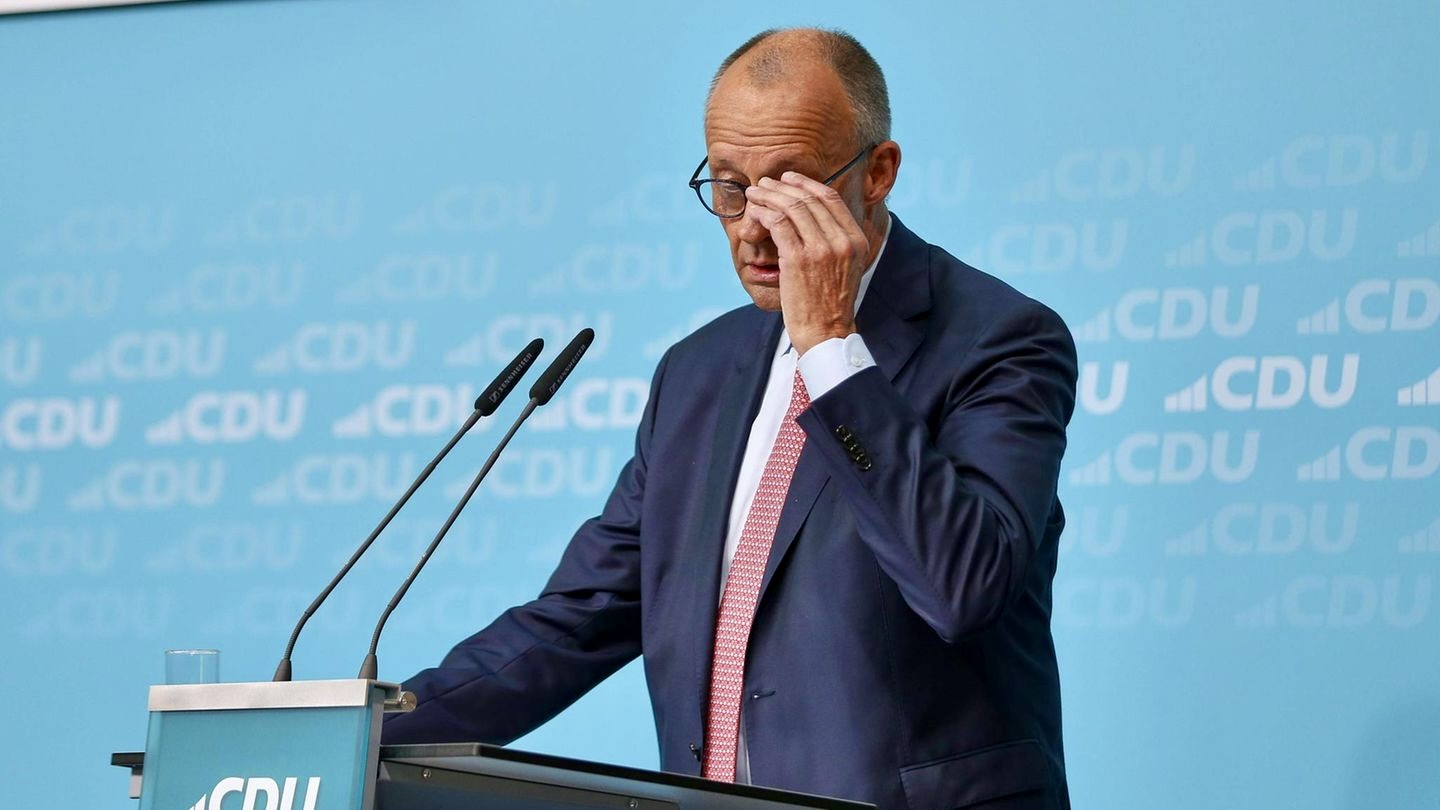
“We cannot gloss over the result in Mecklenburg-Vorpommern; it is a disaster,” he admitted, speaking at the party headquarters in Berlin.
Historic CDU Failure Amid AfD Triumph
According to exit polls, the CDU scored only 5.3% in Mecklenburg-Vorpommern — the party’s worst result in a regional election in the history of the Federal Republic. In some ARD forecasts, the party fell to 4.9%, which would have meant expulsion from the state parliament. The AfD, by contrast, won a convincing victory with around 37% of the vote, more than doubling its previous result and beating the SPD, which received about 35.5%.
Merz attributed the party’s failure to polarization between the SPD and AfD: “The CDU fought hard, but in the end the party was ground down in the escalation of the confrontation between the SPD and AfD.” In Berlin, the governing CDU also lost to the Left Party, scoring around 20% against 24.5% for its rivals.
The Chancellor’s Position: ‘Reforms Must Come’
Despite the obvious failure, Merz refused to resign and confirmed his intention to remain both chancellor and CDU chairman. “What needs to be done now requires resilience, firmness and patience. I will demonstrate these qualities as CDU chairman and, above all, as chancellor of our country,” he said. Merz again called his reforms an “antidote to the authoritarian poison” that he said is seeping into German society.
His reform agenda includes raising the retirement age, cutting some healthcare benefits and tightening sick-leave rules — measures that previous governments considered politically unacceptable.
Pressure Grows, Allies Waver
AfD co-leader Alice Weidel called on Merz to “draw conclusions” and abandon the “firewall” blocking cooperation with the right. According to her, it was the refusal to cooperate with the AfD that led the CDU to defeat.
Political scientists note that the key threat to Merz comes not from the opposition but from his coalition partner. “The decisive problem for him is how the SPD reacts to the election results,” says Professor Jürgen Falter of the University of Mainz.
Mecklenburg-Vorpommern Minister-President Manuela Schwesig, representing the SPD, achieved a strong result with an explicit rejection of the federal government’s reform course.
“Supporters of this course will become louder in the SPD, and therefore it is becoming increasingly unlikely that the coalition will close ranks and remain true to its original decisions,” the expert warns.
A Series of Defeats and Falling Ratings
The current failure is the second in a month: on September 6, the CDU suffered a crushing defeat in Saxony-Anhalt, where the AfD also won. Merz’s approval rating has fallen to 10%, and almost half of Germans expect his resignation before the end of the year.
A week before the elections, the leaders of eight federal states publicly supported Merz, who has been chancellor for only 16 months — an attempt to contain speculation about a possible “chancellor swap” within the CDU.
Stand Firm or Step Down?
Subtle disagreements remain within the CDU and the coalition. Merz has clearly bet that demonstrating stability and refusing to resign will allow him to weather the crisis.
Political scientist Frank Decker notes that the chancellor has received “the support of the party presidium,” but the question is how long it will last.
Christina Weissenbach of the University of Duisburg-Essen assessed his speech as deliberately reassuring but added: “It sounded a bit like blinkers on the eyes.”
Merz’s position is not so much a demonstration of strength as an attempt to buy time. The historic CDU failure in eastern Germany reflects a structural shift: the AfD is consolidating as the leading force in the eastern states, and the “firewall” around it is becoming increasingly fragile.
For Merz, the main threat comes not from voters but from his coalition partner — the SPD, which, having received its own mandate to reject reforms, may move toward confrontation.
The chancellor is betting that his reform course will prove justified. But so far the numbers say otherwise: the more insistently he pushes reforms, the more the space for his political maneuver shrinks.